










Most Unity contract work on Lemon.io comes from mobile game studios, AR/VR product companies, indie + mid-market game teams, and real-time 3D companies in the US, EU, UK, Canada, and Australia. The verticals concentrate around mobile games (free-to-play economy systems, IAP, ad mediation, LiveOps tuning), AR/VR/XR products (Meta Quest 3, Apple Vision Pro / visionOS via PolySpatial, OpenXR-based experiences, hand tracking + spatial anchors), indie + mid-market games (2D/3D shipped titles, Steam releases, console ports), real-time 3D applications (architectural visualization, automotive visualization, training simulations, digital twins, industrial applications), and interactive experiences (location-based entertainment, museum installations, branded experiences). The fastest-growing Unity verticals in 2026 are Apple Vision Pro / visionOS via PolySpatial (Unity is Apple’s primary partner here — UE5 has no direct PolySpatial equivalent), Meta Quest 3 XR development (Unity dominates the Quest ecosystem), Unity 6 + URP / HDRP modernization (existing Unity 2022 LTS codebases moving to Unity 6 to access Render Graph and GPU Resident Drawer), and DOTS / ECS adoption (data-oriented design for large-scale simulation and performance-critical systems).
Why Unity is the production default for mobile, XR, and mid-market 3D in 2026
The September 2023 Runtime Fee fiasco rattled Unity’s developer trust — but by 2026 the engine’s market position is materially stronger than late 2023. Three structural shifts. Unity 6 reset the engine’s technical positioning. Released late 2024, Unity 6 shipped meaningful rendering improvements: Render Graph (modern frame-graph architecture replacing the legacy SRP), GPU Resident Drawer (significant draw-call performance), URP improvements (the Universal Render Pipeline matured into a production-default for mobile and mid-market 3D), and HDRP refinements (high-end deferred rendering for high-fidelity work). The engine is faster, the rendering pipelines are cleaner, and the mobile / XR performance story is meaningfully better. Apple Vision Pro / visionOS via PolySpatial gave Unity a moat. When Apple Vision Pro launched in early 2024, Apple selected Unity as its primary game-engine partner via PolySpatial — Unity’s direct integration with visionOS rendering and spatial primitives. UE5 has no direct PolySpatial equivalent. For studios building Vision Pro games and immersive apps, Unity is effectively the only mainstream choice. This created a real, defensible Unity rate premium for Vision Pro specialists. Mobile and Quest dominance remained intact. Despite the 2023 trust hit, Unity continued to ship the majority of mobile games (the engine’s free-tier reach and asset-store ecosystem are hard to displace) and continued to dominate the Meta Quest 3 development ecosystem (Quest 3’s developer tooling is heavily Unity-aligned). The combination of mobile + Quest + Vision Pro means Unity has a defensible footprint in three of the four major XR / mobile platforms. The rate consequence: senior Unity work in 2026 is steady and well-paid, with the highest premiums concentrating in AR/VR/XR specialization (especially Vision Pro PolySpatial), Unity 6 next-gen rendering work, and DOTS / ECS-powered simulation.
The Unity specializations that drive rates in 2026
Not all Unity experience is valued equally. Specialization depth — much more than “I know Unity” — determines rate ceiling. Unity 6 + URP / HDRP / Render Graph / GPU Resident Drawer commands the highest rate band: $50–$75/hour. Demand concentrates in mid-market and high-end Unity studios modernizing existing codebases or starting greenfield Unity 6 builds. Production patterns: Render Graph adoption, URP shader graph + custom render features, HDRP for high-fidelity work, GPU Resident Drawer optimization, performance profiling at frame-budget level. Unity + AR/VR/XR commands $50–$75/hour. Demand concentrates in AR/VR product companies, Apple Vision Pro studios, and Meta Quest 3 game developers. Production patterns: PolySpatial for Apple Vision Pro / visionOS (Unity-only, no UE5 equivalent), Meta Quest 3 performance optimization (foveated rendering, MSAA, mobile-class GPU constraints), OpenXR cross-platform compatibility, hand tracking + eye tracking + spatial anchors, mixed reality passthrough. Unity + DOTS / ECS commands $50–$73/hour. Demand concentrates in studios building large-scale simulation, RTS / open-world systems, or any product where data-oriented design provides meaningful performance lift over GameObject-based architecture. Production patterns: Entities package, Burst compiler optimization, Job System parallelization, Hybrid ECS for incremental adoption. Unity + Multiplayer commands $45–$70/hour. Demand concentrates in multiplayer game studios and real-time online experiences. Production patterns: Netcode for GameObjects, Mirror, Photon (PUN, Fusion, Quantum), Fish-Net, dedicated server architecture, lag compensation, prediction / rollback systems. Unity + Mobile LiveOps is a high-volume specialization: $40–$65/hour. Demand concentrates in free-to-play mobile studios. Production patterns: economy systems (currency design, progression curves, gacha mechanics), IAP integration (Apple StoreKit, Google Play Billing), ad mediation (AppLovin, IronSource, AdMob), A/B testing platforms, remote config, retention tuning.
What gets you matched fastest (decision framework)
Three factors predict matching speed for Unity developers. 1. Production shipped-title experience beats prototype work. A developer who lists “shipped Unity 6 mobile title with LiveOps + monetization, Apple Vision Pro PolySpatial experience, Netcode for GameObjects multiplayer” matches into significantly more high-rate projects than a “Unity, C#, Unity Asset Store, hobby projects” generalist profile. Released titles or shipped XR products matter at senior level here. 2. Specialization claim compounds rate ceilings. Strong Senior tier rates ($47–$95/hour) cluster in roles requiring at least one of: Unity 6 next-gen rendering (URP / HDRP / Render Graph), AR/VR/XR specialization (especially Apple Vision Pro PolySpatial), DOTS / ECS, multiplayer / Netcode, or mobile LiveOps + monetization. Pick 1–2 specializations, ship them in production, then explicitly claim them. 3. Performance / debugging discipline is the senior bar. Unity candidates who can build features but can’t reason about performance (Unity Profiler, Frame Debugger, Memory Profiler, GC pressure analysis, draw-call optimization, batching strategies, mobile thermal budgets) miss premium-tier roles. Production Unity at scale demands performance discipline — especially for mobile and XR where performance budgets are tight.
What "$80/hour Unity work" actually looks like
Concrete examples from real Unity contract patterns at the upper rate band: 1. $73/hr — Senior Unity Engineer (Apple Vision Pro + PolySpatial + visionOS) at a Funded XR product company, building Vision Pro experiences with Unity as the primary engine. 2. $70/hr — Senior Unity Engineer (Unity 6 + URP + Render Graph) at a Funded mid-market game studio, modernizing rendering architecture for a cross-platform mobile + console title. 3. $65/hr — Senior Unity Engineer (DOTS / ECS + Burst compiler) at a Series A simulation startup, building large-scale simulation with data-oriented design. 4. $60/hr — Senior Unity Engineer (Meta Quest 3 + foveated rendering + hand tracking) at a Funded AR/VR product company, building Quest 3 experiences with performance-tuned rendering. 5. $50/hr — Senior Unity Engineer (Netcode for GameObjects + dedicated servers) at a Series A multiplayer game studio, building replicated game systems. Common pattern: production shipped-title or shipped-XR-product fluency, specialized vertical (Vision Pro / Quest 3 / DOTS / multiplayer / Unity 6 rendering), small-to-mid teams where senior judgment shapes architecture, and clients with concrete production budgets and milestone plans. Generic “build me a Unity prototype” speculative work clusters in the $25–$40/hour band — but is rare on the platform because clients seeking senior Unity engineers self-select for technically substantive production work.
Why Unity devs fail Lemon.io vetting (and how to pass)
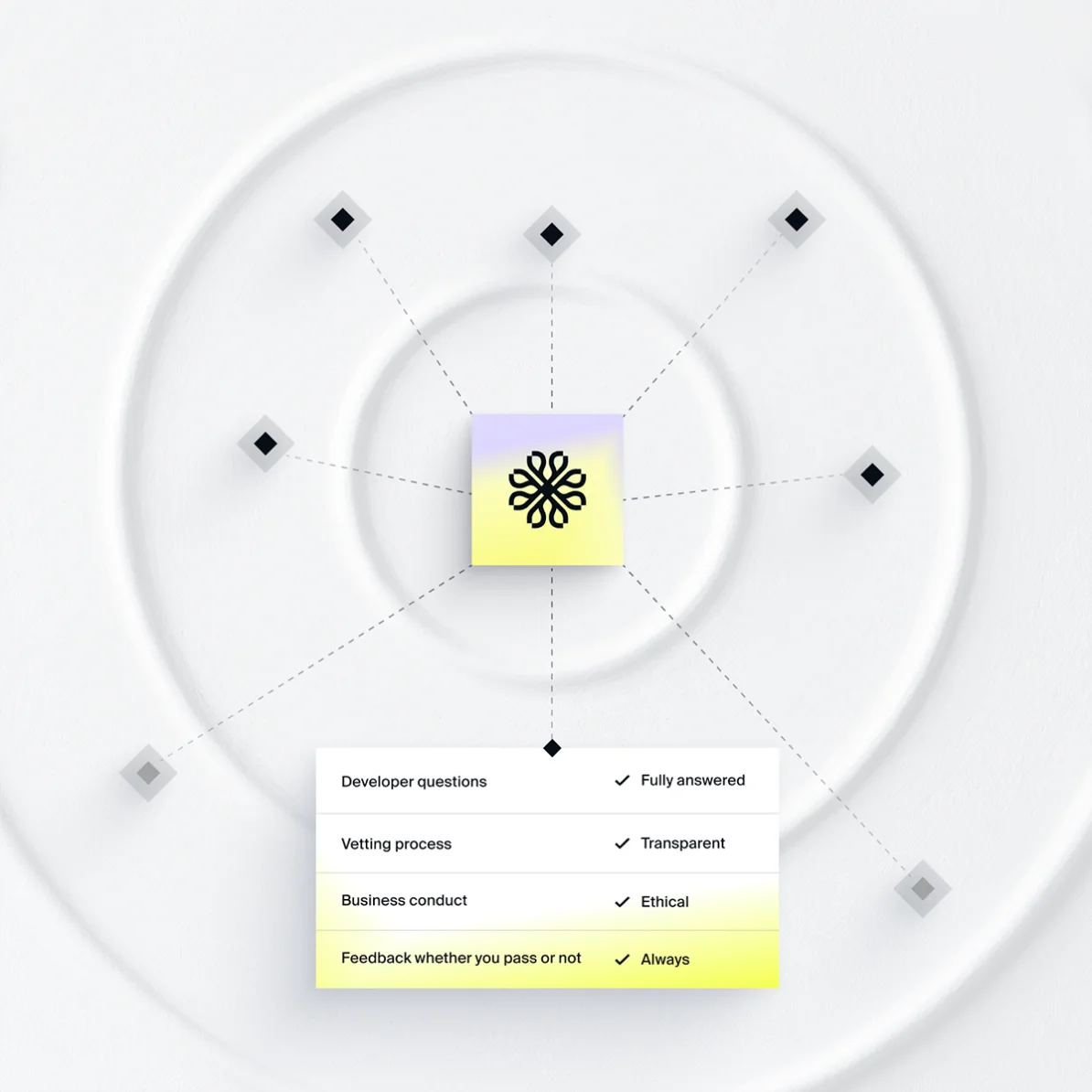
Across vetting interviews, four rejection patterns dominate for Unity candidates: 1. Asset Store-stitching mindset instead of architectural thinking. “I’ll grab this asset to solve it” fails when the topic is custom architecture. Senior Unity matches require knowing when to use existing assets vs when to build custom systems vs when to extend Unity Core. Asset-stacking-as-architecture reads as junior-level. 2. Built-in Render Pipeline thinking in a URP / HDRP market. Senior Unity roles in 2026 expect URP or HDRP fluency — Built-in RP is increasingly legacy. Candidates who default to legacy-RP shaders and rendering patterns get filtered out of newer Unity 6 projects. 3. No production debugging / performance experience. “I built the gameplay system” without specifics fails when the topic is production debugging. Senior Unity matches go to candidates who’ve used Unity Profiler for CPU profiling, Frame Debugger for GPU analysis, Memory Profiler for memory leaks, and shipped fixes that moved a frame-rate or memory metric. 4. No specialization claim. Generalist “I know Unity” profiles match slower and at lower rates. The platform pattern: pick 1–2 specializations (Unity 6 rendering, AR/VR/XR, DOTS/ECS, multiplayer, mobile LiveOps), ship them in production, then explicitly claim them on your profile. The fix is structural: when describing past work, lead with the architectural decision (Built-in RP vs URP vs HDRP, Asset Store gem vs custom system, GameObject vs ECS), the specialization, the production constraint you solved (frame rate, memory budget, network latency), and the measurable outcome.
Modern Unity in 2026 — what's actually changing
Three structural shifts are reshaping what senior Unity looks like. Unity 6 Render Graph + GPU Resident Drawer have become the rendering default. What was experimental in early 2024 is now the production default for new Unity builds and active migration target for existing Unity 2022 LTS codebases. Senior Unity matches expect Render Graph fluency or working knowledge of the migration trade-offs. Apple Vision Pro PolySpatial is a serious Unity vertical. Where Vision Pro launched as a niche XR platform in early 2024, by 2026 it’s a meaningful Unity target — and Unity’s exclusive PolySpatial integration with visionOS gives Unity a defensible moat that UE5 doesn’t have. Vision Pro Unity developers command premium rates. DOTS / ECS has matured from “interesting future” to “production-ready for performance-critical work.” What was an in-development Unity feature for years is now production-default for large-scale simulation, open-world systems, and any project where GameObject architecture hits performance limits. Senior Unity engineers with DOTS / ECS production experience command the platform’s premium tier.
Freelance vs full-time: the real numbers
The day-to-day looks more like being a senior contractor at a game studio or XR product team than a traditional freelancer.
On a typical project, you join the client’s Slack workspace on day one. Your Lemon.io success manager facilitates a 30-minute onboarding call with the engineering lead, technical director, or studio CTO. You get access to the codebase (typically Git LFS for most teams, Plastic SCM for larger studios), Unity project, build pipelines, milestone plans, and project management tool (usually Linear, Jira, ClickUp). Most Unity developers ship their first commit within the first week — typically a small gameplay system, performance optimization, or rendering improvement — then graduate to feature work and architecture contributions.
Communication cadence varies. Async-first teams do brief daily check-ins via Slack and rely on PR / branch reviews, technical design documents, and milestone reviews. Sync-heavy teams may have 2–3 video calls per week including playtests (for game projects) and design reviews.
Code review, design review, performance benchmarking (Unity Profiler, Frame Debugger), and milestone delivery work the same as any senior production team. You’re part of the engineering / production core, not an outsourced resource.
Contracts run as monthly agreements with project-based scope. Average contract length: 9+ months — Unity work compounds across feature releases, especially for multi-platform mobile titles, ongoing XR product development, and live-service Unity games. When a project nears completion, your success manager begins matching you with the next opportunity. Average downtime between projects: less than 2 weeks.