










Most Java contract work on Lemon.io comes from enterprise organizations, regulated industries, and large-team SaaS in the US, EU, UK, Canada, and Australia. The verticals concentrate around banking and fintech (trading systems, retail banking platforms, payment infrastructure, regulatory reporting, ledger systems), insurance (policy management, claims processing, actuarial systems, broker portals), healthcare and life sciences (EHR backends, clinical-data platforms, pharma ERP integrations), government and regulated sectors (citizen-service backends, internal admin platforms, compliance tooling), enterprise B2B SaaS (large-team monorepo backends with role-based access, complex permissions, audit trails, multi-tenant architectures), and event-driven platforms (Kafka-backed streaming, real-time analytics, message-bus architectures). The fastest-growing Java verticals in 2026 are Java 21+ adoption with virtual threads (existing Java 11 / 17 codebases adopting Project Loom for radically simplified concurrent code), Spring Boot 2 → Spring Boot 3 + Jakarta EE migrations (the namespace-rename migration is real engineering work and the modernization wave is ongoing), Quarkus and Micronaut + GraalVM native image adoption (cloud-native Java for Kubernetes / serverless workloads where startup time and memory footprint matter), and AI-integrated Java (LangChain4j and Spring AI maturing into production tools, with enterprise Java teams adding LLM features without rewrites).
Why Java has had a 2024–2026 renaissance
Java had a reputation problem during 2018–2023 — enterprise-dominant but developer-experience-stagnant, with Kotlin and Go pulling mindshare on the JVM and microservice fronts. Three structural shifts changed that. Virtual threads (Project Loom) shipped in Java 21 LTS. What had been the most-criticized aspect of Java for a decade — verbose async / reactive code for I/O-bound workloads — became dramatically simpler with virtual threads. A single line (Thread.ofVirtual().start(…)) replaced complex reactive pipelines for many use cases. Senior Java engineers who can reason about when to use virtual threads vs platform threads vs reactive Java match into the highest-rate concurrency work. Pattern matching + record patterns + sealed classes closed the ergonomics gap. Modern Java 21+ code looks substantially closer to Kotlin or Scala than Java 8 did. Pattern matching for switch (with deconstruction and guards), record patterns, sealed classes, and exhaustive switch matching brought algebraic-data-type-style programming into mainstream Java. The “Java is verbose” critique aged out. Spring Boot 3 + Spring Framework 6 marked a clean modernization break. The Jakarta EE namespace migration (javax.* → jakarta.*) was a real engineering migration that forced shops to either modernize or accept legacy lock-in. Senior Java engineers fluent in Spring Boot 3 + Java 21 + virtual threads command meaningful rate premium because the modernization work is real and ongoing. The rate consequence: senior Java work in 2026 is steady and well-paid, with the highest premiums concentrating in modern Java 21+ adoption, Spring Boot 3 migrations, cloud-native Java (Quarkus / Micronaut + GraalVM native image), reactive Java + Kafka, and AI-integrated Java work.
The Java specializations that drive rates in 2026
Not all Java experience is valued equally. Specialization depth — much more than “I write Java” — determines rate ceiling. Java 21+ + Spring Boot 3 commands the highest rate band: $50–$73/hour. Demand concentrates in teams modernizing Java 8 / 11 / 17 codebases or starting greenfield Java 21 builds. Production patterns: virtual threads for I/O-bound concurrency, Spring Boot 3 idioms (configuration properties classes, modern dependency injection, Spring Security 6), Jakarta EE namespace migration discipline, structured concurrency, scoped values, pattern matching for switch + record patterns + sealed classes for domain modeling. Quarkus / Micronaut + GraalVM Native Image commands $50–$75/hour. Demand concentrates in cloud-native Java workloads — Kubernetes-deployed services, serverless Java, services where startup time and memory footprint matter. Production patterns: GraalVM native-image build pipelines, AOT compilation discipline, reflection-config tuning, native-image limitations (dynamic class loading, runtime metadata), build-time vs runtime trade-offs. Reactive Java + Kafka at Scale commands $50–$73/hour. Demand concentrates in event-driven platforms and high-throughput backends. Production patterns: Spring WebFlux + Project Reactor, when to use reactive vs virtual threads (Java 21+ shifted some of this), Kafka Streams for stream processing, Spring Cloud Stream, schema registry discipline (Avro, Protobuf), Kafka consumer-group tuning. AI-Integrated Java + JVM Performance Tuning commands $50–$73/hour. Demand concentrates in enterprise Java teams adding LLM features (LangChain4j, Spring AI) and engineering-quality-conscious teams that need JVM performance discipline. Production patterns: LangChain4j / Spring AI integration patterns, RAG architectures, JFR + async-profiler for production profiling, GC tuning (G1, ZGC, Shenandoah), heap-dump analysis, native compilation cost / benefit reasoning.
What gets you matched fastest (decision framework)
Three factors predict matching speed for Java developers. 1. Modern Java fluency beats legacy Java knowledge. A developer who lists “Java 21, virtual threads, pattern matching, Spring Boot 3, Jakarta EE migration, Quarkus + GraalVM, Kafka Streams, AI-integrated Java with LangChain4j” matches into significantly more high-rate projects than a “Java 8, Spring Boot 2, Maven, generic backend” profile. New Java projects on the platform increasingly require Java 17 LTS minimum, with Java 21+ the default for greenfield work. 2. Specialization claim compounds rate ceilings. Strong Senior tier rates ($47–$95/hour) cluster in roles requiring at least one of: Java 21+ + Spring Boot 3, Quarkus / Micronaut + GraalVM, reactive Java + Kafka, AI-integrated Java, or JVM performance tuning. Pick 1–2 specializations, ship them in production, then explicitly claim them. 3. Production performance / debugging discipline is the senior bar. Java candidates who can build features but can’t reason about JVM performance (JFR profiling, async-profiler, GC tuning, heap-dump analysis, virtual-thread-vs-platform-thread trade-offs) miss premium-tier roles. Production Java at enterprise scale demands performance discipline.
What "$80/hour Java work" actually looks like
— $73/hr — Senior Java Engineer (Java 21 + virtual threads + Spring Boot 3) at a Funded enterprise SaaS, leading the migration from Java 11 + Spring Boot 2 to Java 21 + Spring Boot 3 with virtual-thread adoption for high-concurrency I/O paths. — $70/hr — Senior Java Engineer (Quarkus + GraalVM native image) at a Series B fintech, building cloud-native Java microservices with sub-second startup for Kubernetes deployment. — $65/hr — Senior Java Engineer (Reactive Java + Kafka Streams) at a Funded streaming platform, owning event-driven architecture and stream-processing pipelines at scale. — $60/hr — Senior Java Engineer (AI-integrated Java + LangChain4j) at a Bootstrapped enterprise SaaS, adding RAG-backed AI features to an existing Spring Boot codebase. — $50/hr — Senior Java Engineer (Spring Boot 2 → 3 + Jakarta EE migration) at an Established enterprise team, leading the namespace migration with measurable engineering-debt reduction. Common pattern: Java 17+ fluency (Java 21+ strongly preferred), specialized vertical (modern Java + Spring Boot 3 / Quarkus-Micronaut / reactive + Kafka / AI integration / JVM performance), and small-to-mid teams or large-org pods where senior judgment shapes architecture. Generic “fix this Java app” rescue work clusters in the $20–$30/hour band — but is rare on Lemon.io because we screen for product-engineering work, not maintenance.
Why Java devs fail Lemon.io vetting (and how to pass)
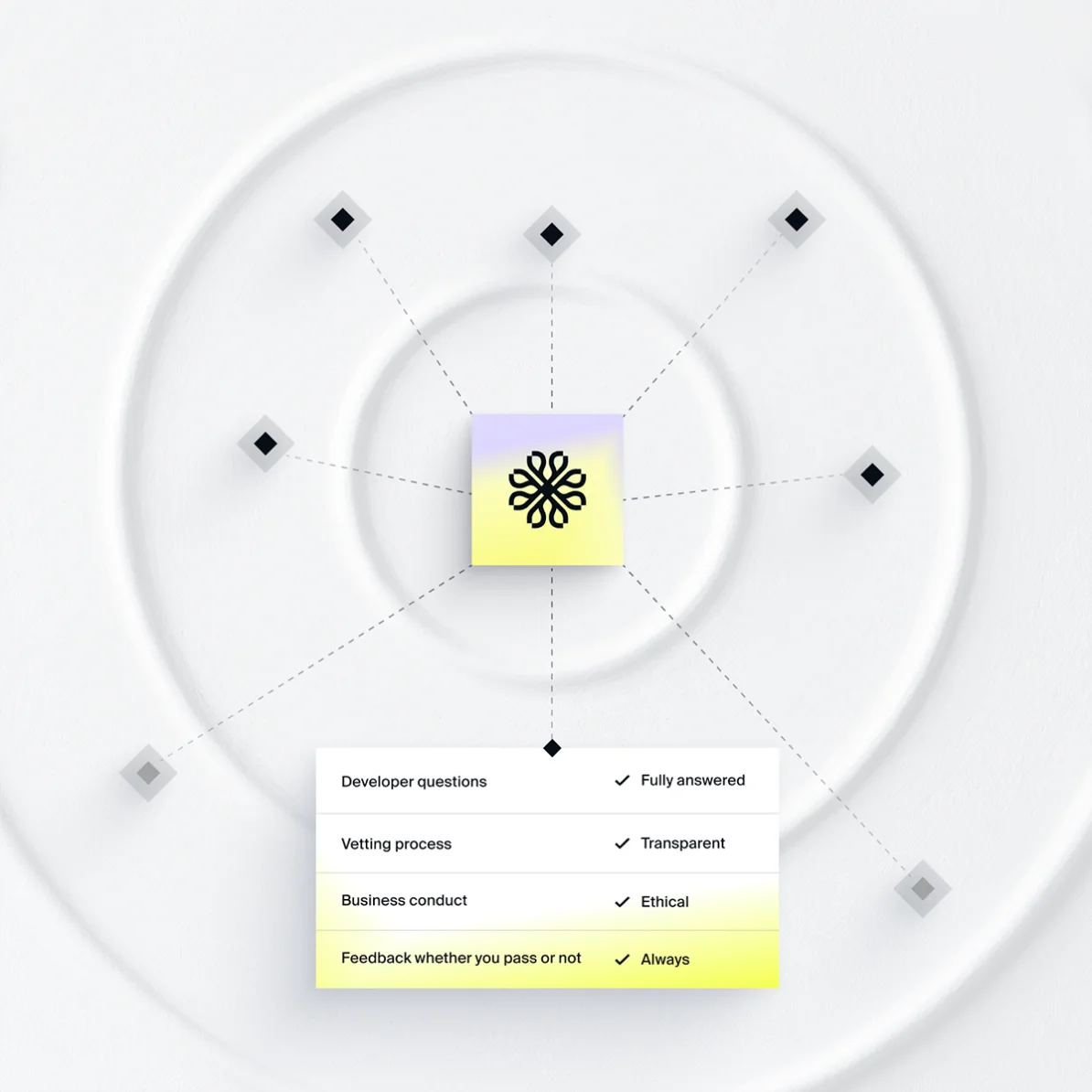
Across vetting interviews, four rejection patterns dominate for Java candidates: 1. Java 8 / 11 thinking in a Java 21+ market. Candidates who default to pre-Java-17 patterns — verbose anonymous inner classes, no var usage, no records, no pattern matching, manual concurrency over virtual threads — get filtered out. Senior matches expect Java 17 LTS fluency at minimum, Java 21+ ideally. 2. No virtual-thread reasoning. “I’ve used virtual threads” without specifics fails when the topic is when-to-use-them vs platform threads vs reactive Java, structured concurrency design, or scoped values. Senior matches require Project Loom architectural thinking. 3. Spring Boot 2 thinking in a Spring Boot 3 / Jakarta EE market. Candidates who haven’t migrated past javax.* namespace, who don’t know modern Spring Security 6 patterns, or who can’t reason about Jakarta EE migration trade-offs miss premium roles. 4. No JVM performance discipline. “I built the service” without specifics fails when the topic is GC tuning (G1 vs ZGC vs Shenandoah), JFR profiling, async-profiler usage, heap-dump analysis, or native-image trade-offs. Senior matches require performance reasoning. The fix is structural: when describing past work, lead with the architectural decision (virtual threads vs reactive, Spring Boot 3 migration, Quarkus vs Spring, GraalVM native vs JVM), the trade-off, and the measurable outcome — not the framework version used.
Modern Java in 2026 — what's actually changing
Virtual threads replaced reactive Java for many use cases. What was the dominant pattern for I/O-bound concurrency in Java (Spring WebFlux + Project Reactor) is increasingly replaced by virtual threads + structured concurrency for new builds. Reactive Java still wins for backpressure-sensitive streaming, but for “many concurrent HTTP calls” workloads, virtual threads simplified the code dramatically. Senior matches expect this architectural reasoning. GraalVM native image is production-default for cloud-native Java. Where GraalVM was niche in 2020, by 2026 it’s the production default for Quarkus and Micronaut deployments where startup time and memory footprint matter (Kubernetes pods, serverless functions). Senior Java engineers fluent in GraalVM native-image discipline match into the highest-rate cloud-native work. LangChain4j and Spring AI matured into real production tools. Where AI-integrated Java was makeshift in 2023, by 2026 LangChain4j and Spring AI provide production-quality RAG patterns, agent orchestration, and LLM integration with proper observability. Senior matches with AI-integrated Java experience match into the fastest-growing project pool.
Freelance vs full-time: the real numbers
The day-to-day looks more like being a senior engineer at an enterprise team than a traditional freelancer.
On a typical project, you join the client’s Slack workspace on day one. Your Lemon.io success manager facilitates a 30-minute onboarding call with the engineering lead or CTO. You get access to the codebase (typically GitHub or GitLab), Java project + monorepo, build pipeline (Gradle / Maven), CI/CD infrastructure, and project management tool (usually Linear, Jira, GitHub Projects, ClickUp). Most Java developers ship their first pull request within the first week — typically a small feature addition, performance fix, or migration step — then graduate to architecture work.
Communication cadence varies. Async-first product teams do brief daily check-ins via Slack and rely on PR reviews and architecture documents. Enterprise Java teams in regulated industries (banking, insurance, healthcare) tend toward sync-heavier cadences for compliance reasons.
Code review, architectural design discussions, performance work (JFR profiling, async-profiler, GC tuning, native-image cost analysis), and deployment all happen the same as any senior engineering team. You’re part of the engineering core, not an outsourced resource.
Contracts run as monthly agreements with project-based scope. Average contract length: 9+ months — Java projects compound across feature releases, especially in enterprise SaaS where multi-year cycles are common. When a project nears completion, your success manager begins matching you with the next opportunity. Average downtime between projects: less than 2 weeks.