










Ruby on Rails Developer Jobs — Vetted Roles at Top Product Companies and SaaS Teams

Pass vetting once. Get continuous access to senior Rails projects across Rails 8 (Hotwire, Turbo, Solid Trifecta, Kamal 2), modern-monolith architecture, Sidekiq / GoodJob at scale, Active Record performance optimization, Rails + React / Vue / Inertia.js full-stack, and AI-integrated Rails apps — we’ll keep sending opportunities until the right match lands. No re-applying, no bidding wars.

how it works
1
Pass vetting once
Screening + tech assessment
2
Get matched to projects
We find the right fit for you
3
Meet Your Client & Start Building
Work directly with the team — no middlemen
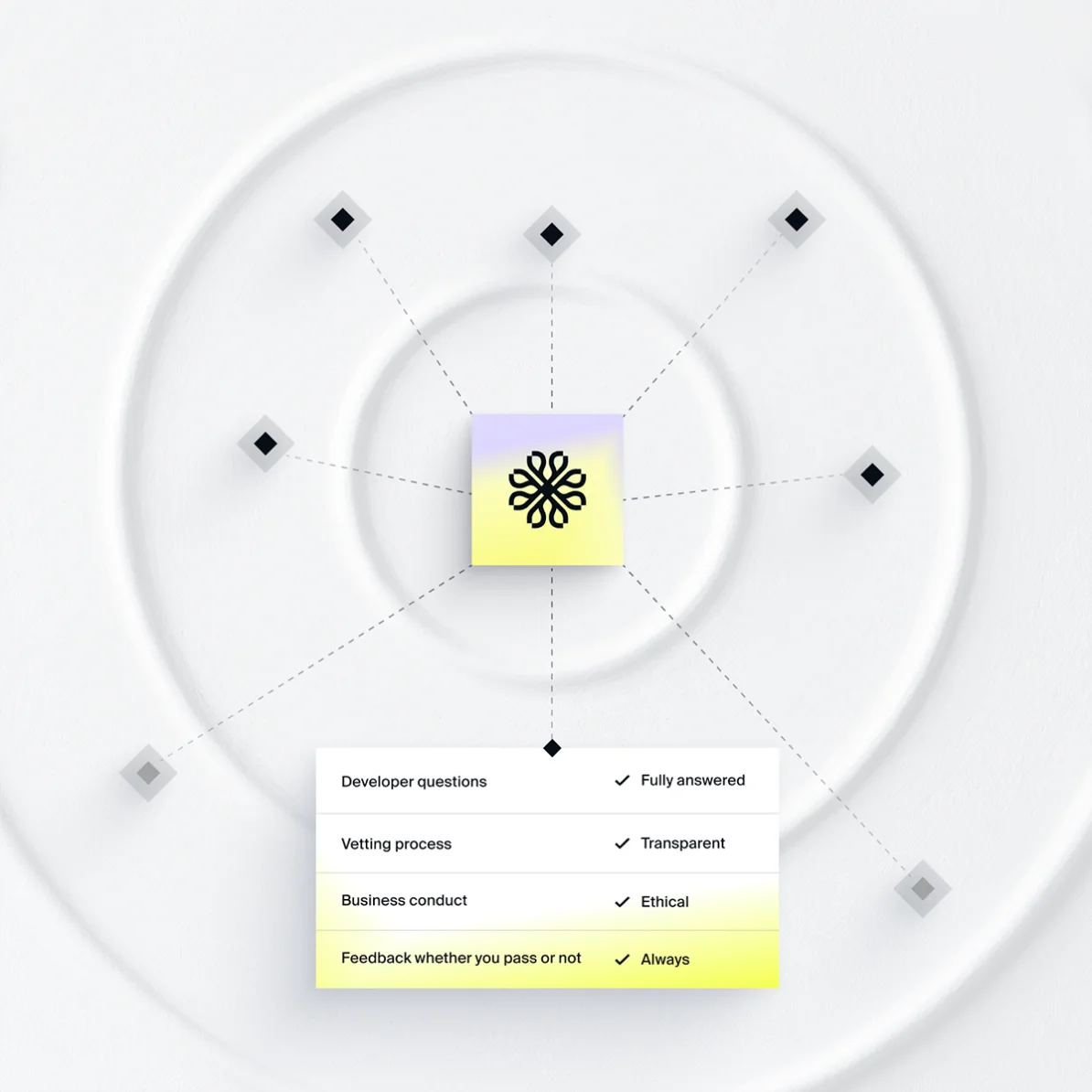
No re-vetting per project — ever. Detailed feedback whether you pass or not.
1,500+
vetted devs
9+ months
average contract length
5 days
to get vetted
See Projects & Apply
illustration

Lemon.io is a developer talent marketplace connecting Ruby on Rails Developers with funded product companies, SaaS teams, and marketplaces for remote contract roles. Developers pass vetting once (5 days average); 60% of applying companies are rejected for funding instability, unclear roadmap, or weak engineering culture. Rails senior rates: $20–$73/hour (median $35); Strong Senior: $20–$95/hour (median $47). The Strong Senior tier shows a +34% jump over Senior — production Rails mastery (Rails 8, Solid Trifecta, Hotwire/Turbo, Sidekiq at scale, Active Record performance) is increasingly scarce as the dev pool shifted to TypeScript/Go during 2020–2023. Average contract length: 9+ months. Both part-time and full-time engagements supported. Lemon.io covers 71+ countries and works with Rails developers across Rails 8, modern-monolith architecture, Sidekiq / GoodJob at scale, Active Record performance optimization, Rails + React / Vue / Inertia.js full-stack pairings, and AI-integrated Rails apps. Operating since 2015.

  • Free to join - No fees ever
  • Pre-vetted companies
  • Long-term projects (avg 9+ months)
  • No bidding wars

Ruby on Rails Projects Actively Hiring Now

Real opportunities at vetted product companies, SaaS teams, and marketplaces. When you apply, Lemon.io sends you opportunities tailored to your stack, timezone, and goals — until the right match lands.

HealthTech / E-commerce / AI
Funded Startup
Senior Full-Stack Developer
$20/hour 3–4 months
Senior Full-Stack Developer (Rails/React) working across a 28-state telehealth cannabis platform, GLP-1 weight-loss e-commerce, and AI support automation SaaS, part-time then FT, 3–4 months, ET.
What you’ll build
Work across three products: a medical telehealth platform for cannabis recommendations operating in 28 US states, a new e-commerce weight-loss medicine platform with dashboards, and an AI B2B support automation platform. The work requires proactive problem identification — creating tickets and solutions independently — with strong emphasis on architecture, database design, code documentation, and testing. HIPAA, GDPR, and CCPA compliance experience is a significant bonus. Each project has a dedicated 3-person team.
Tech stack
Ruby on Rails React Next.js Angular Python FastAPI PostgreSQL PGVector OpenAI API AWS
Team
4–10 Engineers
stage
SCALING
why devs choose this
Same multi-product healthcare platform continues hiring — this third listing confirms genuine sustained demand for senior Rails developers across a telehealth platform serving 28 states, a GLP-1 weight-loss product launch, and an AI SaaS. Each project has a dedicated 3-person team providing real collaboration, and the proactive self-starter requirement means you'll identify problems and create solutions than wait for tickets. Healthcare compliance dimension builds serious professional value.
SaaS
Bootstrapped
Senior Full-Stack Ruby on Rails Developer
$20-$40/hour 7+ months (ongoing)
Senior Full-Stack Rails Developer at a bootstrapped B2B SaaS company specializing in activity-specific mapping, part-time, ongoing.
What you’ll build
Own full-stack development of a mature B2B SaaS platform that delivers custom activity-specific maps to app and website developers worldwide. Work spans building and maintaining features across the Rails stack, integrating with external services like payment processors and API key management systems, and ensuring production-grade code quality with solid test coverage. The product is built on OpenStreetMap data and serves paying customers 24/7 with tailored maps for cycling, hiking, public transport, and more.
Tech stack
Ruby on Rails RSpec Stripe Devise CanCanCan Bootstrap OpenStreetMap
Team
Solo Founder
stage
SCALING
why devs choose this
Rare chance to be the first developer alongside a technical CEO on a profitable 10-year-old product with real paying customers and zero VC pressure. You get full ownership of the codebase, direct influence on technical direction, and the autonomy that comes with a small stable business that values craft over speed-at-all-costs. Stable proven engagement on a niche product in a niche domain where most developers never get to work.
Fintech
Seed
Senior Full-Stack Developer
$20-$45/hour 1–2 months
Senior Full-Stack Developer at a seed-stage fintech startup building an open-banking-powered cashback platform, full-time, 1–2 months.
What you’ll build
Build the MVP of a consumer fintech product that delivers cashback rewards and personalized savings recommendations using open banking data. The work spans the full stack — React on the web frontend, React Native for upcoming iOS and Android apps, Ruby on Rails and Node.js on the backend, all deployed on AWS.
Tech stack
React React Native Ruby on Rails Node.js, AWS Plaid
Team
1–3 Engineers
stage
LAUNCHING MVP
why devs choose this
Joining at the most consequential moment — designs are landing, backend architecture is still open, and you'll have direct access to the CTO shaping technical direction. Genuine greenfield build in fintech with real architectural ownership, not ticket work on someone else's codebase. If you want your decisions baked into a product from day one, this is that project. Cross-platform breadth (web + mobile + backend) in a single engagement is unusual.
Marketing Tech
Early-stage Startup
Senior Full-Stack Ruby on Rails Developer
$20-$30/hour 1–2 months
Senior Full-Stack Rails Developer at an early-stage marketing tech startup building a UTM and link management platform, full-time, 1–2 months.
What you’ll build
Ship features end-to-end on an all-in-one UTM builder and link management platform — a tool marketers rely on to tag, organize, and track campaign links at scale. The work is Rails-heavy: take high-level product requirements directly from the founder, translate them into clean production-ready code, and own delivery from architecture through deployment. React on the frontend is part of the stack but secondary to deep Rails proficiency.
Tech stack
Ruby on Rails React
Team
1–3 Engineers
stage
FUNDED STARTUP
why devs choose this
High-autonomy role where you work directly with a technical founder who reviews code and understands the product deeply — no layers of project management between you and the work. The codebase is small-team scale, so contributions are immediately visible in the product. If you prefer translating loose requirements into well-structured features over grinding through over-specified tickets, this is the kind of engagement that fits.
Marketing Tech
Bootstrapped
Senior Ruby on Rails Developer
$20-$40/hour 5–6 months (ongoing)
Senior Ruby on Rails Developer at a 7-year-old email marketing platform, part-time transitioning to full-time, ongoing.
What you’ll build
Lead the architectural simplification of a legacy Rails email marketing platform — strip out outdated systems, rewrite core modules, and replace a complex frontend/API/backend email template system with a streamlined Rails Hotwire implementation that eliminates the JavaScript frontend entirely. Beyond refactoring, help shape product architecture decisions alongside a recently joined CTO, mentor two junior developers, and establish patterns that let a growing in-house team ship with confidence.
Tech stack
Ruby on Rails Hotwire Vue.js
Team
3 Engineers
stage
SCALING
why devs choose this
Built for developers who think in systems, not just code — someone who'd rather delete 5,000 lines of legacy complexity than add 500 new ones. Work async-first with a CTO who values written technical thinking, small PRs, and iterative discovery over waterfall planning. Genuine architectural ownership here: you're not inheriting someone else's roadmap, you're co-authoring the technical direction of a product being deliberately rebuilt for its next phase.
EdTech
Established
Senior Full-Stack Ruby on Rails Developer
$20-$55/hour 1–3 months (extending to 12+ months)
Senior Full-Stack Rails Developer at an established educational institution modernizing its examination management system, part-time, long-term engagement, 1–3 months extending to 12+.
What you’ll build
Design and build the candidate-facing frontend for an examination management platform currently being migrated from a legacy VBA/MSSQL stack to Ruby on Rails with PostgreSQL. The core work involves building interfaces for exam centers to register candidates, assign them to rooms and time slots, upload spreadsheets of candidate data, manage reasonable adjustment records for disabilities, and handle exam paper logistics.
Tech stack
Ruby on Rails PostgreSQL JavaScript
Team
Solo Technical Lead
stage
LAUNCHING MVP
why devs choose this
Building the modern Rails layer of a system that matters — managing examinations for candidates with real accessibility needs and institutional complexity. As the first and only Rails developer, every architectural choice is yours: data models, UI patterns, import workflows, the lot. Engagement starts at 1–3 months but the roadmap stretches across a full year, giving the rare combination of greenfield ownership with long-term continuity on a product you'll watch come to life.
E-commerce
Bootstrapped
Full-Stack Developer
$20-$50/hour 4–6 months
Full-Stack Developer at a bootstrapped two-sided bookings marketplace built on Ember.js and Rails, part-time, 4–6 months.
What you’ll build
Take over primary feature development and maintenance of a two-sided bookings marketplace with in-app messaging, Stripe payments, marketing pages, and an admin portal. Near-term focus is frontend-heavy — implementing mobile-responsive designs in Ember.js — while backend work involves adding models, writing migrations, and steadily improving test coverage on a minimally tested Rails codebase.
Tech stack
Ember.js Ruby on Rails PostgreSQL Stripe Nginx HAProxy CI/CD
Team
1–3 Engineers
stage
SCALING
why devs choose this
Product-minded role, not a ticket queue. Work directly with the company's founders on prioritization and have real input into what gets built and how — propose alternatives, flag trade-offs, shape technical direction alongside the existing team. The codebase is small enough to fully understand yet mature enough to have paying customers and real transaction volume, so your improvements ship to people who depend on them daily.
Marketing Tech
Early-stage Startup
Senior Full-Stack Ruby on Rails Developer
$20-$53/hour 7+ months (ongoing)
Senior Full-Stack Rails Developer at an early-stage marketing tech startup building a link management platform, full-time, ongoing.
What you’ll build
Be the senior engineering hire on a link management platform that helps marketers organize and track campaign URLs. The work is primarily backend — build new features, fix bugs, and improve existing functionality across the Rails application — with some React frontend work as needed. The backlog is specced and ready; you'll move straight into shipping.
Tech stack
Ruby on Rails React AWS
Team
2 Engineers
stage
FUNDED STARTUP
why devs choose this
Stepping in as the technical senior on a small team where your code and judgment carry real weight — no committees, no layers of review, a technical founder who built the product and a junior dev who needs a strong engineering partner. Backlog is defined, the product has direction, and the engagement is long-term, so you can invest in the codebase knowing you'll reap the benefits of your own architectural decisions.
HealthTech
Series A
Senior Full-Stack Ruby on Rails Developer
$20-$60/hour 3–4 months
Senior Full-Stack Rails Developer across multiple HealthTech and AI SaaS products, full-time, 3–4 months.
What you’ll build
Work across three distinct products: a telehealth platform operating in 28 US states for cannabis recommendations, a GLP-1 weight management platform, and an AI-powered B2B support automation tool. Backend core is Rails 6/7, but the stack diversity is real — move between Angular, React/Next.js, and Python/FastAPI depending on the project, integrating with OpenAI APIs, managing PostgreSQL with PGVector for semantic search, and deploying on AWS Elastic Beanstalk.
Tech stack
Ruby on Rails React Next.js Angular Python FastAPI PostgreSQL OpenAI API AWS
Team
4–10 Engineers
stage
SCALING
why devs choose this
Few engagements let you touch three live products with three different architectures in a single role — telehealth at multi-state scale, a consumer health platform, and an AI SaaS with vector search and LLM integration. You get variety without chaos: each project has a dedicated squad with QA, and communication runs through Slack, Jira, and bi-weekly syncs.
View all

Ruby on Rails developer rates – what you'll actually earn (2026)

 Based on Ruby on Rails rate observations across the Lemon.io network, covering 71+ countries.

Mid-Level
$15–$60/hr
Senior
$20–$73/hr
Staff/Principal
$20–$95/hr

Mid-level Rails developers (3–5 years) earn $15–$60/hour on Lemon.io (median $25). Senior developers (5–8 years) earn $20–$73/hour (median $35). Strong Senior engineers (8+ years) earn $20–$95/hour (median $47). North American Rails developers command the highest rates: senior median $61/hour — a +74% premium over the European baseline of $35. Australia is the second-highest paying region. The Strong Senior tier shows a +34% jump in median earnings over Senior — production Rails mastery (Rails 8, Solid Trifecta, Hotwire/Turbo, Sidekiq at scale, Active Record performance optimization) compounds significantly. The takeaway: specialization plus modern-Rails fluency is the largest earnings lever for Rails developers in 2026 — pre-Rails-7 codebase work clusters at the rate floor, while Rails 8 + Hotwire + Solid Trifecta + AI-integration drive senior matches into the upper tier. Average weekly workload: 35–40 billable hours full-time, 15–20 hours part-time.

Stack Premiums
Rails 8 + Hotwire / Turbo / Solid Trifecta + Kamal 2
$50–$75/hr
Sidekiq / GoodJob at Scale + Active Record Performance
$45–$70/hr
Rails + React / Vue / Inertia.js Full-Stack
$45–$70/hr
AI-integrated Rails Apps (OpenAI, Anthropic, RAG-on-Postgres)
$45–$70/hr
+74%
North America rate premium over EU
$95/hr
Top observed Rails rate (Strong Senior)
+34%
Strong Senior earnings jump over Senior median
$15–$25/hr
Modern Rails (Rails 8 + Solid Trifecta + Hotwire) specialization premium

We reject 60% of companies that apply

What we screen for
  • Stable funding or proven revenue
  • Clear product vision and technical specs before you start
  • Engineering culture: autonomy, documentation, organized PMs
  • Real technical challenges (not CRUD maintenance)
  • Direct collaboration with decision-makers
hand
What we don’t do
  • We don't list 2-week throwaway gigs
  • We don't accept companies without verified funding
  • We don’t make you repeat long interview processes for every project
  • We don't charge developer fees — ever
hand

Apply once. Pass vetting in 5 days. Start in 2 weeks.

illustration
Tell us what you're looking for
Fill out a quick profile with your stack, rate, availability, and preferences.
illustration
Prove Your Skills
A soft skills interview, then a technical assessment with senior engineers. Real problems, no trick questions.
illustration
Start Building
We match you with clients that fit your criteria. Join the team and start working directly with your client.
Who we're looking for
  • 3+ years of commercial Ruby on Rails development experience

  • Modern Rails fluency (Rails 7+ minimum, Rails 8 strongly preferred — Hotwire, Turbo, Stimulus, Solid Trifecta, Kamal 2)

  • Strong Active Record discipline (N+1 awareness, EXPLAIN-driven optimization, index design, query pattern fluency)

  • Background-job experience at scale (Sidekiq, GoodJob, Solid Queue — retry semantics, idempotency, queue prioritization)

  • Frontend pairing: Hotwire + Turbo for Rails-native UX; React / Vue / Inertia.js for SPA-style work

  • A specialization claim helps: Rails 8 modern-monolith architecture, Sidekiq at scale, Active Record performance, AI-integrated Rails (OpenAI / Anthropic / RAG-on-Postgres), or marketplace / multi-tenant SaaS architecture

  • Production deployment experience (Kamal 2, Heroku, Render, AWS — Kamal-fluent candidates match faster in 2026)

  • Comfortable working async with US/EU teams

  • English: Upper-Intermediate or higher

  • Available for 20+ hours/week — part-time and full-time both supported

How it works
  • Apply once. Pass vetting in 5 days.

  • Once you pass vetting, no re-screening for new projects.

  • During your first week, your success manager ensures clear expectations, documentation, and a direct line to the engineering lead.

Contract work, without the instability

9+ months
Average contract length
<2 weeks
Average downtime between contracts
48 hours
Average re-matching time if a project ends early
Addressing the "what if" fears
  • Is Rails dying? Should I pivot to TypeScript / Go?
    Rails powers Shopify, GitHub, Basecamp, HEY, and a long tail of profitable SaaS products. Rails 8 (released late 2024) brought a meaningful renaissance — Solid Trifecta replaced the Redis dependency for many use cases, Kamal 2 simplified deployment, and the "modern monolith" movement reframed Rails as a deliberate productivity choice rather than a legacy bet. The dev-pool shift toward TypeScript/Go during 2020–2023 actually strengthened senior Rails rates: scarcity drives premium. Rails isn't growing the way Rust is — but senior Rails work is more lucrative in 2026 than it was in 2022.
  • What if I get stuck on legacy Rails 4 / Rails 5 rescue jobs?
    We screen aggressively for this. Rails clients on Lemon.io must show modern stack expectations (Rails 7+ minimum, Rails 8 increasingly the default), real product roadmap, and clear engineering culture — not "the previous dev disappeared, please rescue this Rails 4 codebase." Our 60% company rejection rate filters out the rescue-job market that dominates other Rails freelance platforms.
  • What about holidays and vacation?
    You set your own schedule and availability. Contracts account for time off. Most devs take 3–4 weeks/year without issues.
  • What if I'm transitioning from full-time?
    Many Rails devs in the network made this transition. Start part-time during your notice period to validate income before going independent. Senior Rails contract rates ($35–$95/hour) consistently outpace local full-time Rails salaries in most markets.
Apply to Get Matched

Real developers. Real objections. Real outcomes.

thumbnail
Ivan Pratz
Senior Full-stack Developer
Javascript, Typescript, Vue.js, Node.js, Golang
ES flag Spain
thumbnail
Borisa Krstic
Senior Full-stack Developer
Javascript, Typescript, React, Node.js
BA flag Bosnia And Herzegovina
thumbnail
Bartek Slysz
Senior Front-end Developer
Javascript, Typescript, React
PL flag Poland
thumbnail
Viktoria Bohomaz
Full-stack Developer
Ruby, Ruby on Rails
PL flag Poland
thumbnail
Samuel Oyekeye
Senior Full-stack Developer & Technical Interviewer
Javascript, Typescript, React, Angular, Vue.js, Node.js
EE flag Estonia
thumbnail
Alla Hubko
Senior Full-stack Developer & Technical Interviewer
Javascript, PHP, React, Vue.js, Laravel
CA flag Canada
thumbnail
Matheus Fagundes
Senior Full-stack Developer
Javascript, Typescript, React, Vue.js, Node.js
BR flag Brazil
thumbnail
Jakub Brodecki
Senior Full-stack & Senior Mobile Developer
Javascript, Typescript, React, React Native, Node.js
PL flag Poland
thumbnail
Santiago González
Senior Full-stack & Senior Mobile Developer
Javascript, Typescript, React, React Native, Node.js
UY flag Uruguay
thumbnail
Carlos Henrique
Senior Full-stack Developer
Javascript, Typescript, React, Node.js
BR flag Brazil
View more

Hear from our developers

avatar
Alexandre
Senior Full-Stack Developer
Lemon is the best remote work company in place right now. Every single manager or person I talked to were super friendly and kind to me, and I never had a single issue while working with them. Despite how the market is going through bad times, we still made good work together and they ever managed to get things working for both sides.
avatar
Roger
Senior Full-Stack Developer
The folks at Lemon.io are not just super nice but also total pros. They make the whole process smooth and fun. I have been treated with respect and professionalism. This platform is a game-changer for us developers from South America who dream of landing cool jobs in US startups or Europe and starting to earn in a strong currency by doing what we are already good at.
avatar
Matheus
Senior Full-Stack Developer
Joining lemon.io has been an absolutely fantastic experience. From the moment I joined the platform, I knew I had made the right choice. People are great, educated, and have a good balance of work with great projects.
avatar
Eduard
Senior Full-Stack Developer
They're great at what they do: connecting you to the developer/client and stepping out of the way so the work gets done in the most efficient manner possible!

What Happens Next?

websites
Fill out a 5-minute profile
puzzle
Pass our vetting process (interviews & technical check)
lemon
Get matched with pre-vetted companies
lemon-rocket
Start your first project
Even if you don't pass vetting, you get detailed feedback from our senior technical interviewers — something most hiring processes never offer.

Frequently Asked Questions

  • What is the average hourly rate for senior Ruby on Rails developers in 2026?

    Senior Rails developers on Lemon.io earn $20–$73/hour (median $35/hour) based on rate observations across 71+ countries. Strong Senior engineers (8+ years) earn $20–$95/hour (median $47/hour). North American developers command the highest rates ($61/hour senior median, up to $95/hour for Strong Senior — a +74% premium over the European baseline of $35). Stack matters: Rails 8 + Hotwire + Solid Trifecta + Kamal 2 fluency, Sidekiq at scale, Active Record performance optimization, and AI-integrated Rails work command the highest premiums.

  • Is Ruby on Rails still a good career choice in 2026?

    Yes — and arguably more lucrative for seniors than it was in 2022. Three structural realities: (1) Rails powers profitable SaaS products at scale (Shopify is the largest Rails codebase in production; GitHub, Basecamp, HEY, and thousands of mid-market SaaS companies still run on Rails); (2) Rails 8 (released late 2024) brought a meaningful technical renaissance — Solid Trifecta replaced Redis for many use cases, Kamal 2 simplified deployment, Hotwire + Turbo matured into a serious SPA alternative; (3) the dev-pool shift toward TypeScript / Go during 2020–2023 created scarcity at the senior tier, which drives premium rates. Rails isn’t growing the way Rust is, but it’s stable, profitable, and well-paid for senior specialists.

  • Can I work part-time as a contract Ruby on Rails developer?

    Yes — and many developers start that way. Part-time engagements (15–25 hours/week) are fully supported and a common entry point. Several active Rails projects on the platform are explicitly part-time tracks, especially for Active Record performance audits, Sidekiq tuning, and Rails-version migrations. Both schedules are equally supported.

  • How long does it take to get a Ruby on Rails developer job through Lemon.io?

    After passing vetting (5 days average), Lemon.io continuously sends Rails developers opportunities matched to their stack and timezone — until the right project lands. The fastest matches go to developers who list specific specializations clients filter on (Rails 8 + Hotwire, Sidekiq at scale, Active Record performance optimization, Rails + React/Inertia.js, AI-integrated Rails). Broader “general Rails” profiles see longer cycles.

  • Which Rails specializations command the highest premiums?

    Across active Rails projects on Lemon.io, the highest-paying specializations are: Rails 8 + Hotwire / Turbo / Solid Trifecta + Kamal 2 ($50–$75/hr — modern-monolith architecture, Solid Cache / Solid Queue / Solid Cable, simplified deployment); Sidekiq / GoodJob at scale + Active Record performance ($45–$70/hr — N+1 elimination, EXPLAIN-driven query optimization, index design, queue throughput tuning, idempotency); Rails + React / Vue / Inertia.js full-stack ($45–$70/hr — Rails backend with modern SPA frontend, especially Inertia.js for Rails-native SPA UX); AI-integrated Rails apps ($45–$70/hr — OpenAI / Anthropic API integration, RAG patterns on Postgres + pgvector, agent orchestration in Rails monoliths).

  • How is this page different from a Ruby Developer page?

    The Ruby on Rails Developer page targets devs who specialize in the Rails web framework — production Rails 8 fluency, Hotwire/Turbo, Solid Trifecta, Sidekiq, Active Record. For broader Ruby roles — Sinatra, Hanami, gem development, Crystal pairings, or framework-agnostic Ruby work — see our future Ruby Developer Jobs page (if/when published). The two pages share the underlying language but target different specializations and project pools

  • What's the vetting process for Ruby on Rails developers?

    Five business days. Four stages. No whiteboards, no algorithm trivia, no recruiter screens. Stage 1: profile + LinkedIn review. Stage 2: soft-skills interview — English, communication, role-play, not rehearsed pitches. Stage 3: technical interview with a senior Rails engineer — small talk, an experience dive, a theory check, and a practice challenge (system design, live coding, code review of the interviewer’s own code, smelly-code debugging). Every interviewer is a senior engineer or tech lead, not a generalist recruiter. Stage 4: you’re listed and visible to vetted companies. We vet companies too — about 60% are rejected for shaky funding, unclear roadmaps, or weak engineering culture, so the projects on the other side are worth the bar. Every candidate who doesn’t pass gets detailed technical feedback — specific gaps, code observations, and what to ship before re-applying. Pass once, stay in — no re-vetting for new projects.

State of Ruby on Rails contracting in 2026

Market insights from the Lemon.io developer network, active since 2015.

Head of Talent Acquisition at Lemon.io
Zhenya Kruglova
Verified expert in Talent Acquisition
8 years of experience

Zhenya Kruglova is a talent acquisition strategist with nearly a decade of experience designing scalable hiring systems for startups, marketplaces, and tech companies across Europe and Latin America. As Head of Talent Acquisition at Lemon.io, she leads the vetting process for top-tier engineers — making sure clients get the right talent quickly and with confidence. With a foundation in education and mentoring, she brings both empathy and structure to her role, overseeing recruitment and talent matching teams while shaping the overall strategy behind Lemon’s developer vetting process. Her focus is not just on matching skills, but on aligning values, goals, and team fit to build partnerships that last.

Expertise
Talent Acquisition
Management
Strategy
Recruitment
Talent matching
role
Head of Talent Acquisition at Lemon.io

Where the demand is

Most Rails contract work on Lemon.io comes from mid-market SaaS companies, marketplaces, fintech, e-commerce platforms, and bootstrapped product teams in the US, EU, UK, Canada, and Australia. The verticals concentrate around multi-tenant SaaS (B2B platforms with per-tenant data isolation, role-based access, billing complexity), marketplaces (two-sided platforms with payments, listings, messaging, dispute flows), fintech and payments (Rails for financial back-office, ledger systems, reconciliation, compliance workflows), e-commerce (Shopify ecosystem partners, custom checkout flows, headless commerce with Rails backends), and internal tools / admin platforms (Rails as the productivity-first choice for company-internal software).

The fastest-growing Rails verticals in 2026 are Rails 8 + Solid Trifecta migrations (existing Rails 6/7 codebases moving to Rails 8 to drop Redis), AI-integrated Rails apps (OpenAI / Anthropic / Hugging Face features added to existing Rails monoliths, often with pgvector for RAG), Rails + Inertia.js full-stack (Rails-native SPA UX without committing to a separate frontend framework), and Kamal 2 deployment migrations (existing Heroku / Render / AWS-managed Rails apps moving to self-hosted Kamal-deployed infrastructure for cost reasons).

Why Rails has had a 2024–2026 renaissance

For a few years (2020–2023), Rails was treated as a legacy stack — the dev-pool migration toward TypeScript / Node / Go was real, and “should we rewrite in [language]?” was a recurring conversation in Rails shops. Three things changed that.

  • Rails 8 + Solid Trifecta dropped the Redis dependency.

    Rails 8 (released late 2024) shipped Solid Cache, Solid Queue, and Solid Cable — Postgres-backed implementations that replace Redis for caching, background jobs, and real-time channels for many apps. Combined with SQLite-friendly defaults, Rails 8 made the small-to-mid-scale deployment story dramatically simpler. “One database, one process model, one deploy” became the new Rails default.

  • Kamal 2 simplified deployment.

    Kamal 2 (37signals’ deployment tool) made self-hosted Rails deployment trivial — Docker-based, zero-downtime, multi-server, and meaningfully cheaper than Heroku at scale. The cost-reduction pattern of “leave Heroku, deploy with Kamal to a Hetzner / DigitalOcean / AWS box” became common in 2025–2026.

  • The modern-monolith movement reframed Rails as a deliberate productivity choice.

    What was framed as “Rails is legacy” in 2021 was reframed as “monoliths win for most teams” by 2025 — DHH’s writing, Shopify’s continued investment in Rails, and the broader pushback against microservices-by-default drove a cultural shift. Rails 8 + Hotwire + Solid Trifecta is now positioned as the productivity-first choice for small-to-mid teams shipping product fast.

The rate consequence: senior Rails work is increasingly scarce-and-well-paid. The dev-pool shrank during the 2020–2023 migration, demand stayed steady (because Rails apps don’t disappear; they keep generating revenue), and Rails 8 brought new modernization work. Senior Rails specialists in 2026 command meaningful premiums.

The Rails specializations that drive rates in 2026

Not all Rails experience is valued equally. Specialization depth — much more than “I’ve shipped Rails apps” — determines rate ceiling.

Rails 8 + Hotwire / Turbo / Solid Trifecta + Kamal 2 commands the highest rate band: $50–$75/hour. Demand concentrates in teams modernizing existing Rails 6/7 codebases to Rails 8 and in greenfield Rails 8 product builds. Production patterns: Solid Cache / Solid Queue / Solid Cable adoption, Hotwire + Turbo Frame architecture, Kamal 2 deployment migrations from Heroku / Render, SQLite-friendly architecture decisions.

Sidekiq / GoodJob at Scale + Active Record Performance commands $45–$70/hour. Demand concentrates in mid-market SaaS and marketplace teams with real production load. Production patterns: Sidekiq queue prioritization, retry semantics, idempotency design, Sidekiq Enterprise patterns; Active Record performance work — N+1 elimination, EXPLAIN-driven query optimization, composite index design, query-pattern refactoring, batch-loading strategies.

Rails + React / Vue / Inertia.js Full-Stack commands $45–$70/hour. Demand concentrates in product teams wanting modern SPA UX without committing to a separate frontend codebase. Production patterns: Inertia.js for Rails-native SPA architecture (the increasingly default choice in 2026), React + Rails API + custom GraphQL, Vue + Rails monolith with Inertia, Hotwire as the lightweight alternative to a full SPA.

AI-integrated Rails Apps commands $45–$70/hour. Demand concentrates in existing Rails SaaS adding AI features without rewrites. Production patterns: OpenAI / Anthropic API integration with proper retry / streaming patterns, RAG architectures on Postgres + pgvector (Rails-native vector search), agent orchestration patterns in Rails monoliths, structured prompt engineering integrated with Rails service objects.

What gets you matched fastest (decision framework)

Three factors predict matching speed for Rails developers.

1. Modern Rails fluency beats legacy Rails knowledge. A developer who lists “Rails 8, Hotwire + Turbo, Solid Trifecta, Kamal 2, Sidekiq at scale, Active Record performance optimization, pgvector for RAG” matches into significantly more high-rate projects than a “Rails 5, Sidekiq, jQuery, classic ERB” profile. New Rails projects on the platform increasingly require Rails 7+ fluency, and Rails 8 specialists match fastest.

2. Specialization claim compounds rate ceilings. Strong Senior tier rates ($47–$95/hour) cluster in roles requiring at least one of: Rails 8 + Solid Trifecta migration experience, Sidekiq at scale, Active Record performance optimization, Rails + Inertia.js full-stack, or AI-integrated Rails work. Pick 1–2 specializations, ship them in production, then explicitly claim them.

3. Production performance / debugging discipline is the senior bar. Rails candidates who can build features but can’t reason about performance optimization (Rails query EXPLAIN analysis, N+1 elimination patterns, Sidekiq queue tuning, memory profiling, GC pressure analysis) miss premium-tier roles. Production Rails at SaaS scale demands performance discipline.

What “$80/hour Rails work” actually looks like

Concrete examples from real Lemon.io Rails contract patterns at the upper rate band:

— $73/hr — Senior Rails Engineer (Rails 8 + Solid Trifecta migration) at a Funded mid-market SaaS, leading the migration from Rails 7 + Redis to Rails 8 + Solid Trifecta with measurable infrastructure cost savings.

— $70/hr — Senior Rails Engineer (Sidekiq at scale + Active Record performance) at a Series A marketplace, owning queue throughput and database performance for a high-volume two-sided platform.

— $65/hr — Senior Rails Engineer (Rails + Inertia.js + React) at a Funded B2B SaaS, building modern SPA UX on a Rails 8 backend with Inertia.js as the bridge layer.

— $60/hr — Senior Rails Engineer (AI-integrated Rails + RAG on Postgres) at a Bootstrapped product team, adding OpenAI-powered features to an existing Rails 7 codebase with pgvector-backed RAG.

— $50/hr — Senior Rails Engineer (Kamal 2 deployment migration) at an Established Rails SaaS, moving from Heroku to self-hosted Kamal-deployed infrastructure.

Common pattern: Rails 7+ fluency (Rails 8 strongly preferred), specialized vertical (Solid Trifecta migration / Sidekiq scale / Active Record performance / Inertia.js / AI integration), and small-to-mid teams where senior judgment shapes architecture. Generic “fix this Rails site” rescue work clusters in the $20–$30/hour band — but is rare on Lemon.io because we screen for product-engineering work, not maintenance.

Why Rails devs fail Lemon.io vetting (and how to pass)

Across vetting interviews, four rejection patterns dominate for Rails candidates:

1. Rails 4/5 thinking in a Rails 8 market. Candidates who default to pre-Rails-7 patterns — before_filter, manual jQuery, classic ERB-heavy views without Hotwire, Sidekiq-without-idempotency — get filtered out. Senior Rails matches expect modern Rails 7+ fluency at minimum, Rails 8 + Solid Trifecta + Hotwire ideally.

2. No Active Record performance discipline. “I built the Rails app” without specifics fails when the topic is N+1 elimination, EXPLAIN-driven query optimization, composite indexes, or query-pattern refactoring. Senior Rails matches require performance reasoning.

3. Plugin-first thinking instead of Rails-native solutions. “I’ll add the X gem to solve this” fails when the topic is custom architecture. Senior Rails matches require knowing when to use existing gems vs when to build custom service objects vs when to extract concerns vs when to go Postgres-native. Gem-stacking-as-architecture reads as junior-level.

4. No deployment / infrastructure experience. Rails candidates who can ship code but can’t reason about Kamal 2, Heroku alternatives, multi-server Postgres, Sidekiq throughput, or background-job architecture miss premium tier roles.

The fix is structural: when describing past work, lead with the architectural decision (Solid Trifecta vs Redis, Hotwire vs SPA, gem vs custom service object), the trade-off, and the measurable outcome — not the gems used.

Modern Rails in 2026 — what’s actually changing

Three structural shifts are reshaping what senior Rails looks like.

Solid Trifecta is replacing Redis for many apps. Solid Cache, Solid Queue, and Solid Cable (Postgres-backed implementations of caching, background jobs, and real-time channels) have moved from “interesting Rails 8 feature” to “production default for new builds and active migration target for existing apps.” Senior Rails matches expect Solid Trifecta fluency or working knowledge of when to use it vs when to keep Redis.

Inertia.js has become the Rails-native SPA default. Where React + Rails API + custom GraphQL was the SPA pattern in 2021, Inertia.js has matured into the productivity-first default for Rails-native SPA UX in 2026. Senior matches increasingly require Inertia.js fluency for full-stack Rails work.

Kamal 2 is reshaping Rails deployment economics. Where Rails apps defaulted to Heroku / Render in 2020, Kamal 2 has made self-hosted Docker-based deployment trivial enough that cost-driven migrations are common. Senior Rails matches with deployment / infrastructure fluency match into Kamal-migration roles at premium rates.

Freelance vs full-time: the real numbers

Senior Rails developers on Lemon.io earn a median of $35/hour, working 35–40 billable hours per week. North American developers command higher: $61/hour senior median. Strong Senior engineers earn $47/hour median — a +34% jump over Senior — with top observed rates of $95/hour for Rails 8 + Solid Trifecta + AI-integration specialists.

The +74% NA-vs-EU senior premium is meaningful enough that European Rails developers serving US clients consistently out-earn local-EU work by a wide margin.

In all geographies, contract Rails senior earnings consistently match or exceed full-time total compensation when factoring in benefits cost (~$15K–$25K to replicate independently), no equity vesting cliffs, and no multi-month job searches between roles. Strong Senior tier rates ($47–$95/hour) significantly outpace local full-time Rails salaries in most markets, especially when paired with Rails 8 / Solid Trifecta / AI-integration specialization.

The most common transition pattern: start with a part-time contract (15–20 hours/week) while still employed, validate income stability, then scale to full-time. Both schedules are fully supported.

How remote Rails contracting actually works

The day-to-day looks more like being a senior engineer at a product company than a traditional freelancer.

On a typical project, you join the client’s Slack workspace on day one. Your Lemon.io success manager facilitates a 30-minute onboarding call with the engineering lead or CTO. You get access to the codebase (typically GitHub), Rails project, deploy pipeline (Kamal 2, Heroku, Render, or custom AWS), staging environments, and project management tool (usually Linear, Jira, GitHub Projects, ClickUp). Most Rails developers ship their first pull request within the first week — typically a small feature addition, bug fix, or performance improvement — then graduate to feature work and architecture contributions.

Communication cadence varies. Async-first teams do brief daily check-ins via Slack and rely on PR reviews and architecture documents. Sync-heavy teams may have 2–3 video calls per week. Rails teams skew async-first more than most stacks — Basecamp/HEY’s influence on Rails culture means async-first is the cultural default.

Code review, architectural design discussions, performance work (EXPLAIN analysis, Sidekiq tuning), and deployment all happen the same as any senior engineering team. You’re part of the engineering core, not an outsourced resource.

Contracts run as monthly agreements with project-based scope. Average contract length: 9+ months — Rails projects compound across feature releases and infrastructure improvements. When a project nears completion, your success manager begins matching you with the next opportunity. Average downtime between projects: less than 2 weeks.

 

Data Sources & Methodology

Rate ranges in this report are based on 2,500+ developer contracts analyzed on Lemon.io from January 2024 through April 2026 — actual hourly rates paid by vetted companies to engineers across 71+ countries and three seniority tiers (Middle 3–5 yrs, Senior 5–8 yrs, Strong Senior 8+ yrs). Lemon.io has operated as a talent marketplace since 2015.

Download the Full 2026 Report

Get complete salary tables for 50+ tech stacks, country-by-country breakdowns, and actionable hiring recommendations.
By clicking Download, you agree to our Privacy Policy and consent to receive the report and occasional insights on developer compensation and hiring from Lemon.io