










Most Electron contract work on Lemon.io comes from productivity SaaS teams, AI-integrated desktop products, creative tools, security-conscious enterprise apps, and developer-tools companies in the US, EU, UK, Canada, and Australia. The verticals concentrate around productivity SaaS (note-taking, task management, communication tools, document collaboration — typical Electron market), AI-integrated desktop apps (the fast-growing 2024–2026 vertical — local-LLM-powered assistants, on-device RAG over user data, GPU-accelerated AI features), creative and developer tools (design tools, code editors, dev-tooling, CLI-with-GUI hybrids), security-conscious enterprise apps (1Password-style products with strict security requirements), and media + entertainment (streaming clients, music players, podcast apps). The fastest-growing Electron verticals in 2026 are AI-integrated desktop apps (the local-LLM revolution drove a wave of Electron + llama.cpp / Ollama desktop products needing on-device AI), modern Electron architecture migrations (existing Electron apps modernizing to context isolation + secure IPC), and native-module + FFI work (performance-critical paths in Electron apps moving to native modules via N-API / FFI for better performance).
Why senior Electron work commands premium rates in 2026
Three structural realities keep senior Electron rates well-supported. – The install base is enormous and isn’t migrating. VS Code, Slack, Discord, Notion, Linear, Figma desktop, Obsidian, 1Password, GitHub Desktop, Microsoft Teams, and a long tail of profitable productivity SaaS all run on Electron — the existing-app maintenance + feature work compounds across multi-year cycles. Tauri / Wails / Flutter Desktop are real competition for *new* builds where bundle size matters, but established Electron apps aren’t rewriting. – The dev pool concentrated. As some developers shifted toward Tauri (Rust-based), Flutter Desktop (Dart-based), or .NET MAUI, the senior Electron pool concentrated. Demand stayed steady (existing Electron apps need ongoing work) while supply tightened — driving premium rates for senior specialists. Similar dynamic to senior Rails / Django / Angular: scarcity premium. – AI integration drove a new vertical. The local-LLM revolution (llama.cpp making on-device LLM inference viable on consumer hardware, Ollama making it deployable, MLX on Apple Silicon, CUDA acceleration on Windows) drove a wave of Electron + AI desktop products in 2024–2026. Senior Electron engineers fluent in native-module integration + GPU acceleration + local-LLM serving command meaningful rate premium because the work requires unusual cross-stack depth.
The Electron specializations that drive rates in 2026
Not all Electron experience is valued equally. Specialization depth determines rate ceiling. Modern Electron Architecture commands the highest rate band: $50–$73/hour. Demand concentrates in teams modernizing legacy Electron codebases and shops starting greenfield with security-first patterns. Production patterns: context isolation always on, contextBridge for safe API exposure, preload-script architecture, secure IPC design (typed message channels, validation, no nodeIntegration: true), multi-window architecture (BrowserWindow lifecycle, window-state persistence, parent-child window patterns), worker threads for CPU-heavy work, async-pattern discipline. Native Module Integration commands $50–$75/hour. Demand concentrates in performance-critical Electron apps. Production patterns: N-API (node-addon-api) for stable native module ABI, FFI via koffi for calling existing C/C++/Rust libraries without writing native modules, napi-rs for Rust-based native modules, hardware integration (USB devices via node-hid, serial ports, audio devices), performance-critical paths (image processing, encryption, custom rendering). AI-Integrated Desktop Apps commands $50–$75/hour. Demand concentrates in the fast-growing local-LLM desktop products vertical. Production patterns: llama.cpp + node bindings for on-device LLM inference, Ollama integration as a managed local-LLM serving layer, GPU acceleration (Metal on macOS, CUDA on Windows, ROCm on Linux), MLX integration on Apple Silicon, RAG architectures running entirely on-device (vector store + retrieval + LLM all local), streaming response handling in Electron renderer, model-management UX (downloading, caching, swapping models). Packaging + Auto-Updater + Code Signing commands $45–$70/hour. Demand concentrates in shops shipping to real users. Production patterns: electron-builder or electron-forge for production build pipelines, code signing for macOS (Apple Developer ID + Notarization for Gatekeeper), code signing for Windows (EV cert for SmartScreen), multi-arch builds for Apple Silicon + Intel, auto-updater with electron-updater (background updates, rollback support, staged rollouts), CI / CD integration (GitHub Actions for cross-platform builds), CSP design + crash reporting (Sentry, Crashpad, Breakpad).
What gets you matched fastest (decision framework)
Three factors predict matching speed for Electron developers. 1. Production shipping experience at scale beats demo-level work. A developer who lists “shipped Electron app with 100K+ users, modern context-isolation architecture, native module integration via N-API, llama.cpp-powered AI features, electron-builder pipeline with Apple Notarization + auto-updater” matches into significantly more high-rate projects than a “I wrapped a React app in Electron” generalist profile. Production-at-scale matters at senior level here — shipping to real users with proper code signing, notarization, and auto-updater is the senior bar. 2. Specialization claim compounds rate ceilings. Strong Senior tier rates ($47–$95/hour) cluster in roles requiring at least one of: modern Electron architecture, native module integration via N-API / FFI, AI-integrated desktop apps with local LLMs, packaging + auto-updater + code-signing pipelines, or security hardening. Pick 1–2 specializations, ship them in production, then explicitly claim them. 3. Cross-stack reasoning is the senior bar. Electron candidates who can build in the renderer but can’t reason about main-process work (Node.js fluency, native modules, file-system patterns, child processes), IPC architecture, or production packaging miss premium-tier roles. Senior Electron work demands cross-stack architectural thinking — frontend + Node.js + native + packaging.
What "$80/hour Electron work" actually looks like
Concrete examples from real Electron contract patterns at the upper rate band: — $73/hr — Senior Electron Engineer (AI-integrated desktop app + llama.cpp + Metal acceleration) at a Funded AI productivity startup, building an on-device LLM-powered desktop assistant with local RAG architecture and Metal acceleration on Apple Silicon. — $70/hr — Senior Electron Engineer (Modern architecture migration + secure IPC) at a Funded productivity SaaS, leading the migration from legacy nodeIntegration patterns to modern context-isolation + secure IPC architecture. — $65/hr — Senior Electron Engineer (Native module integration via N-API + FFI) at a Funded creative tool, building performance-critical native modules for image processing and hardware integration. — $60/hr — Senior Electron Engineer (Auto-updater + multi-arch packaging) at an Established desktop app, modernizing the build pipeline with electron-builder, Apple Silicon support, code signing + Notarization, and staged-rollout auto-updater. — $50/hr — Senior Electron Engineer (Security hardening + CSP + sandboxing) at a Security-conscious product team, hardening an existing Electron app with proper CSP, sandboxing, and IPC validation. Common pattern: production shipping fluency at scale, specialized vertical (modern architecture / native modules / AI integration / packaging / security), and small-to-mid teams where senior judgment shapes architecture. Generic “wrap our React app in Electron” speculative work clusters in the $20–$30/hour band — but is rare on Lemon.io because we screen for substantive desktop-app work.
Why Electron devs fail Lemon.io vetting (and how to pass)
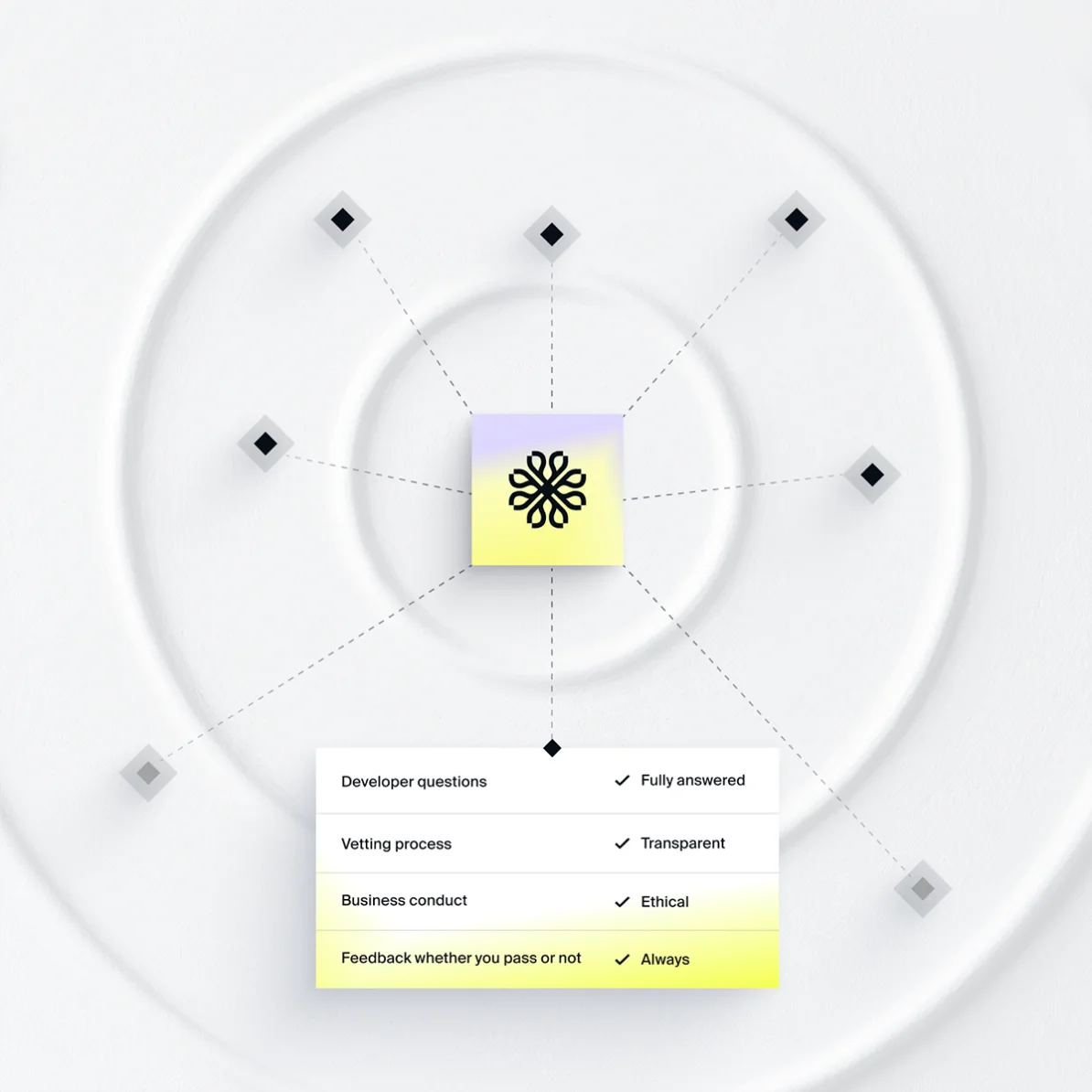
Across vetting interviews, four rejection patterns dominate for Electron candidates: 1. No production shipping experience. Candidates with hobby projects or demo-level Electron work but no production shipping (real users, code-signed builds, Apple Notarization, auto-updater in production) match into a smaller pool. Senior matches expect production-at-scale fluency. 2. Insecure-IPC thinking in a context-isolation market. Candidates defaulting to nodeIntegration: true patterns or unsafe IPC designs without contextBridge get filtered out. Senior matches expect modern security-first Electron architecture — context isolation always on, contextBridge for API exposure, validated IPC. 3. No native-module or FFI awareness. Candidates without N-API / FFI / node-addon-api experience match into a smaller pool. Many high-rate Electron projects involve performance-critical paths needing native-module integration. 4. No specialization claim. Generalist “I know Electron” profiles match slower and at lower rates. The platform pattern: pick 1–2 specializations (modern architecture / native modules / AI integration / packaging / security), ship them in production, then explicitly claim them. The fix is structural: when describing past work, lead with the architectural decision (context isolation strategy, IPC design, native-module vs JavaScript, packaging approach), the trade-off, and the measurable outcome — not the framework version used.
Modern Electron in 2026 — what's actually changing
Three structural shifts are reshaping what senior Electron looks like. Context isolation + secure IPC is the production default. What was opt-in in 2020 is the production default for new Electron builds in 2026. Senior matches expect modern security-first Electron architecture; legacy nodeIntegration: true patterns get filtered out. Local LLMs reshaped what desktop apps can do. The 2024–2026 local-LLM revolution (llama.cpp, Ollama, MLX, CUDA acceleration) made on-device AI viable for consumer-hardware desktop apps. Senior Electron engineers fluent in local-LLM integration command premium rates because the cross-stack depth required (Electron + native + GPU + LLM) is unusual. Tauri-aware Electron specialists command strategic premium. Senior Electron engineers who can advise *when* to migrate to Tauri vs *when* to stay on Electron match into the highest-rate strategic work. Most existing Electron apps aren’t migrating — but the conversation is real, and senior judgment about the trade-offs matters.
Freelance vs full-time: the real numbers
The day-to-day looks more like being a senior contractor at a desktop-app product team than a traditional freelancer.
On a typical project, you join the client’s Slack workspace on day one. Your Lemon.io success manager facilitates a 30-minute onboarding call with the engineering lead or CTO. You get access to the codebase (typically GitHub), the Electron project, build pipeline (electron-builder / electron-forge with cross-platform CI), code-signing infrastructure (Apple Developer + Windows EV cert), staging build channels, and project management tool (usually Linear, Jira, GitHub Projects, ClickUp). Most Electron developers ship their first pull request within the first week — typically a small feature addition, bug fix, or packaging improvement — then graduate to architecture work.
Communication cadence varies. Async-first product teams do brief daily check-ins via Slack and rely on PR reviews + architecture documents. Desktop-app teams in particular often run on slower release cadences than web apps (auto-updater rollouts, app-store review cycles for Mac App Store), so sprint planning has different rhythm.
Code review, architectural design discussions, performance work (memory leak diagnosis, startup-time profiling, Chromium DevTools profiling), and packaging + release work all happen the same as any senior engineering team. You’re part of the engineering core, not an outsourced resource.
Contracts run as monthly agreements with project-based scope. Average contract length: 9+ months — Electron projects compound across feature releases, release-channel maturation, and platform-specific work (Apple Silicon, Windows ARM, Linux). When a project nears completion, your success manager begins matching you with the next opportunity. Average downtime between projects: less than 2 weeks.