










Most SaaS contract work on Lemon.io comes from funded multi-tenant SaaS companies, subscription-billing platforms, enterprise-readiness teams, PLG-driven product companies, and usage-based pricing infrastructure shops in the US, EU, UK, Canada, and Australia. The sub-verticals concentrate around multi-tenant B2B SaaS at scale (per-tenant data isolation, complex permissions, audit trails, multi-tenant patterns at 1K+ tenants), subscription billing engineering (companies building on top of Stripe Billing / Chargebee / Recurly / Metronome, or internal billing systems for larger SaaS), enterprise readiness (the work that turns “consumer SaaS” into “enterprise-ready SaaS” — SSO/SAML/SCIM, SOC 2 Type 2, audit logs, data residency), PLG + activation engineering (the post-2020 product-led-growth wave matured; senior engineers fluent in PLG patterns are scarce), usage-based pricing infrastructure (the AI-era-driven shift from per-seat to usage-based pricing requires billing-grade event pipelines), and webhook + integration platforms (Zapier-style integration ecosystems, OAuth-based connector engineering, partner-app marketplaces). The fastest-growing SaaS verticals in 2026 are usage-based pricing infrastructure (the AI era drove a shift from per-seat to usage-based pricing across mature and new SaaS; the engineering challenge is real — billing-grade metering at scale), AI-integrated SaaS (existing SaaS adding LLM features — feature gating, AI-feature pricing, usage tracking for AI features specifically), modern-monolith SaaS adoption (Rails 8 + Solid Trifecta, Laravel 11+, modular Spring Boot — the post-microservices-default pattern winning back SaaS engineering hearts and minds), and enterprise-readiness modernization (mid-market SaaS hitting the enterprise-deal threshold and needing to ship SSO/SAML/SCIM + SOC 2 + audit logs to close $50K+ ARR deals).
Why senior SaaS work commands premium rates in 2026
Three structural realities keep senior SaaS engineering rates above generic product engineering. – Multi-tenant architecture decisions compound for years. The trade-off between schema-per-tenant, row-level, and database-per-tenant patterns isn’t a one-time decision — it shapes years of subsequent engineering. Per-tenant scaling, tenant isolation under load, tenant-aware caching, data-residency engineering for international expansion — all flow from the initial multi-tenant choice. Senior SaaS engineers who’ve shipped multi-tenant systems at 1K+ tenants command premium rates because the architectural judgment is hard-won. – Subscription billing complexity is non-trivial and high-stakes. Proration logic, dunning + failed-payment recovery, MRR / ARR / NRR calculation, revenue recognition (ASC 606 in US, IFRS 15 internationally), refund and credit-memo flows, usage-based metering at billing-grade accuracy — none of this is googleable in 5 minutes. Senior SaaS engineers fluent in subscription billing (especially with Stripe Billing, Chargebee, Recurly, Metronome, or internal billing systems at scale) command meaningful rate premium because the dev pool with real billing experience is small relative to demand – Enterprise readiness bridges engineering and compliance. SSO via SAML / OIDC, SCIM provisioning, SOC 2 Type 2 audit-prep engineering, audit logs at scale, role-based access via Permify / OpenFGA / Cerbos, data-residency for EU / UK / regulated industries — this work bridges engineering and compliance, and the dev pool with both depth + patience for compliance work is small. Senior SaaS engineers who can ship enterprise-readiness features and pass SOC 2 audits command premium because the work unlocks enterprise deals ($50K+ ARR per customer).
The SaaS sub-verticals that drive rates in 2026
Not all SaaS experience is valued equally. Sub-vertical specialization determines rate ceiling. Subscription Billing Infrastructure commands the highest rate band: $55–$100/hour. Demand concentrates in billing-platform companies (Stripe, Chargebee, Recurly, Maxio, Metronome) and SaaS companies building proprietary billing engines at scale. Production patterns: proration logic for plan changes, dunning + smart retry for failed payments, MRR / ARR / NRR calculation engineering, revenue recognition automation (ASC 606), refund + credit-memo flows, usage-based metering at billing-grade accuracy, multi-currency billing, tax-handling integration (Stripe Tax, Anrok, Avalara). Enterprise Readiness commands $55–$100/hour. Demand concentrates in mid-market SaaS scaling into enterprise. Production patterns: SSO via SAML 2.0 + OIDC + Okta / Azure AD integration, SCIM 2.0 user provisioning, role-based access via Permify / OpenFGA / Cerbos / internal RBAC, audit logs at scale with structured logging + query infrastructure, SOC 2 Type 2 audit-prep engineering, data-residency engineering for EU / UK / regulated industries, customer-managed encryption keys, custom-domain / white-labeling infrastructure. Multi-Tenant Architecture at Scale commands $50–$95/hour. Demand concentrates in B2B SaaS companies at 1K+ tenants. Production patterns: schema-per-tenant vs row-level vs database-per-tenant trade-offs at scale, tenant isolation under load, per-tenant scaling strategies, tenant-aware caching (Redis cluster patterns), data-residency engineering, tenant-aware observability (per-tenant metrics, tenant-aware error tracking). Usage-Based Pricing + Metering commands $55–$95/hour. Demand concentrates in usage-based-first SaaS (Metronome-style platforms, AI-feature pricing in existing SaaS, infrastructure SaaS with consumption pricing). Production patterns: event aggregation at scale, usage-data reliability + reconciliation, billing-grade event pipelines (the “at least once” vs “exactly once” delivery problem for billing events), real-time usage tracking, hybrid pricing models (per-seat + usage-based combined).
What gets you matched fastest (decision framework)
Three factors predict matching speed for SaaS Developers. 1. Sub-vertical specialization claim is the entry condition. A developer who lists “SaaS, TypeScript, hobby projects” matches into significantly fewer high-rate engagements than one who lists “Senior multi-tenant SaaS engineer — schema-per-tenant patterns at 5K+ tenants, Stripe Billing integration with proration + dunning, SOC 2 audit-prep engineering at previous role.” Sub-vertical clarity is what serious SaaS clients filter on. 2. Specialization claim compounds rate ceilings. Strong Senior tier rates ($62–$110/hour) cluster in roles requiring at least one of: multi-tenant architecture at scale, subscription billing infrastructure, enterprise readiness (SSO/SAML/SCIM, SOC 2), PLG + activation engineering, usage-based pricing, or webhook + integration platforms. Pick 1–2 specializations, ship them in production with measurable outcomes, then explicitly claim them. 3. Billing-flow correctness reasoning is the senior bar. SaaS candidates who can build CRUD endpoints but freeze on proration logic, dunning state machines, idempotency for webhooks, or revenue recognition concepts miss premium-tier roles. Senior SaaS work demands billing-flow architectural thinking — the practice challenge tests this directly.
What "$80/hour SaaS work" actually looks like
Concrete examples from real SaaS contract patterns at the upper rate band: — $95/hr — Senior SaaS Engineer (Multi-tenant + billing + enterprise readiness combined) at a Series B B2B SaaS, owning multi-tenant architecture + billing infrastructure modernization + SOC 2 audit-prep engineering as a combined specialist role. — $85/hr — Senior SaaS Engineer (Subscription billing infrastructure) at a Funded billing platform, building proration + dunning + revenue-recognition automation on top of Stripe Billing. — $75/hr — Senior SaaS Engineer (Enterprise readiness — SSO/SAML/SCIM) at a Funded mid-market SaaS, shipping the SSO + SCIM + audit-log work needed to unlock enterprise deals. — $65/hr — Senior SaaS Engineer (Usage-based pricing + metering) at a Funded AI-integrated SaaS, building usage-tracking infrastructure for AI feature pricing. — $55/hr — Senior SaaS Engineer (Multi-tenant Django architecture) at a Series A B2B SaaS, designing schema-per-tenant patterns and tenant-aware caching. Common pattern: production SaaS shipping at multi-tenant scale, specialization in a SaaS sub-vertical (multi-tenant / billing / enterprise readiness / usage-based pricing / PLG / integrations), and small-to-mid teams where senior judgment shapes architecture. Generic “build a SaaS” maintenance work clusters in the $25–$40/hour band — but is rare on Lemon.io because we screen for substantive SaaS engineering.
Why SaaS devs fail Lemon.io vetting (and how to pass)
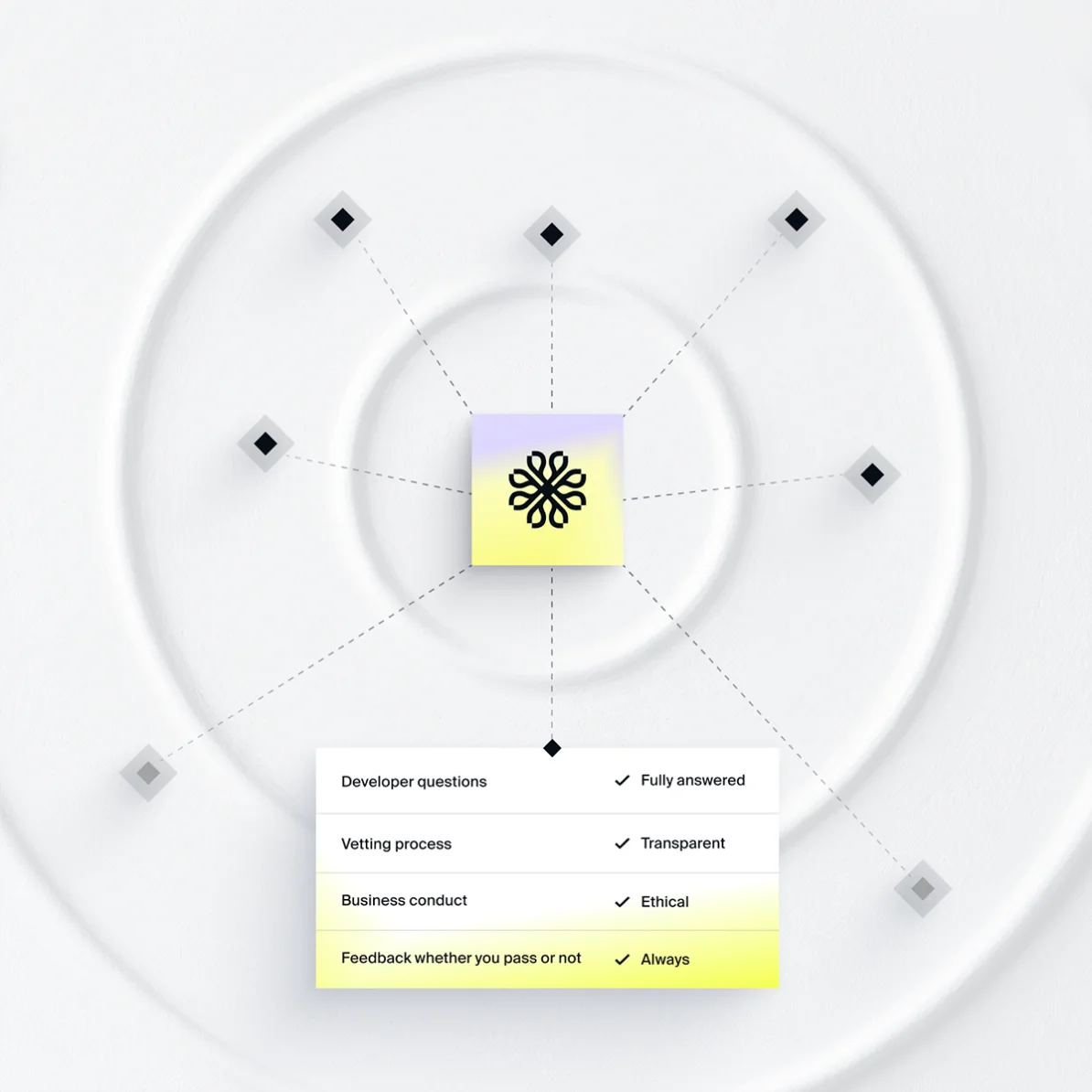
Across vetting interviews, four rejection patterns dominate for SaaS candidates: 1. No multi-tenant reasoning. Candidates who can build CRUD endpoints but freeze on multi-tenant trade-offs (schema-per-tenant vs row-level vs database-per-tenant), tenant isolation, or per-tenant scaling get filtered out. Senior SaaS matches expect multi-tenant architectural thinking. 2. No subscription billing depth. Candidates without production billing experience (proration, dunning, MRR / ARR calculation, revenue recognition basics) match into a smaller pool. The dev pool with real billing experience is small, and senior SaaS clients value billing fluency. 3. No enterprise-readiness exposure. Candidates who haven’t shipped SSO/SAML/SCIM, audit logs at scale, or SOC 2-relevant engineering match into a smaller pool. Mid-market and enterprise SaaS clients specifically filter for this experience. 4. No sub-vertical specialization claim. Generalist “I built a SaaS” profiles match slower than specialists. The platform pattern: pick 1–2 sub-verticals (multi-tenant / billing / enterprise readiness / usage-based pricing / PLG / integrations), ship them in production with measurable outcomes, then explicitly claim them. The fix is structural: when describing past work, lead with the SaaS-architectural decision (multi-tenant pattern choice, billing-flow architecture, enterprise-readiness boundary, PLG activation strategy), the trade-off, and the measurable business outcome (deal sizes unlocked, churn reduced, billing accuracy improved) — not the language list.
Modern SaaS in 2026 — what's actually changing
Usage-based pricing displaced per-seat for many AI-era SaaS builds. What was per-seat-dominant in 2020 shifted toward usage-based or hybrid pricing through 2024–2026, driven by AI-feature pricing models. Senior SaaS engineers fluent in usage-based pricing infrastructure (billing-grade metering, event aggregation at scale, real-time usage tracking) match into the modernization-tier work. Modern-monolith SaaS is back. What was framed as “you need microservices for SaaS” in 2020 reversed by 2026 — Rails 8 + Solid Trifecta, modular Spring Boot, NestJS modular monolith approaches, Laravel 11+ won back significant SaaS engineering hearts and minds. The post-microservices-default architectural pattern is real, and senior SaaS engineers with modern-monolith architectural reasoning command premium. Enterprise readiness became a checkbox enterprise dealmakers demand. What was “nice to have” in 2020 became “table stakes for $50K+ ARR enterprise deals” by 2026. SSO/SAML/SCIM, SOC 2 Type 2, audit logs at scale, role-based access — senior SaaS engineers who can ship this efficiently command premium because the work directly unlocks revenue.
Freelance vs full-time: the real numbers
The day-to-day looks more like being a senior engineer at a product team than a traditional freelancer.
On a typical project, you join the client’s Slack workspace on day one. Your Lemon.io success manager facilitates a 30-minute onboarding call with the engineering lead or CTO. You get access to the codebase (typically GitHub), the SaaS monorepo or service, deploy pipeline, staging environments, billing-platform admin access (Stripe Billing / Chargebee / Recurly dashboard if relevant), SSO/SAML test environments (if enterprise-readiness work), observability infrastructure, and project management tool (usually Linear, Jira, GitHub Projects, ClickUp). Most SaaS engineers ship their first pull request within the first week — typically a small feature addition, billing-flow improvement, or enterprise-readiness fix — then graduate to architecture work.
Communication cadence varies. Async-first product teams do brief daily check-ins via Slack and rely on PR reviews and architecture documents. Mid-market and enterprise SaaS teams shipping SSO/SAML/SCIM or SOC 2 audit-prep work tend toward sync-heavier cadences (compliance reviews, audit-prep checkpoints, security reviews). PLG-focused SaaS teams skew async-first.
Code review, architectural design discussions, billing-flow verification, enterprise-readiness reviews, and deployment all happen the same as any senior SaaS engineering team. You’re part of the engineering core, not an outsourced resource.
Contracts run as monthly agreements with project-based scope. Average contract length: 9+ months — SaaS projects compound across feature releases, billing-infrastructure modernization, enterprise-readiness rollouts, and multi-tenant scaling work. When a project nears completion, your success manager begins matching you with the next opportunity. Average downtime between projects: less than 2 weeks.