



Over the past decade, the software engineering landscape has undergone a massive shift.
Freelance web development was once seen primarily as a solution for simple, execution-level tasks with rigid, narrow scopes — largely because remote contract work rarely appealed to senior talent. Today, that dynamic is inverted. The independent specialist executing your core architecture or leading your web design overhaul could easily be a seasoned freelancer. Along with that, platforms that were focused on short-term freelance gigs haven’t gone anywhere.
Out of the vast landscape of 1K sites offering you freelance software engineers, we have narrowed down the 10+ platforms worth your attention.
What are freelance websites?
According to the World Bank’s recent statistics, an estimated 132.5M people worldwide rely on online platforms as their primary source of income — with roughly 34% of them working in software development.
To access this global talent pool, you need to navigate a marketplace ecosystem comprising over 800 active freelance platforms — with different rules, vetting approaches, and pricing structures. So here are two key categories of players you should know:
Open freelance marketplaces
Open job networks offer maximum candidate reach and complete control over pricing. Platforms like Upwork or Fiverr host millions of global contractors. On some of them, freelance web developers publish predefined project packages for fixed-scope items. The rest support open-ended hourly contracts. Rates across open marketplaces span widely from $15 to $100+/hour. However, vetting responsibilities rest entirely on you.
AI-driven hiring platforms
AI-powered platforms optimize developer hiring by replacing manual profile filtering with automated candidate evaluation and semantic search.
Managed networks like Turing use algorithmic coding tests to match companies directly with pre-vetted engineers from a closed talent pool. Alternatively, open-web search engines like Juicebox leverage large language models to scan hundreds of millions of public profiles, automatically surfacing and reaching out to specialized developers.
Pre-vetted & matching networks
When rapid deployment and guaranteed technical quality are critical, pre-vetted matching platforms handle candidate sourcing, vetting, and even paperwork.
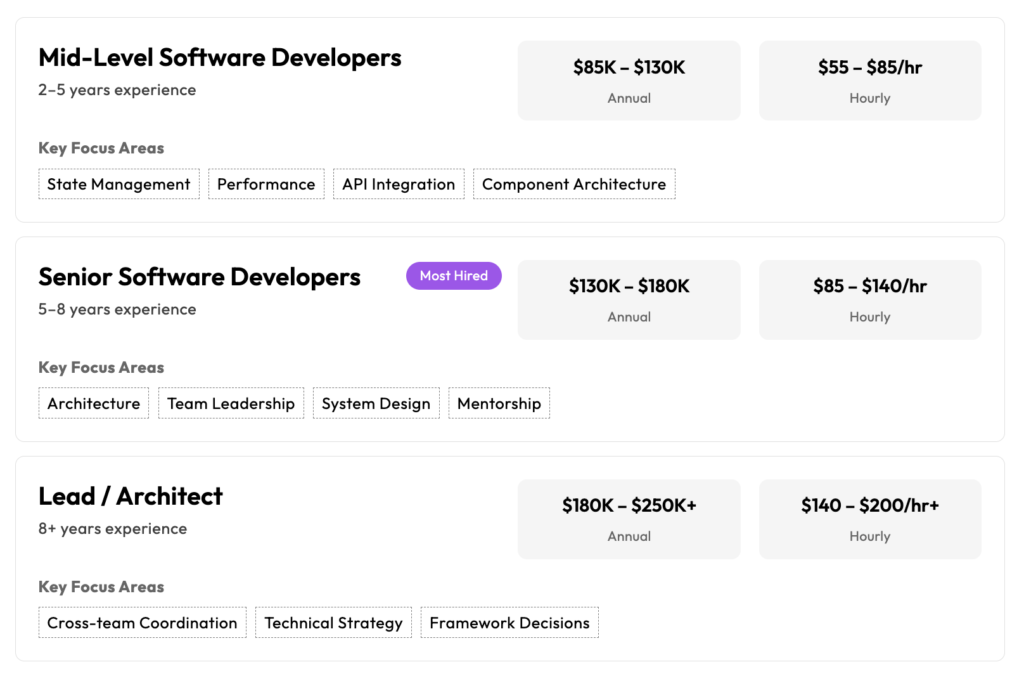
- Enterprise networks. Toptal screens for top-tier talent, commanding client rates between $90 and $220+/hour. Gun.io connects organizations with senior US-based software talent at similar premium benchmarks.
- Startup-oriented platforms. Lemon.io focuses on fast-scaling companies, matching them with vetted senior web developers across 100+ tech stacks in under 48 hours. With a price tag of $55–$120/hr.
Selecting the optimal platform requires balancing internal vetting bandwidth against speed and budget. Open marketplaces suit smaller tasks and budgets; AI-powered marketplaces offer high speed and minimal guarantees; and pre-vetted platforms provide verified technical talent for high-velocity engineering initiatives.
10+ platforms to hire a web developer at a glance
| Platform | Type | Candidate volume | Vetting | Specialization | Rates |
|---|---|---|---|---|---|
| Lemon.io | Pre-vetted marketplace | 1,5K+ | ✅ | Software development | $55–$120/hr |
| Toptal | Pre-vetted marketplace | 30K | ✅ | Software development | $90–$220+/hr; $500 deposit and $79/mo fee |
| Upwork | Open bidding marketplace | ~18M | ❌ | ⚠️General: development, admin support, design, marketing | $29–100/hr |
| Fiverr | Open gig marketplace | ~380K | ❌ | ⚠️General: design, writing, voiceover, AI prompt work | Gig-priced; equivalent to $25–65/hr |
| Freelancer | Open bidding marketplace | 87M+ | ⚠️ Reputation-based | ⚠️ General: development, design, writing, marketing | $15–130/hr; client fee $3 |
| Gun.io | Pre-vetted marketplace | 25K | ✅ | Software engineering; US-based | $100–220/hr+ |
| PeoplePerHour | Open marketplace | 2.4M | ⚠️ Application review | ⚠️ General: design, development, writing, marketing, SEO | $20–100/hr |
| Turing | Pre-vetted marketplace (AI-driven) | 3M | ✅ | Software development | $100–$200/hr |
| Contra | Open marketplace | 1.5M | ❌ | ⚠️ General: design, engineering, marketing, writing | $25–$75/hr |
| Freelancermap | Job-board marketplace | 300K+ | ❌ | SAP, DevOps, project management, software development | $108–112/hr |
| Useme | Open marketplace | 170K+ | ❌ | Software development | $25–120/hr |
| Juicebox* _ *not a freelance platform | AI-powered recruiting search engine | 800M+ | ❌ | General; particularly popular for tech talent | Platform fee of ~$100; from $10/hr |
#1 Lemon.io
Best for: startups and SMB for to launch or scale fast with extra senior developers added to the core team
Price: low to mid-market
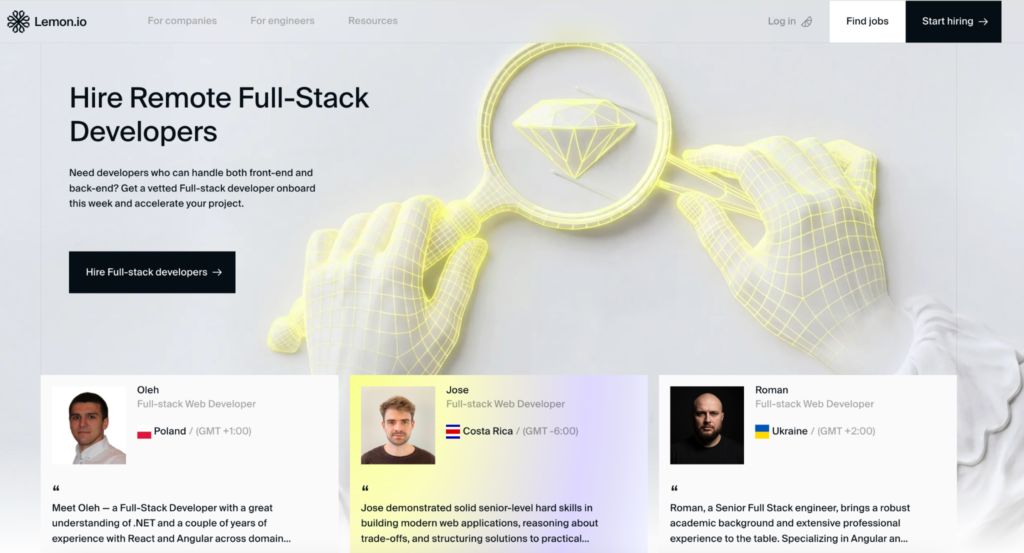
Lemon.io is a curated talent marketplace connecting early-stage startups with pre-screened freelance web developers and engineers. Instead of browsing traditional freelance websites, clients submit their stack requirements, and Lemon.io manually matches them with pre-vetted candidates within 48 hours.
The platform rigorously screens applicants using technical coding tests and live code reviews, meaning clients do not need to vet talent themselves.
Lemon.io focuses heavily on essential web stacks — it is particularly good at finding skilled AI engineers, front-end developers, back-end development experts, and full-stack developers fluent in JavaScript, React.js, Vue.js, Node.js, Python, and Django. The developers the marketplace offers are primarily located across Central/Eastern Europe and Latin America.
The platform’s strengths include rapid matching, strong English proficiency, and continuous project management oversight. This platform best suits seed and Series A startups that need to hire web developers or a dedicated software engineer quickly, without conducting lengthy internal technical interviews. Contracts and NDAs are also handled by Lemon.io.
#2 Upwork
Best for: accessing the world’s largest talent pool across every possible web technology, budget level, and geographic region
Price: low to enterprise-level
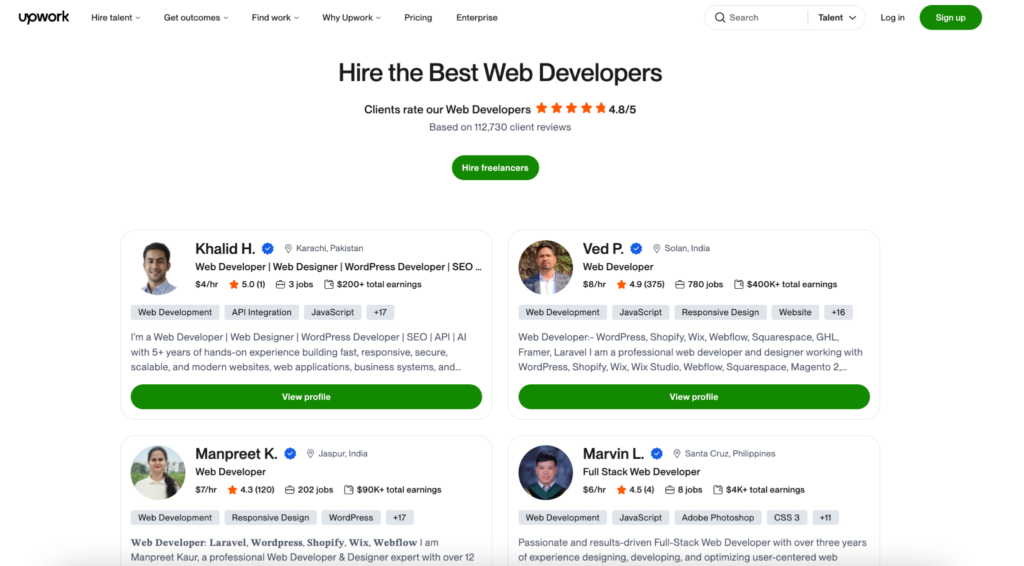
Upwork is the world’s largest open talent marketplace, offering access to millions of global freelancers for any scale of website development. However, the hiring flow is fully client-managed: founders or hiring managers post web developer jobs, review incoming proposals, check candidate GitHub profiles, and initiate hourly or fixed-price contracts.
Positive thing: Upwork supports every technology stack imaginable, making it easy to contract specialists for web applications, custom user interfaces, and complex system architectures. For instance, startups can source Shopify developers, a dedicated WordPress developer, or experts in HTML, CSS, HTML5, PHP, MySQL, PostgreSQL, and AWS.
The main platform is self-vetted, requiring you to evaluate work samples and test skills independently, though curated options like Upwork Enterprise offer manual vetting. Normally, this can take weeks or even months, with no guarantee of finding a perfectly skilled candidate.
Talent spans all global regions, including North America, Europe, Asia, and LATAM. Upwork’s primary strengths are vast talent variety, flexible pricing, and integrated tracking tools. Potential disadvantages include a high volume of low-quality proposals, time-intensive candidate screening, and client payment processing fees.
If Upwork feels like too much vetting effort, check out this article to find a platform that suits you better: Best Upwork Alternatives in 2026.
#3 Toptal
Best for: lond-term dedicated developers hiring for enterprise-scale projects
Price: low to enterprise-level
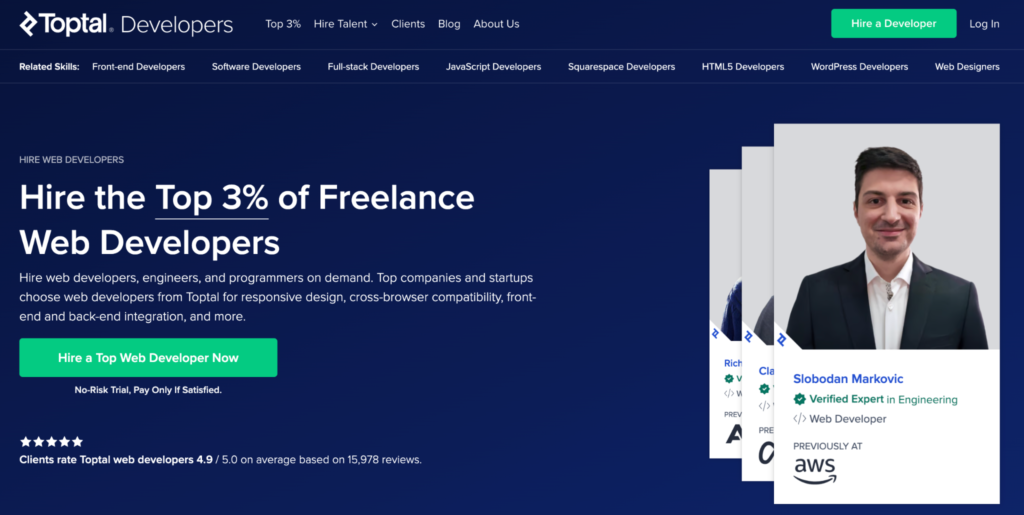
Toptal is an exclusive, high-end freelance talent network. It includes software developers, designers, finance experts, and product managers.
The hiring workflow is concierge-led: clients submit their project specifications and conduct an intake call with a Toptal matching specialist who manually selects pre-screened candidates within days. On its side, Toptal enforces an intensive vetting process — including English fluency checks, timed algorithmic coding challenges, live technical interviews with senior engineers, and a multi-week test project.
The platform specializes in enterprise-grade software development, high-scale backend development, custom full-stack web applications, and cloud engineering. Its talent is distributed globally, with a heavy concentration in North and Latin America.
Toptal’s key strengths include candidate quality and comparatively fast time-to-hire. What clients may not like is the premium cost structure, the required initial deposit, the recurring fees, and the limited fit for small, low-budget gigs.
Toptal seems a bit too expensive and slow for your project? Explore leading Toptal alternatives.
#4 Fiverr
Best for: buying well-defined, modular web development deliverables, fast bug fixes, and turnkey scope-based micro-projects
Price: low
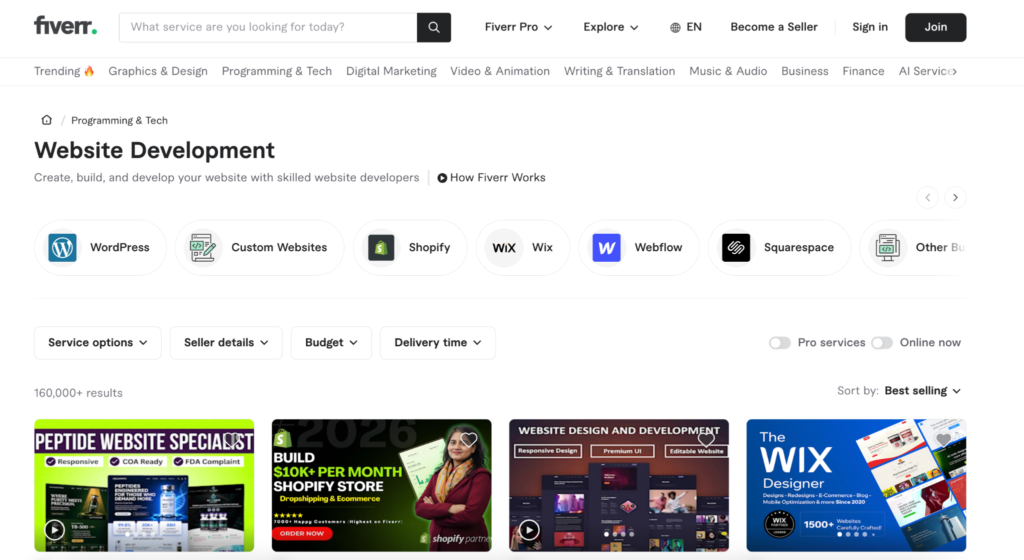
Fiverr is an e-commerce-style marketplace centered on fixed-price service packages (Gigs) rather than project bidding.
Clients search the platform for precise deliverables — such as creating a high-converting landing page, setting up a WooCommerce store, or developing custom Figma designs into functional code. Instead of opening a job post, you buy structured gig tiers or request custom orders. Standard Fiverr listings rely on self-vetting via public ratings, seller levels, and client reviews. Talent is globally distributed across North America, Europe, Asia, and Latin America.
In a nutshell, Fiverr hosts a broad spectrum of talent, ranging from graphic design and UX design specialists to functional web developers skilled in Webflow, Squarespace, Shopify, Magento, and JavaScript. So its wide candidate pool can go shellow is you are working with a rare tech stack.
What clients may dislike is that standard gigs are poorly suited for complex, iterative software development or long-term team integration. Fiverr best suits tech startups needing immediate, self-contained assets—such as converting a website design into code or fixing a database bug—without ongoing management.
More insights on this platform: Fiverr Alternatives for Hiring Developers [2026].
#5 Freelancer
Best for: sourcing budget-friendly global web developers through competitive contest models and broad open-bid project postings
Price: low to mid-market
Freelancer.com is a massive global bidding marketplace for employers seeking remote contractors from lower-price-rate regions.
To hire a programmer, a client posts a project specifying their budget and receives competitive bids. Then you evaluate proposals based on platform feedback scores, past work portfolios, and direct chat interviews before awarding the job.
The platform also features a unique “Contests” model, in which developers submit completed assets — such as a custom landing page layout or a website design template — for a prize.
In general, the site hosts freelancers across every field, from digital marketing specialists to full-stack engineers experienced in HTML5, CSS, PHP, Laravel, MySQL, and modern frameworks. However, the main marketplace is self-vetted, so it takes time to check the real expertise of candidates you like. Developers are heavily concentrated in regions like India, Pakistan, Eastern Europe, and Southeast Asia.
Strengths include highly competitive pricing. Drawbacks: proposal spam, variable work quality, and frequent upgrade fees. Detailed Freelancer review read here.
#6 Gun.io
Best for: securing battle-tested senior software engineers and technical leads from the US with human-driven vetting
Price: enterprise-level
Gun.io is an exclusive network focused on matching companies with senior-level web developers and system architects. The platform provides a concierge service: clients discuss their engineering needs with a technical specialist, and Gun.io’s staff manually matches them with vetted candidates within weeks.
Gun.io conducts internal screening — including algorithmic coding exams, technical background checks, and live peer code assessments — eliminating the need for client vetting. The platform specializes in complex, high-performance software development, backend engineering, and modern web architectures using Node.js, React.js, Python, Angular, Go, and AWS.
Talent is concentrated in North America, Western Europe, and select LATAM regions.
The main disadvantage of Gun.io is its premium pricing, which makes it a choice for well-funded tech startups that require senior technical leads and mission-critical application builds.
Want to find a platform like Gun.io but cheaper and with a deeper talent pool? Check out this article: 7 Gun.io Alternatives in 2026 to Hire Vetted Software Developers.
#7 PeoplePerHour
Best for: hiring regional European and UK-based freelance web developers for flexible hourly work or fixed-price packages
Price: low to mid market
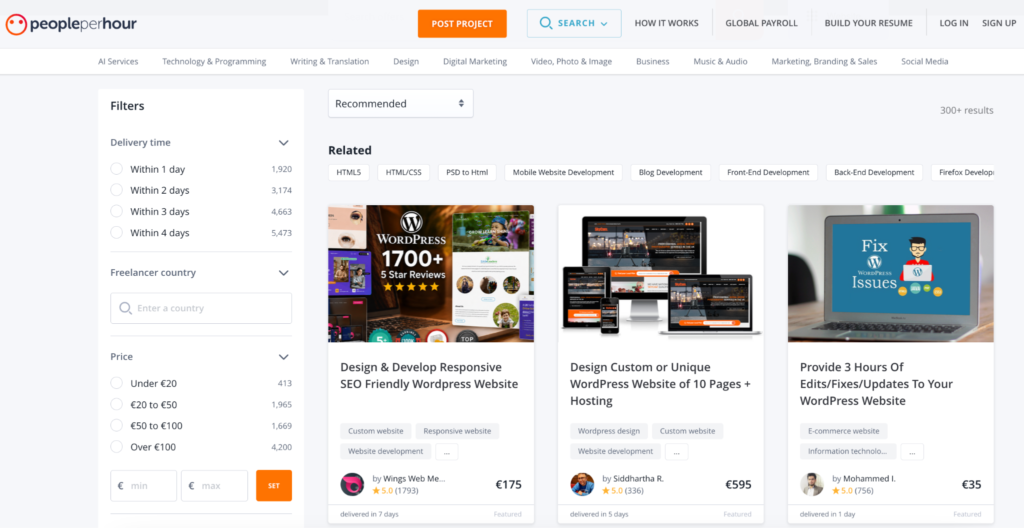
PeoplePerHour (PPH) is a UK-founded platform that combines an open marketplace for project bidding with fixed-price service packages called Hourlies.
To hire a freelancer, you can post a project for free to collect proposals or purchase fixed-price packages for tasks like custom plugin setup, ux design audits, or responsive web builds. Note that PPH uses an AI system to match incoming job posts with relevant freelancers.
The network covers core web technology areas, including web design, front-end developers, WordPress developer services, Laravel, PHP, and front-end JavaScript frameworks.
The general marketplace is self-vetted, relying on star reviews, client feedback, and portfolios; clients must run their own coding evaluations and technical interviews.
Key benefits include an intuitive interface, strong coverage across European time zones, and payment protection through an escrow system. Downsides: less granular search filters for complex engineering roles and lower overall candidate volume than larger platforms.
#8 Turing
Best for: scaling remote engineering teams using an AI-driven talent cloud that vets developers fast
Price: enterprise-level
Turing.com is an AI-powered talent platform engineered to help companies hire and manage full-time, remote software engineer talent. How it works: you submit your technical specifications, required stack, and team constraints, and Turing’s automated Talent Cloud matches them with pre-vetted engineers.
Turing automates candidate vetting through technical tests, algorithmic challenges, system design assessments, and soft-skill evaluations. The network specializes in complex software development, backend development, and full-stack engineering across modern frameworks such as React.js, Node.js, Angular, Python, Next.js, and Vue.js, as well as cloud architecture on AWS.
The talent base spans over 100 countries across Latin America, Eastern Europe, Asia, and Africa. The key strengths include time-zone alignment and fast matching, but the drawbacks are enterprise rates and a focus primarily on full-time (40 hrs/week) commitments.
Check out the fresh overview of Turing alternatives.
#9 Contra
Best for: discovering web developers and agency talent through portfolio-first professional networking
Price: mid-market
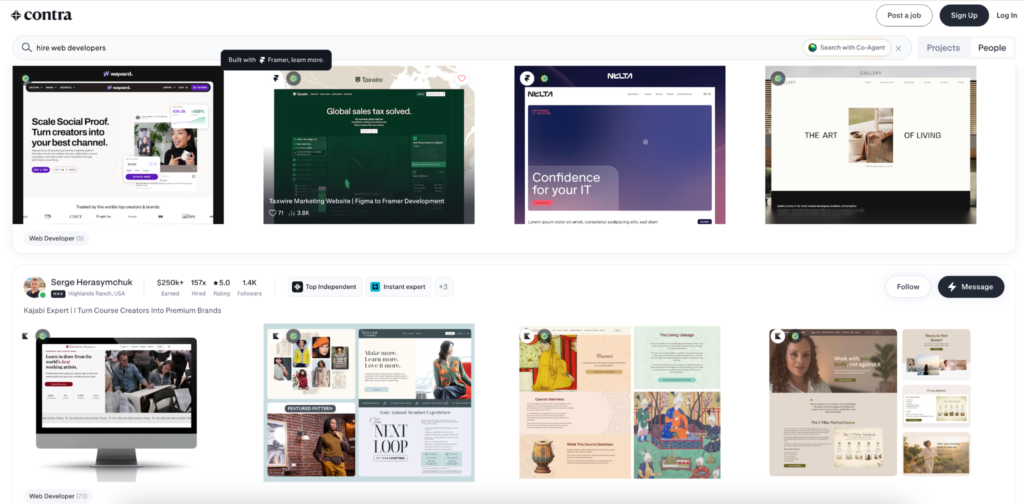
Contra is a commission-free professional network designed around portfolio-first talent discovery and transparent freelance hiring. Founders can source freelance web developers by posting project opportunities, searching curated talent pools, or reviewing interactive developer portfolios showcasing real product builds.
Once a candidate is chosen, contract management, milestone tracking, and payments are handled within the platform.
A major advantage of Contra is that it charges zero commission fees to freelancers, making it popular among high-caliber independent talent.
The platform heavily emphasizes modern tech stacks and design tools, featuring experts in Figma, Webflow, React.js, Next.js, Tailwind, and full-stack JavaScript. Vetting is portfolio-based and self-conducted by the client, though Contra offers identity-verification badges and Contra Pro designations for established creators.
Contra’s major advantages are a sleek user interface and transparent project workflows. What clients may miss is the need for deep algorithmic code vetting.
#10 Freelancermap
Best for: sourcing highly specialized IT contractors and web engineering experts across Europe
Price: mid-market to enterprise-level
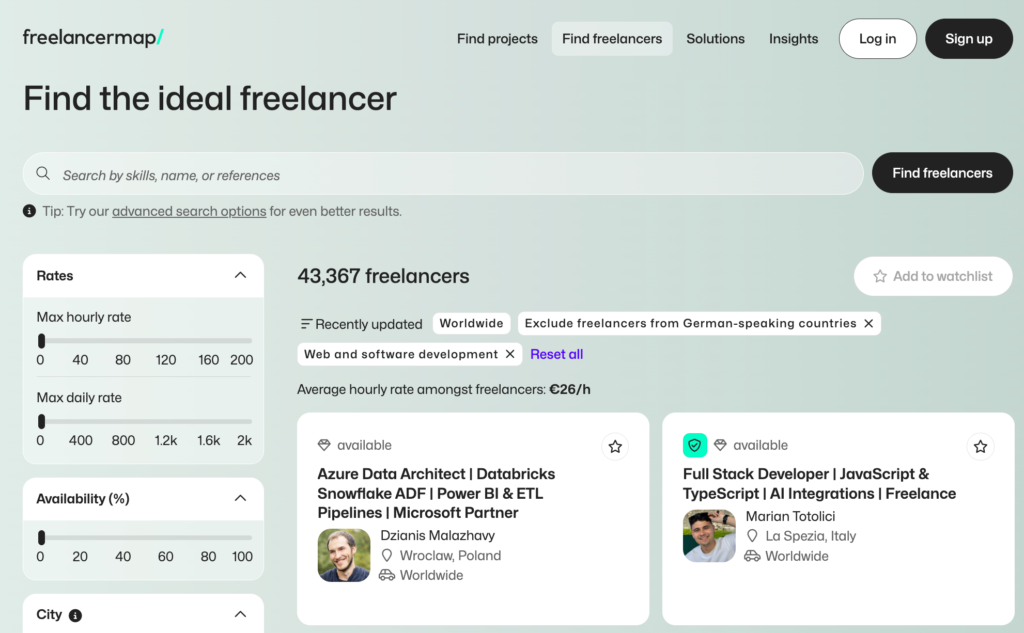
Freelancermap is a specialized European contract board and talent marketplace focused on IT consulting, software engineering, and infrastructure.
Employers hire by posting contract roles or directly querying the platform’s database using detailed technical filters. Candidates submit applications directly to project postings. This allows clients to negotiate contracts without percentage-based markup fees on standard tiers.
The platform focuses on enterprise-grade software development, database architecture, and complex infrastructure using Java, C#, Python, PHP, Angular, PostgreSQL, and MySQL. The talent base is concentrated in German-speaking countries (Germany, Austria, Switzerland) and wider Europe.
Freelancermap is a self-vetting platform where clients review developer CVs, certifications, and past industry projects to run their own technical evaluations. Strengths include direct communication without platform intermediary fees, access to senior European technical contractors, and transparent direct-hire options.
A drawback is higher average hourly rates typical of European IT markets. It best suits tech startups operating in European time zones.
#11 Useme
Best for: legally hiring and paying independent global web developers safely via automated contract invoicing
Price: low to mid-market
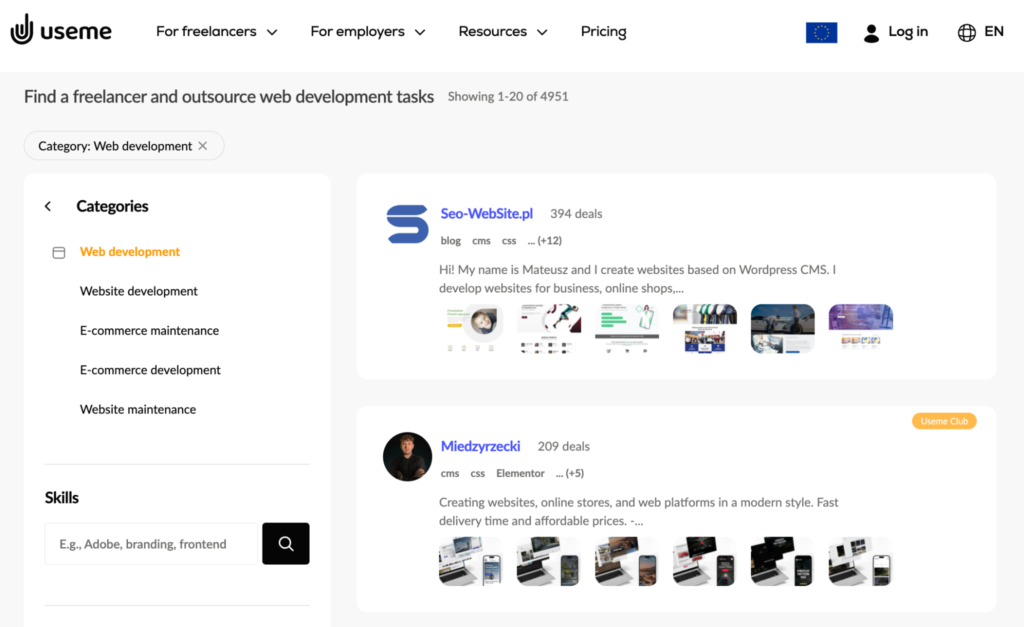
Useme is a hybrid platform functioning as both a freelance job board and an Employer of Record contract-invoicing service for independent talent.
Startup founders and hiring managers post job opportunities to collect bids from freelance web developers or invite external talent they met elsewhere to complete transactions legally through Useme. Upon hiring, Useme acts as the intermediary vendor, issuing official tax invoices to the startup while managing tax compliance, work contracts, and copyright transfers with the developer via escrow.
The platform supports general website development, from simple graphic design and HTML markup to backend development and framework integration. It operates on a self-vetting model; clients assess candidate portfolios, proposals, and work samples directly. The freelancer network is rooted in Central and Eastern Europe.
Useme’s strengths are its legal invoicing setup, automatic intellectual copyright transfers, and minimal admin fees when contracting international talent without setting up local entities. Drawbacks: a smaller pool of pre-vetted engineers and fewer basic project management tools than those offered by full-scale talent marketplaces.
What is the best freelance website for web developers?
Selecting the right hiring platform requires aligning your project’s specific constraints — such as budget, timeline, scale, and technical complexity — with the platform model best structured to deliver:
For budget-limited projects
Go to Upwork, Fiverr, Freelancer, or Useme. Open marketplaces offer access to massive global talent pools at very competitive rates. These platforms work best for straightforward tasks and basic web builds. The trade-off is the vetting you need to handle.
For urgent cases
Choose Turing, Juicebox, or Fiverr (for modular micro-tasks). When you need immediate matching without manual sourcing, AI-driven and large-pool platforms help. Trade-off here: while turnaround speed is high, matching works best when technical requirements are clearly defined.
For long-term, complex enterprise projects
Your target platforms are Toptal or Gun.io (for the US). For mission-critical infrastructure, cloud architecture, or enterprise-scale software development, enterprise-oriented pre-vetted networks provide senior-level engineering talent and technical leads. Trade-off — pricing at the top end of the market and long-term contract commitments.
Startup launch or product scaling (speed + quality + value ratio)
Hire with Lemon.io. Early-stage projects or startups scaling their core engineering teams need rapid deployment without enterprise price tags. Lemon.io delivers the ideal balance: hand-matched, pre-vetted senior developers across 100+ stacks delivered within 48 hours at mid-market rates ($55–$120/hr).
Key advantage — Lemon.io removes the vetting burden and handles contracts, NDAs, and project oversight. As a result, it often takes days between your initial hiring request and actual work with a web developer.