


Turing started as a developer marketplace but has expanded significantly into serving frontier AI labs. Today, the company provides PhD-level experts for STEM reasoning and reinforcement learning with human feedback (RLHF) used to train frontier AI models.
That shift has also changed how some clients and developers perceive the platform. Reviews increasingly describe an automated experience with limited access to real human support. And while Turing still promotes software engineering services alongside AI model training, its recent direction suggests that AI labs have become a much bigger focus.
This review looks beyond the positioning on Turing’s website. We’ll examine how the platform compares with credible alternatives for hiring technical talent, where it performs well, and what users complain about.
Toptal: Premium devs at a premium price tag
Toptal is a premium talent marketplace with access to the top 3% of pre-vetted experts. Their network includes 30K+ professionals, spanning engineers, designers, QA experts, project managers, finance, and marketing specialists. On top of having a pool of pre-vetted professionals, they also offer sourcing services based on specialized client needs.
What you get: Battle-tested hiring and vetting process, enterprise credibility, and a well-structured recruiting funnel.
On the plus side: For a lot of buyers, the big win is not just quality, but “the overall experience” feeling like someone put a turbo on your hiring sprint. As proven by the customer review below.
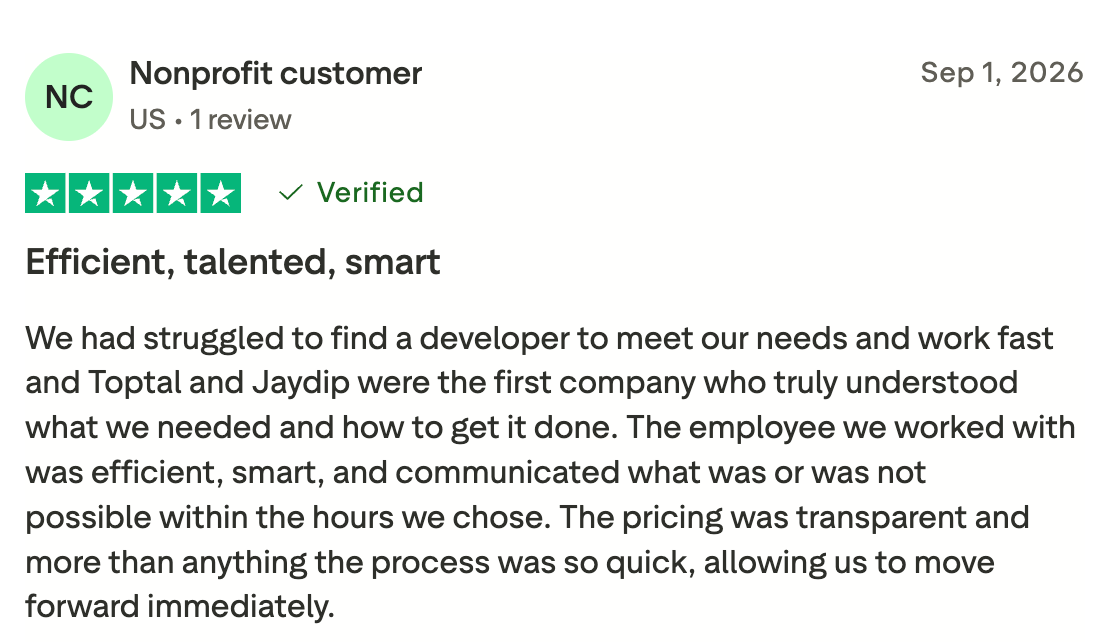
Critique: The vetting process is a mixed bag. Yes, it weeds out weak candidates, but several reviews note that it tends to favor juniors and mid-levels who can pass interviews over veteran devs who can untangle gnarlier problems. Some clients also complain about hidden pricing tags. Others claim that Toptal’s team seems overconfident at times and doesn’t take into consideration feedback from clients who are more knowledgeable in their domain.
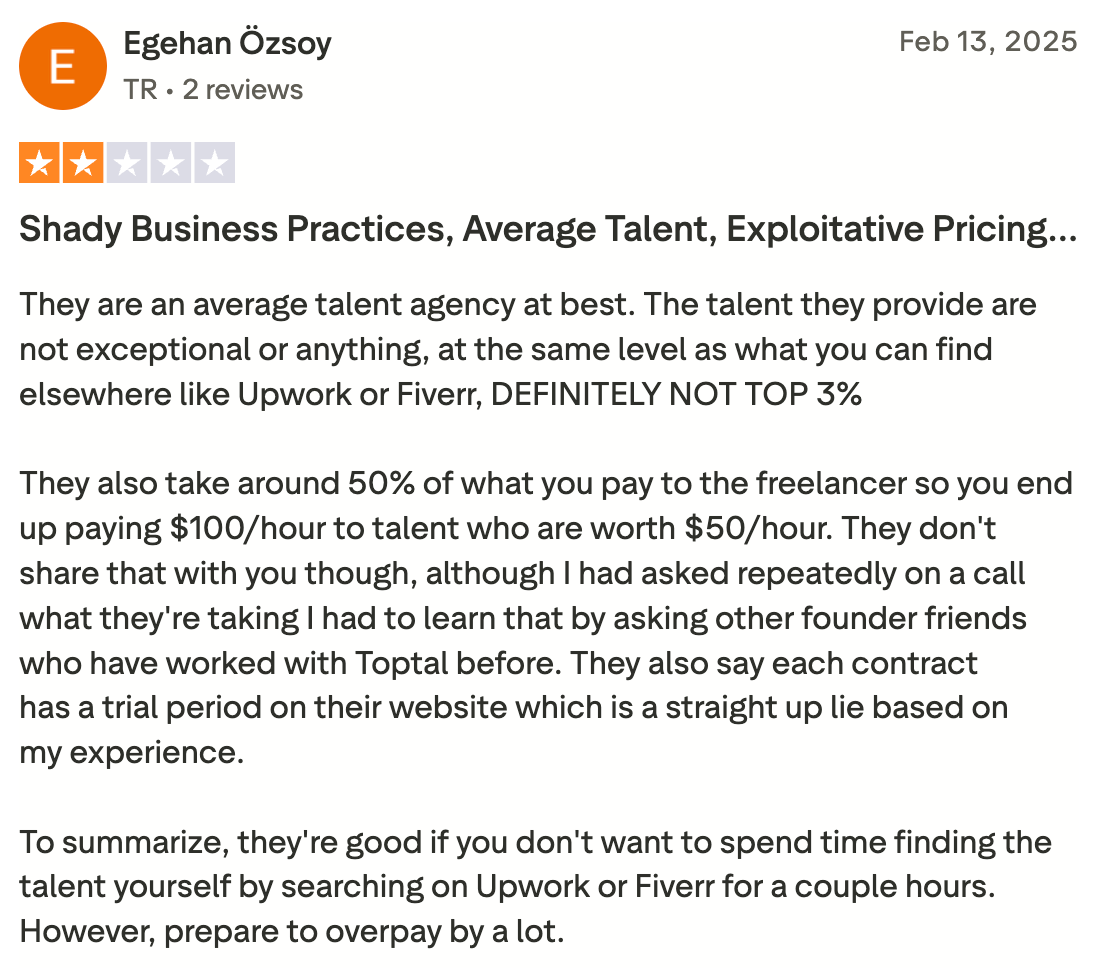
Best for: Overall, Toptal’s for big budgets, big contracts, and buyers who want a velvet rope—just be prepared to pay for every velvet fiber.
Lemon.io: Pre-vetted senior devs you can hire in a day
Our database might be smaller than Turing’s, but the quality is at the highest level. We vet senior specialists against technical and startup-oriented soft skills. In order to get access to our community, they need to prove their seniority and commercial experience. We care about AI literacy, but only to the point where human judgement won’t get lost amid all the prompting.
What you get: Direct, honest matching—no sugarcoating if candidates can’t fill your niche request, no mystery fees, no endless “fast-track” interviews just to end up with someone learning React on the fly. Most matches happen in 24 or 48 business hours, and if your needs line up with our pool, you’ll get a dev who’s already passed a real code review.
Buyers say it best: Trustpilot reviews are full of comments about Lemon’s “shockingly fast” dev sourcing services.
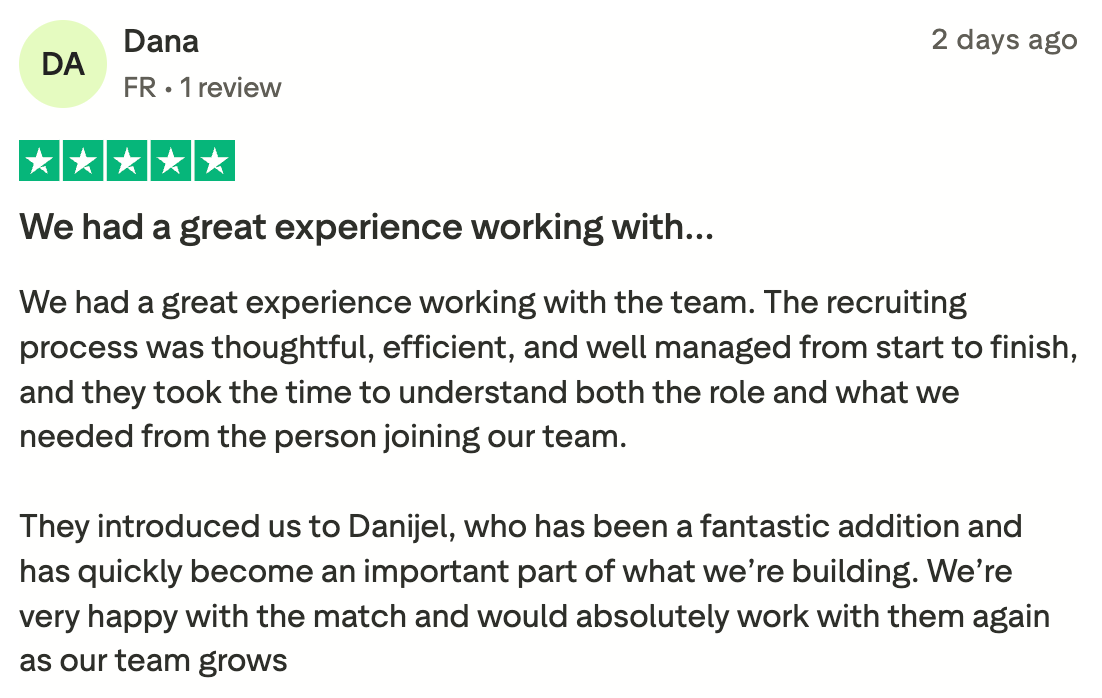
Many reviews praise Lemon.io’s “responsive and genuinely helpful support,” as well as the “no-nonsense matching.”
On the downside? Lemon.io doesn’t try to be for everyone, and that’s the point. We don’t source subpar coders who don’t meet our high vetting requirements.
HiringCafe: Skip the marketplace and search the source
HiringCafe isn’t a talent platform, a staff augmentation provider, or one of the open marketplaces where you scroll through freelancer profiles. Instead, it works as an AI-powered job search engine that aggregates openings from company career pages. The homepage indexes more than 3.8 million jobs from 133K+ companies.
What you get: A very large searchable job index with unusually granular filters for salary, experience, work environment, company stage, benefits, industry, and other criteria. HiringCafe uses AI to collect positions directly from employer websites, which helps it surface opportunities that may never make it onto the biggest job boards.
For teams hiring developers internally, however, there is an important distinction: HiringCafe helps candidates discover you. It does not pre-vet engineers, build a shortlist, run interviews, manage an EOR, or handle onboarding and replacements.
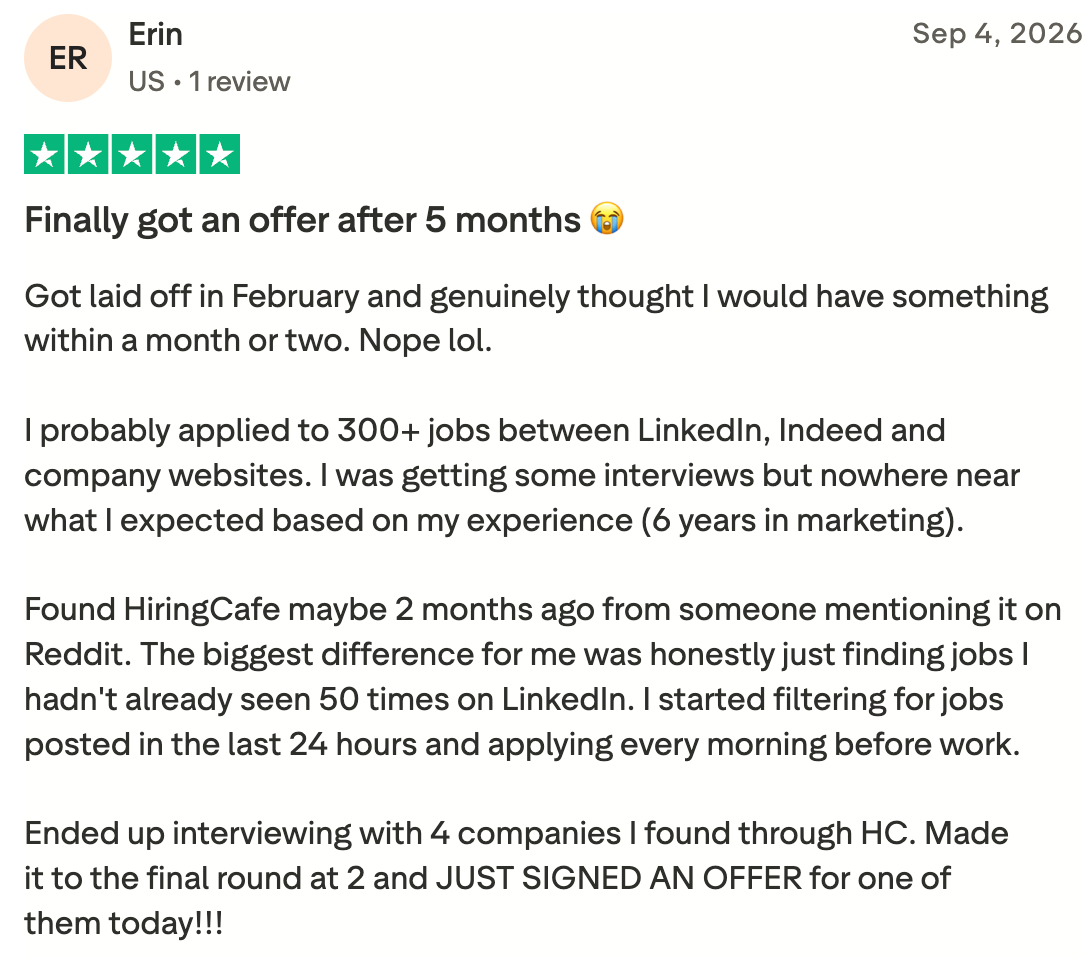
What users say: There is not enough Trustpilot data to draw a meaningful conclusion yet. HiringCafe has a 3.8 TrustScore, but that is based on only two reviews. One recent reviewer said they discovered the platform after months of applying through LinkedIn, Indeed, and company websites, and eventually received an offer.
Critique: The huge index solves discovery better than selection. AI aggregation can also create overlapping or repeated listings, something we noted in our own review. And if reducing time-to-hire is your reason for looking beyond Turing, HiringCafe still leaves screening, technical assessment, interviews, and closing entirely with your team.
Best for: Companies comfortable running their own recruiting process and candidates who would rather apply directly to employers than enter another platform funnel.
Andela: AI talent under an enterprise wrapper
The company now positions itself as the “human layer” behind enterprise AI systems, combining AI engineers, production delivery, and workforce training in one platform. The network includes 17K certified AI-native engineers.
That makes Andela particularly relevant if you’re comparing Turing for AI work rather than ordinary software development. Current talent focus includes AI application and systems engineering, data engineering, platform engineering, cloud infrastructure, and DevOps, alongside fully managed AI delivery.
What you get: The Andela Talent Cloud combines AI-assisted matching with human review from Andela staffing specialists or the client. Andela says candidates are evaluated using experience, required skills, assessment results, and previous client feedback.
Client reviews praise the engineering talent, communication, and ability to support remote teams. Negative reviews mention inconsistent engineer quality, billing issues, turnover, and an impersonal automated hiring process.
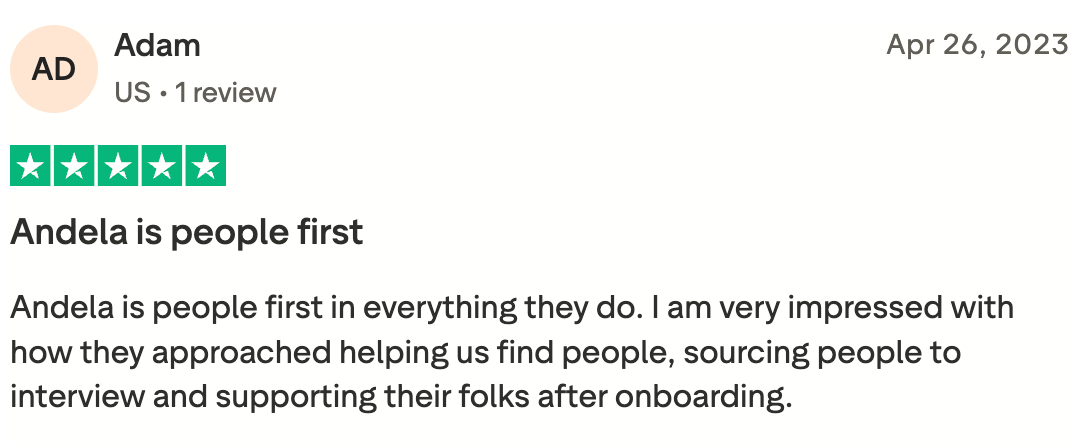
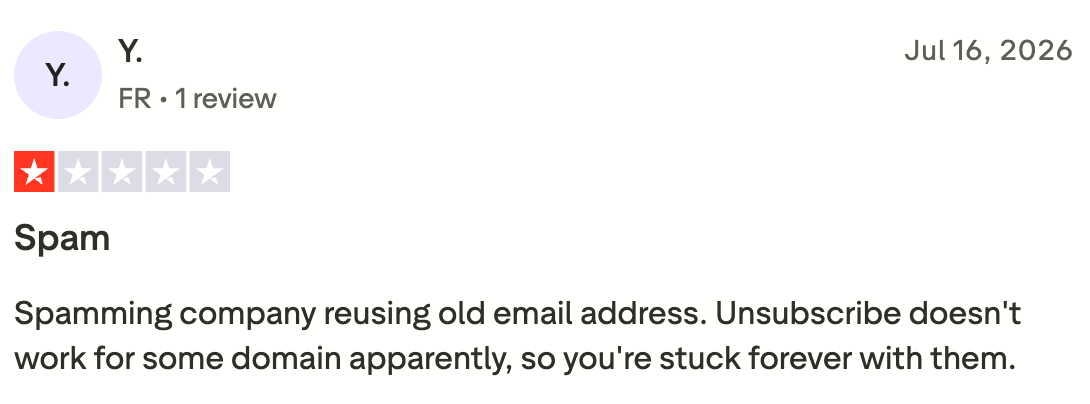
On the downside: Pricing transparency remains one of the biggest weak points. There is no public rate card or service margin breakdown on Andela’s current site. Additionally, users claim that their inbox receives lots of irrelevant spam, which they can’t unsubscribe from.
Best for: Enterprises building production AI, scaling global engineering capacity, or looking for a vendor that can combine staff augmentation with managed AI delivery.
Upwork: The open sea of miscellaneous talent
Upwork is the freelance marketplace for anyone who wants choices. It’s not so much a curated club as a 24/7 global bazaar with thousands of devs, IT professionals, and freelancers at all price points and experience levels. If you’ve got time to dig, there are bargains and gems. If you want control over every step, this is your playground.
What you get: Massive flexibility, instant access, and a pricing spread that runs from “beer money” to “private island.” You can handpick your freelancer, negotiate directly, and scale up or down with a click. Many buyers find long-term partners here, and Upwork’s infrastructure handles the contracts, payments, and time-tracking so you don’t have to.
Buyers say: “I love the range of talent on Upwork—you can find just about anything, from specialized developers to budget options.” Some reviewers appreciate the payment protection and project management features.
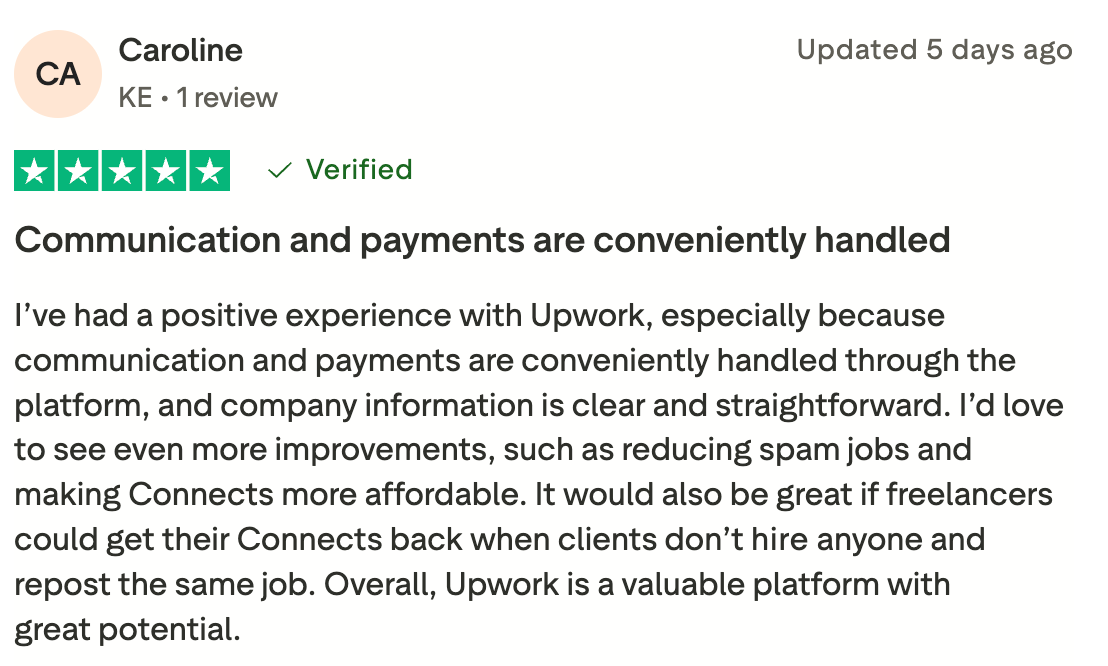
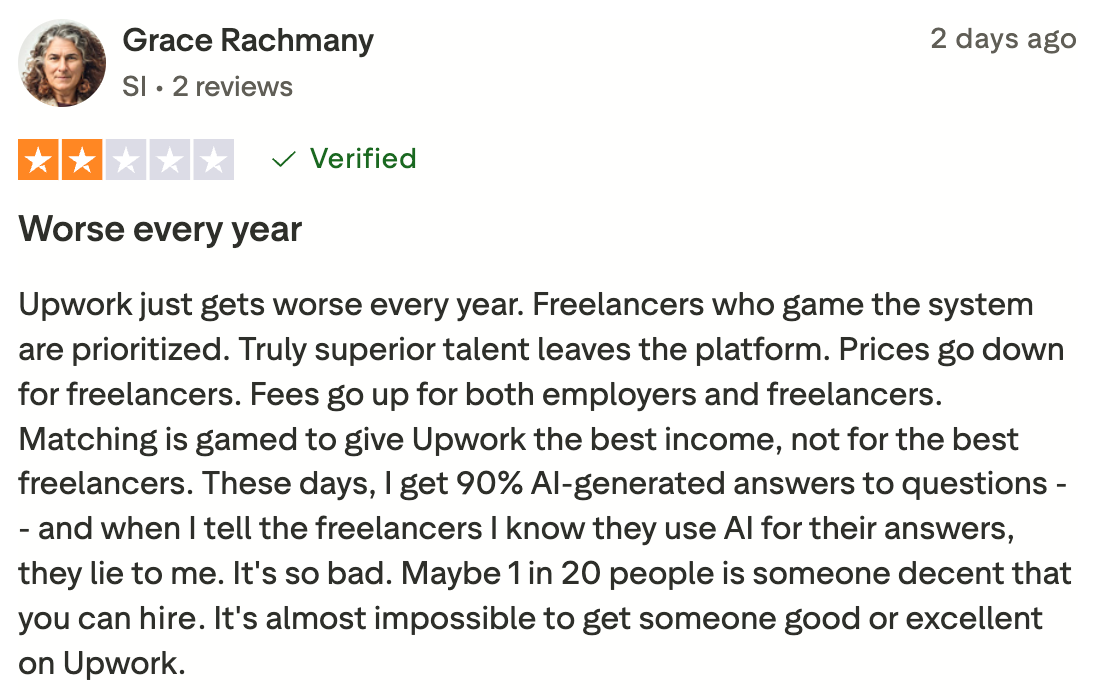
But dig into the review sites, and you’ll see repeated complaints about “a 90% or greater failure rate” in finding quality, and warnings that customer support is “very difficult to reach if you need help.”
Best for: Think of Upwork as the world’s giant freelance hiring buffet: great if you know what to look for, a little less fun if you show up indecisive.
Arc.dev: Algorithmic matching under Toptal’s corporate umbrella
Arc.dev was known for fast, AI-driven matching for remote teams. However, with Arc now acquired by Toptal, it operates within Toptal’s broader ecosystem rather than as an independent platform. While it still pitches quick matchmaking, buyers should be aware that working with Arc now introduces Toptal’s corporate-style contracts, enterprise pricing structures, and potential administrative friction.
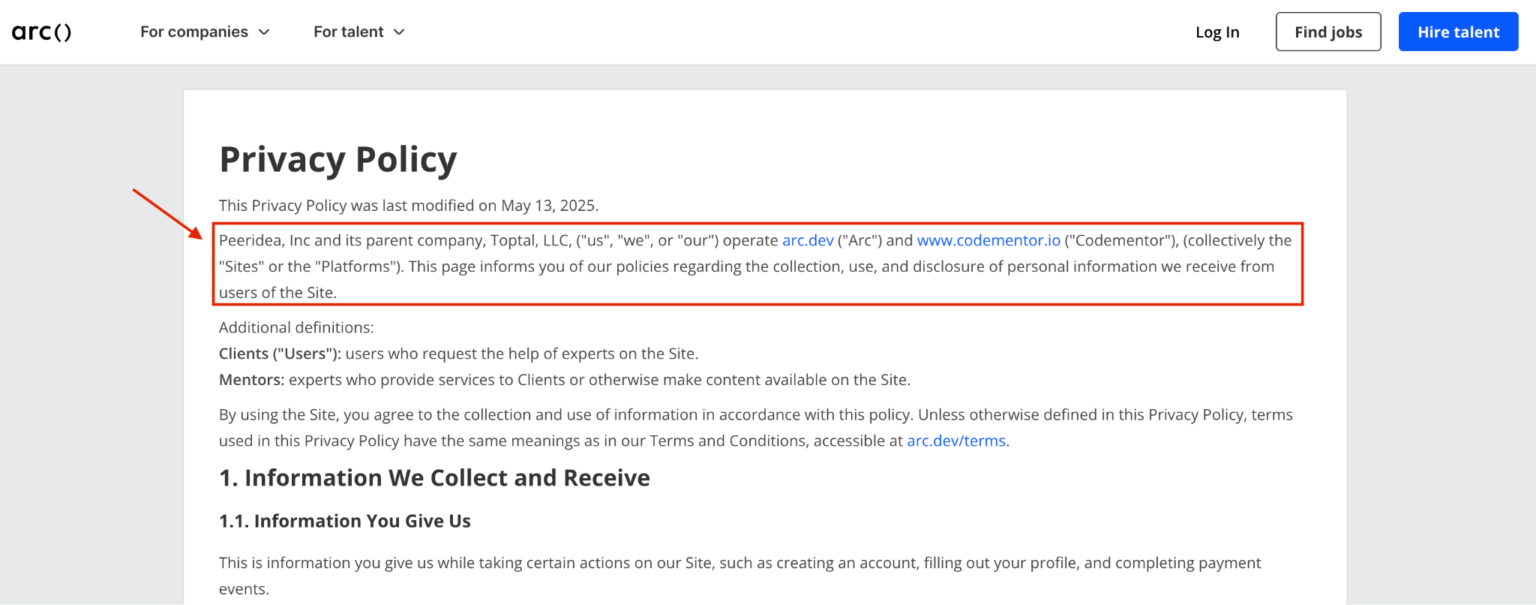
What you get: Global reach backed by Toptal’s backend infrastructure, though this non-independent status carries noticeable trade-offs. For developers, registering on Arc funnels profiles and vetting records directly into Toptal’s central database. For clients, there is a risk of filtered access: Toptal can pull top-tier candidates from Arc’s pool to supply its own higher-margin contracts, leaving startup clients subject to umbrella data policies and slower, enterprise-heavy processes.
Buyers say: Arc.dev stands out because, unlike most platforms, you can actually get a human on the line—and they’ll give you real feedback, not just copy-paste talking points. One reviewer mentions being surprised by how much genuine help they got making their resume stand out, and even got a real-life mentor for the job search.
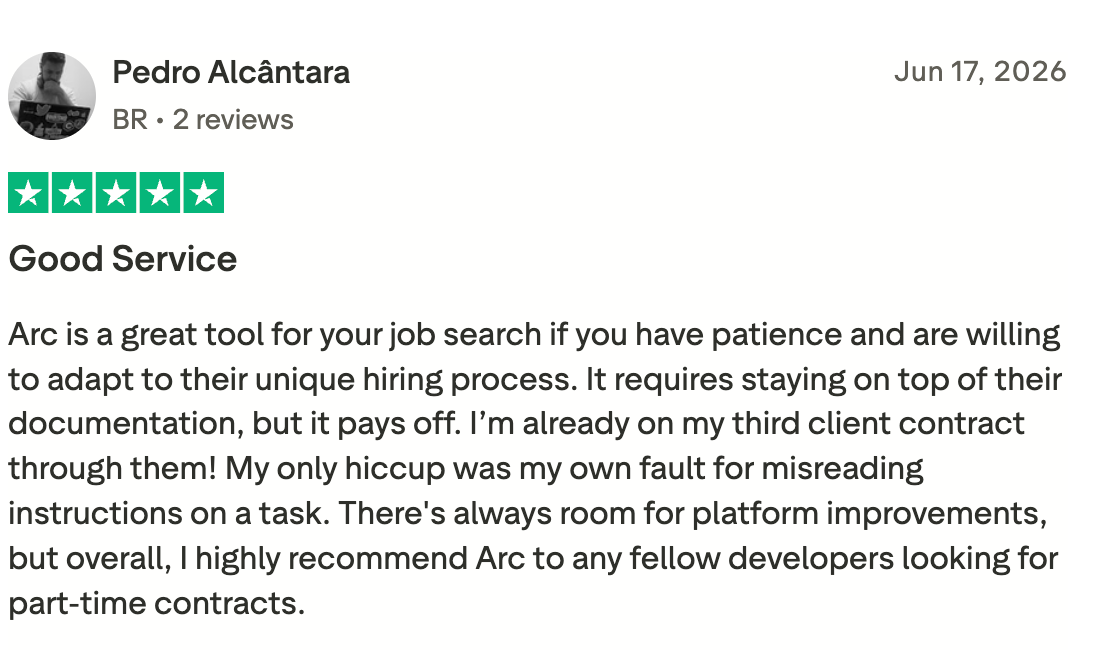
There are also stories from buyers hiring devs across several countries—one called out a hire who climbed the ranks to Engineering Manager. Arc.dev seems to open up your options, and some teams credit the platform for making innovation possible by bringing in new perspectives.
But not everything is perfect. Some users wish they could connect with candidates even faster (hint: emails are hidden at first), and there’s a grumble or two about process quirks that make the initial scheduling slow.
Best for: Arc.dev remains a player in global matching, but its days as an agile, standalone startup platform are behind it. If you want flexibility, startup-friendly pricing, and a truly independent team, Lemon.io offers a more direct alternative.
Fiverr Pro: Freelance fast food
Fiverr Pro is the no-frills, menu-driven answer when you want something done fast and don’t want to negotiate for weeks. Instead of endless proposals, you get a buffet of “Pro” gigs with upfront pricing and turnaround times that sometimes border on the supernatural.
What you get: Simplicity, speed, and a clear project scope from the jump. For one-off builds, design, or smaller features, you can sort by reviews, see portfolios, and hit “Buy Now”—no back-and-forth required. When it goes right, you get crisp delivery and a finished asset in a matter of days.
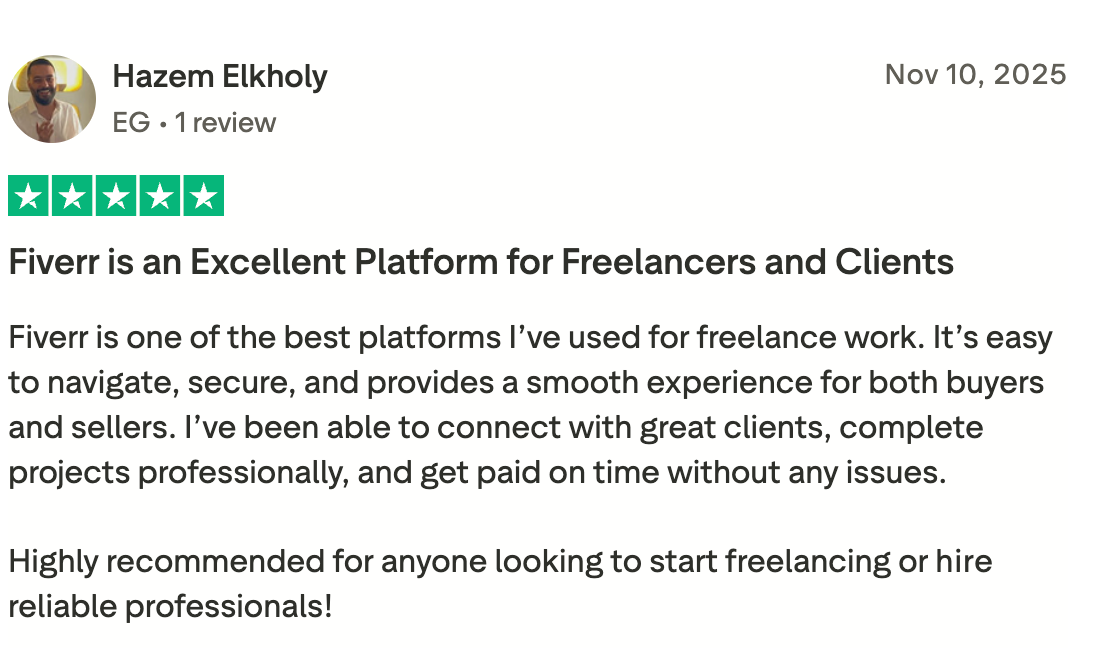
Buyers say Fiverr Pro is a great fit for premium projects where you want to pay for reliable, top-tier talent. Reviewers say it’s “worth it for high-profile or time-sensitive projects, and the quality and professionalism really do feel next level.” If you’re after polish, this is where you find your pro.
Pros: People love the “assurance of high quality and professionalism” and the feeling you’re working with a vetted expert instead of rolling dice, which is rare for the freelance platform.
Cons: As expected, you’ll pay extra for the privilege—“Fiverr Pro isn’t cheap,” and some buyers say the pricing stings if you’re on a tight budget.
But real talk: Trustpilot is full of warnings about scams. Negative feedback flags “projects that never happened,” disappearing freelancers, or deliverables that weren’t even close to what was promised. More than one buyer says you need to vet sellers as if you’re on the standard Fiverr marketplace, not just assume the Pro tag means smooth sailing.
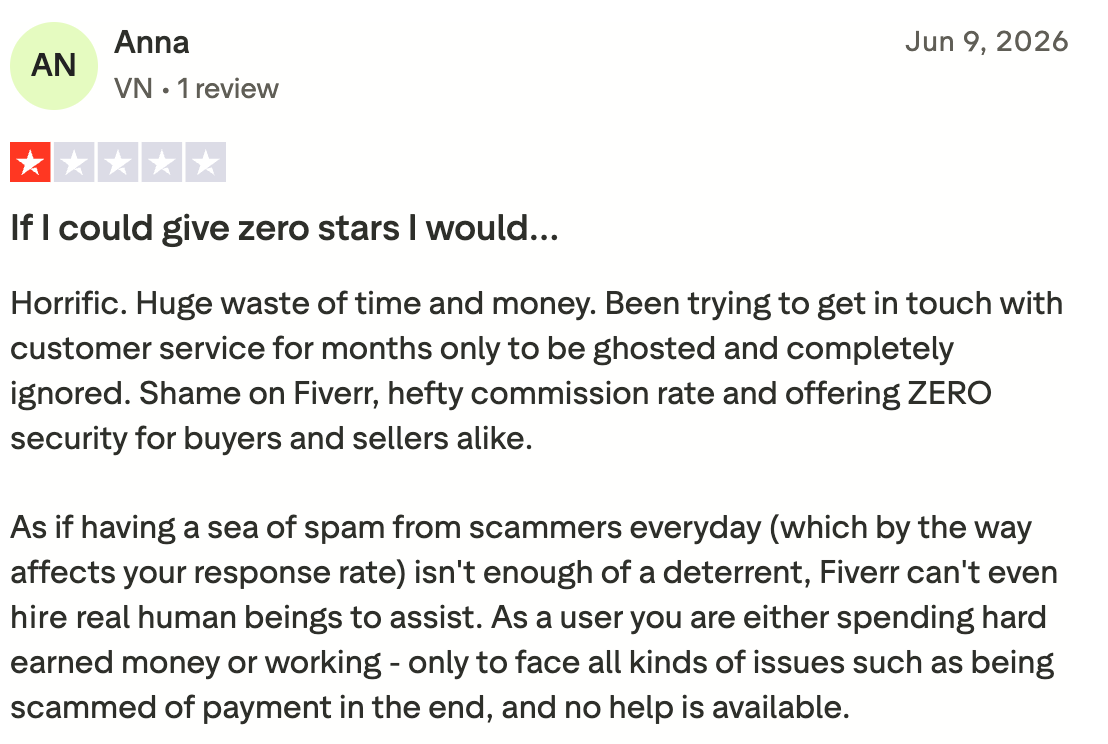
Fiverr Pro works for well-funded projects and teams who want speed, but don’t skip due diligence—or you might end up with an empty inbox and a lesson learned.
Best for: Fiverr Pro is for buyers who need work done yesterday and are willing to keep it short, sweet, and to the point. Sometimes you get genius, sometimes just done—but you always know where you stand.
Gun.io: When you want U.S. talent and don’t care about the bill
Gun.io is the platform for buyers who want a tightly vetted, mostly North American engineering pool and don’t mind paying for it. Their three-stage screening is serious, and when it works, it really works.
What you get: Deep technical interviews, a focus on U.S. timezone overlap, and rapid matching for specialized roles. One buyer says, “Found a senior dev in 24 hours, started work the next day.” Others highlight “transparent, professional service” and credible expertise for complex projects.
What you don’t get: Big-scale or budget rates. Some clients say project management can fade out (“Paying the extra overhead of the Gun.io team did nothing to improve the outcome of my project… There was no assistance from the Gun.io team… If that’s the case, then why am I paying a premium to pay for the overhead of Gun.io?”). Freelancers have reported payment issues, like “paid only for 3 weeks and then got banned from the platform”.
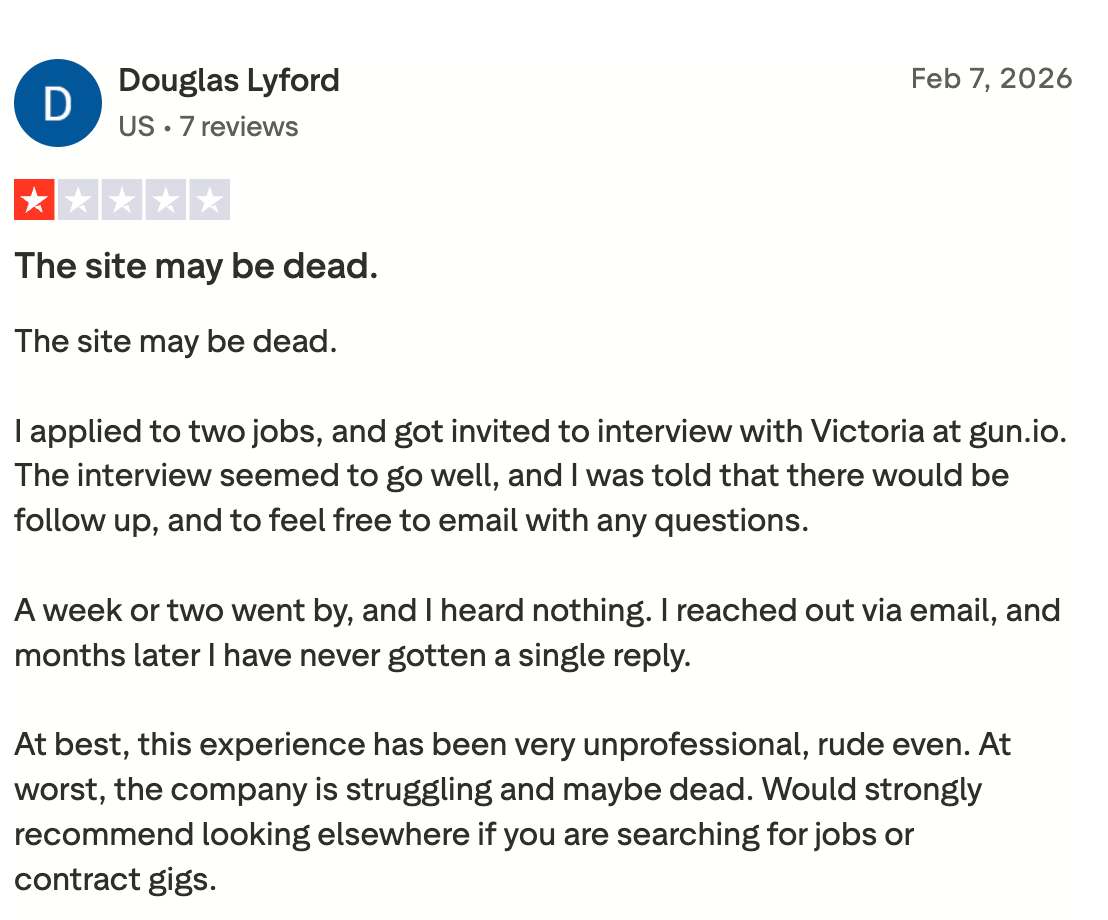
Best for: Gun.io fits buyers who want the curated experience of an agency, U.S. talent, and are fine with the bill—but if you need scale or flexible budgets, keep shopping. Explore more Gun.io alternatives in our recent guide.
Pricing, transparency, and commitment level compared
Pricing on Turing is a bit like chasing a moving target. You won’t find a price list on their site—expect a back-and-forth with sales before you see any hard numbers. Here’s how it usually shakes out, based on client and developer reports:
| Platform | Model | Pricing | Trial / commitment | Pricing transparency |
|---|---|---|---|---|
| Turing | Vetted talent platform | Custom rates | 3-week trial | Low — rates after inquiry |
| Toptal | Curated talent network | $79/mo platform fee + expert rate | Up to 2-week trial | Medium — expert rates quoted separately |
| Lemon.io | Pre-vetted developer marketplace | ~$35–$90/hr | Up to 20-hour paid risk-free trial | High — typical rates published |
| HiringCafe | AI job search engine | Free for job seekers | N/A | High — depends on employer listing |
| Andela | Talent platform + managed teams | Custom; typically ~$6K–$15K/mo | 15-business-day trial | Low — no public rate card |
| Arc.dev | Vetted freelance + direct hire | ~$15–$110+/hr freelance | Varies by engagement | Medium — freelance range published |
| Upwork | Open freelance marketplace | Freelancer rate + up to 7.99% client fee | None | High — fees published |
| Fiverr Pro | Vetted project marketplace | Seller price + 5.5% buyer fee | None | High — price shown before purchase |
| Gun.io | Curated contract + direct hire | ~$70–$200/hr; direct hire 20% of salary | Varies | High — rate bands published |
What is Turing: Origins and evolution
Founded in 2018 by two Stanford grads who couldn’t hire fast enough for their own startup, Turing bills itself as “deep vetting + AI matching + global scale.” Their promise: Silicon Valley-level talent, sourced from everywhere, filtered by machine learning, and available on demand.
Today, Turing claims a talent pool of 4 million developers spanning 150+ countries, with customers ranging from household-name giants to sprightly startups. Mid-market and enterprise clients who need full-time, long-term engineers, not gig project freelancers.
Instead of pure marketplace chaos or agency handholding, Turing walks a line between both: AI does the screening and matching, but once you get a developer, you’re still on the hook for onboarding, management, and making things work.
Turing’s strengths and where it trips up
Here’s where Turing delivers: you want to hire a bunch of devs at once, across nearly any tech stack and, as of late, data annotation for AI training, without spending the next quarter buried in LinkedIn DMs. The platform is built for teams who already know how to manage remote engineers and want speed, not endless handholding.
Now, the flip side: If you expect white-glove curation or think Turing’s managers will babysit your project, you’re in for a surprise. High-touch support is hit-or-miss, and the algorithm is no substitute for an engaged account manager. Niche roles and true “wow, they fit our culture” picks still require heavy lifting on your end.
Buyer reviews: Some teams find a stellar hire on the first try, others churn through mismatched candidates and wonder where the real “top” talent went. The platform’s sheer size means more choice, but also less curation. And as a bonus, if you need ultra-niche or bleeding-edge tech, your shortlist may shrink fast.
Bottom line: Turing’s depth is real if you’re after popular stacks, but consistency and specific fit still require work and sometimes luck. Want speed, scale, and the kind of platform that’s always pitching “next-gen matching”? Turing’s your tool. Want a squad that sweats the details and hand-picks every fit? You’ll miss the human touch. Just know what you’re signing up for before you hit “get started.”