


Searching for pre-vetted senior engineers in the US usually leads to Gun.io, a platform known for its invite-only standards and cowboy-inspired branding.
But while their approach to software development has delivered results for hundreds of businesses, it comes with clear trade-offs — namely, a limited regional talent pool and premium US rates for skills that global software engineers can match at a fraction of the cost.
If you’re exploring your options, you’re in luck. We evaluated the leading Gun.io alternatives — from industry giants like Toptal to specialized vetted talent networks and freelance platforms — to give you an objective look at their vetting process, cost structures, and overall fit for hiring senior engineers.
Gun.io review: Why you may not like the platform
Gun.io was built on the idea that one can skip corporate recruiters — because developers can be vetted by other developers.
Over more than a decade, the platform grew into a famous invite-only network of US-based senior engineering talent. The positioning: a boutique alternative to massive freelancing sites like Upwork or Fiverr, as well as tech recruiting agencies with high markups.
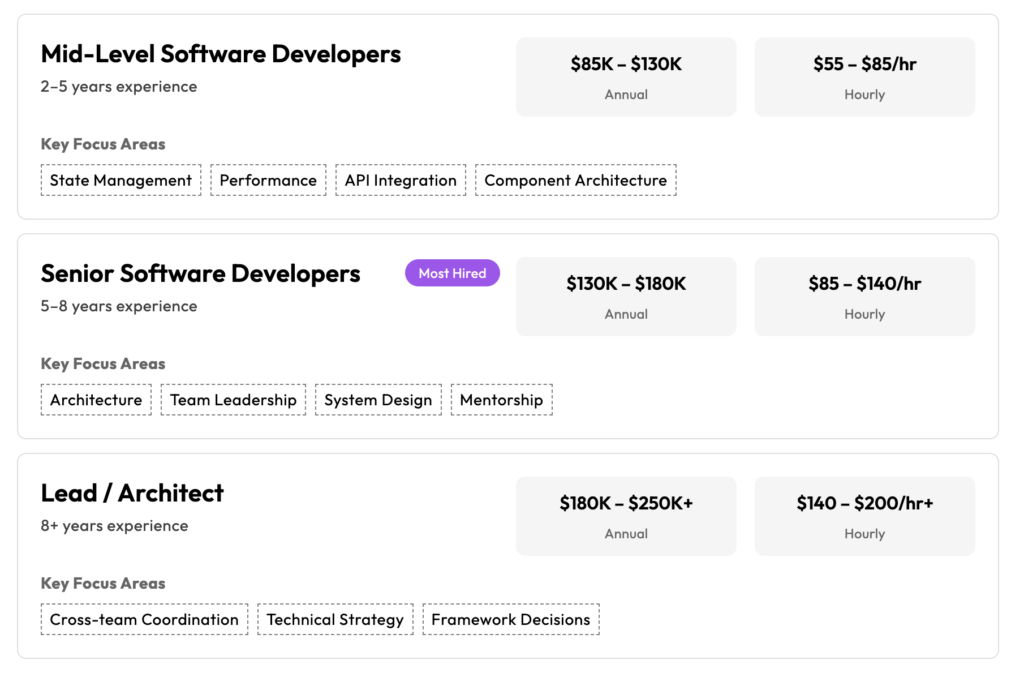
In 2026, for a non-technical founder, Gun.io remains a solid safeguard. However, the platform has enterprise-level pricing. Blended hourly rates ($100–$200+/hr) incorporate Gun.io’s heavy markup, and the total you pay is approximately 20% higher compared to the global average.
At the same time, the platform has a limited pool of freelance developers. Because their network is highly curated and leans heavily toward senior US talent, you lose access to high-performing offshore developers (LatAm, Eastern Europe) who build products at half the cost.
Another problem is the slow matching speed. Gun.io’s hand-matching process takes over 2 weeks, and their talent specializes in scalable architecture. If you just need a scrappy developer to throw together a quick prototype, paying Gun.io’s premium rates is financial overkill.
Gun.io alternatives compared
| Platform | Rating | Vetting | Geo | Price | Best for |
|---|---|---|---|---|---|
| Lemon.io | ⭐️4.8/5 (Trustpilot) | ✅Yes | Global | 🏆$60–$90/hr | Early-stage startups & scaling SMBs needing pre-vetted senior devs fast |
| Toptal | ⭐️4.7/5 (G2) | ✅Yes | Global | $90–$220+/h; $500 deposit and $79/mo fee | Scale-ups & enterprises |
| Upwork | ⭐️4.5/5 (G2) | ❌No | Global | $10–$150+/hr | Micro-tasks, small script fixes, WordPress maintenance, etc. |
| Andela | ⭐️4.7/5 (G2) | ⚠️Yes, AI | Global | $6k–$15k+/mo | Growing engineering orgs looking to scale dedicated long-term offshore pods or DevOps capacity |
| Turing | ⭐️4.3/5 (G2) | ⚠️Yes, AI | Global | $80–$200/hr | Enterprise AI labs & tech departments scaling developer headcount rapidly |
| Arc.dev | ⭐️4.5/5 (Trustpilot) | ⚠️Yes, AI | Global | $80–$110/hr | Startups testing developers on short-term contracts before converting them into full-time hires |
| CloudDevs | ⭐️4.2/5 (Trustpilot) | ✅Yes | Latin America | $50–$100/hr; $500 fee | North American teams needing real-time collaboration with senior developers |
#1 Lemon.io
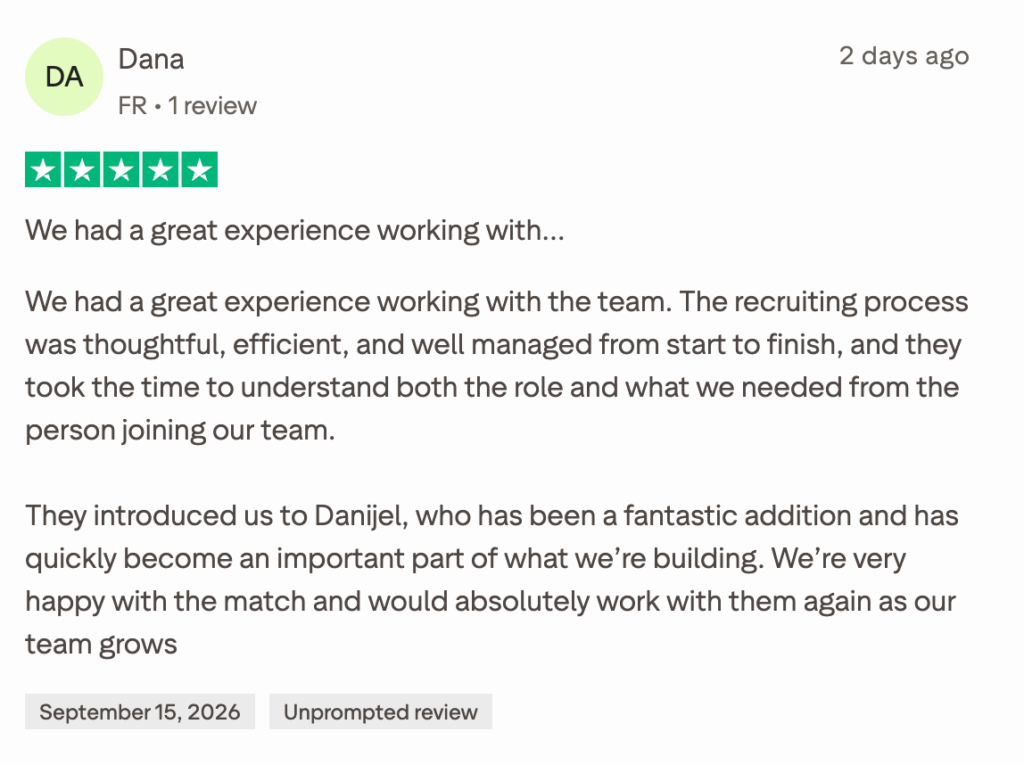
Why it is better: startup-oriented, most matches under 24 hours, human-led vetting, rare expertise talent pool
Rating: 4.7/5 on G2 | 4.8/5 on Trustpilot
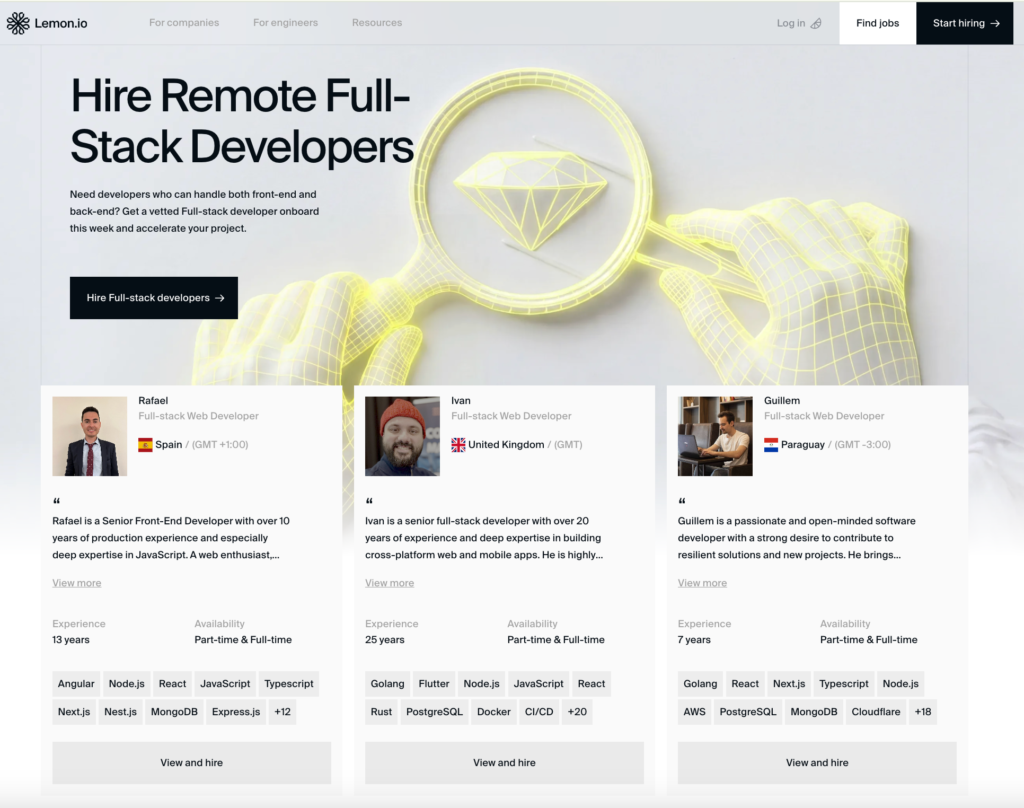
If you are trying to get an MVP out the door without getting dragged down by recruitment, Lemon.io is purpose-built for you. We run a tech talent network that accepts just 1.2% of applicants through a 4-stage human-first vetting process. The team conducts multi-source background checks, vets English fluency, and puts candidates through a 90-minute technical interview run by active CTOs and senior engineers. Plus, live coding and code quality tests.
Instead of posting a job and reading dozens of applications, you can let Lemon.io handle the matching for you. It works like this: you submit your scope, and a technical analyst handpicks profiles within 24 hours — accompanied by a detailed breakdown of why each developer fits your stack (whether that is JavaScript, Node.js, React, or Python).
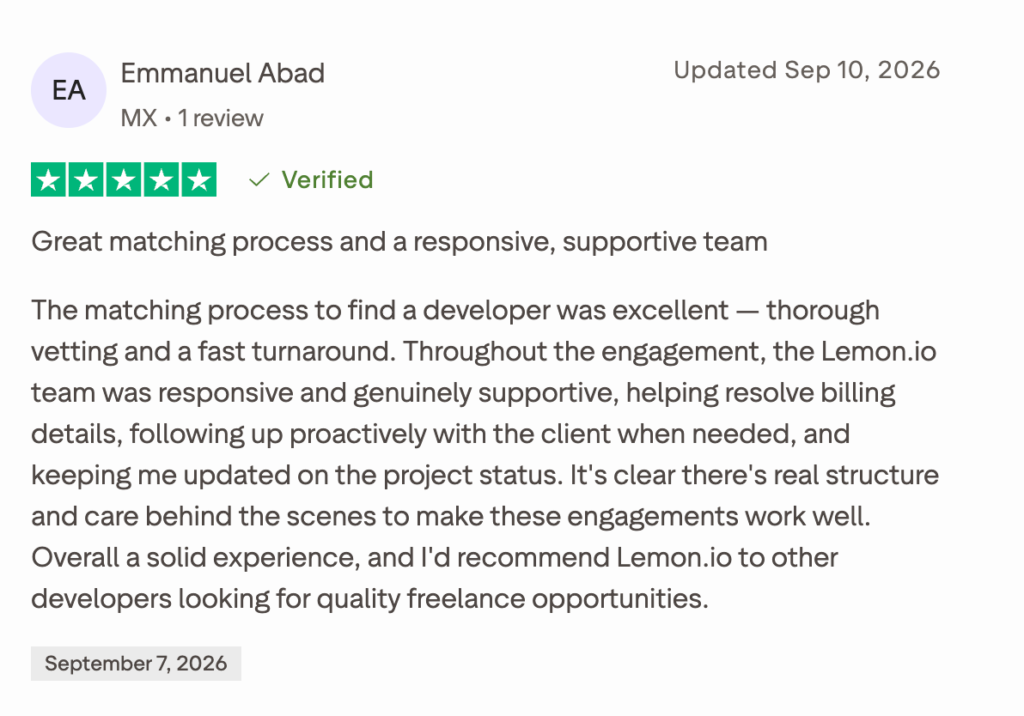
Rates range from $60 to $90/hr, with no bidding wars, billed via prepaid subscriptions, with unused hours rolling over automatically. And no paperwork — the platform handles contracts and NDAs, and a free replacement guarantee within 1–2 days.
#2 Toptal
Why it is better: global network of senior software engineers suited for enterprise tasks
Rating: 4.7/5 on G2 | 4.8/5 on Trustpilot
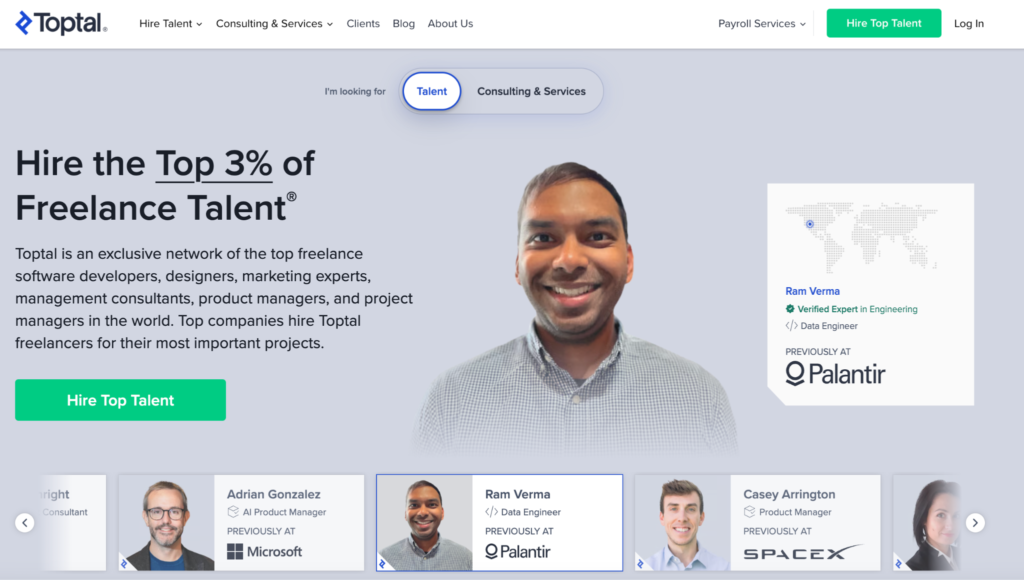
Toptal screens candidates through language tests, timed algorithm challenges, live coding, and a test project to filter for high-caliber talent. If you are building high-scale cloud platforms, complex AI models, or regulatory-heavy apps requiring HIPAA compliance, they have the technical depth to handle it.
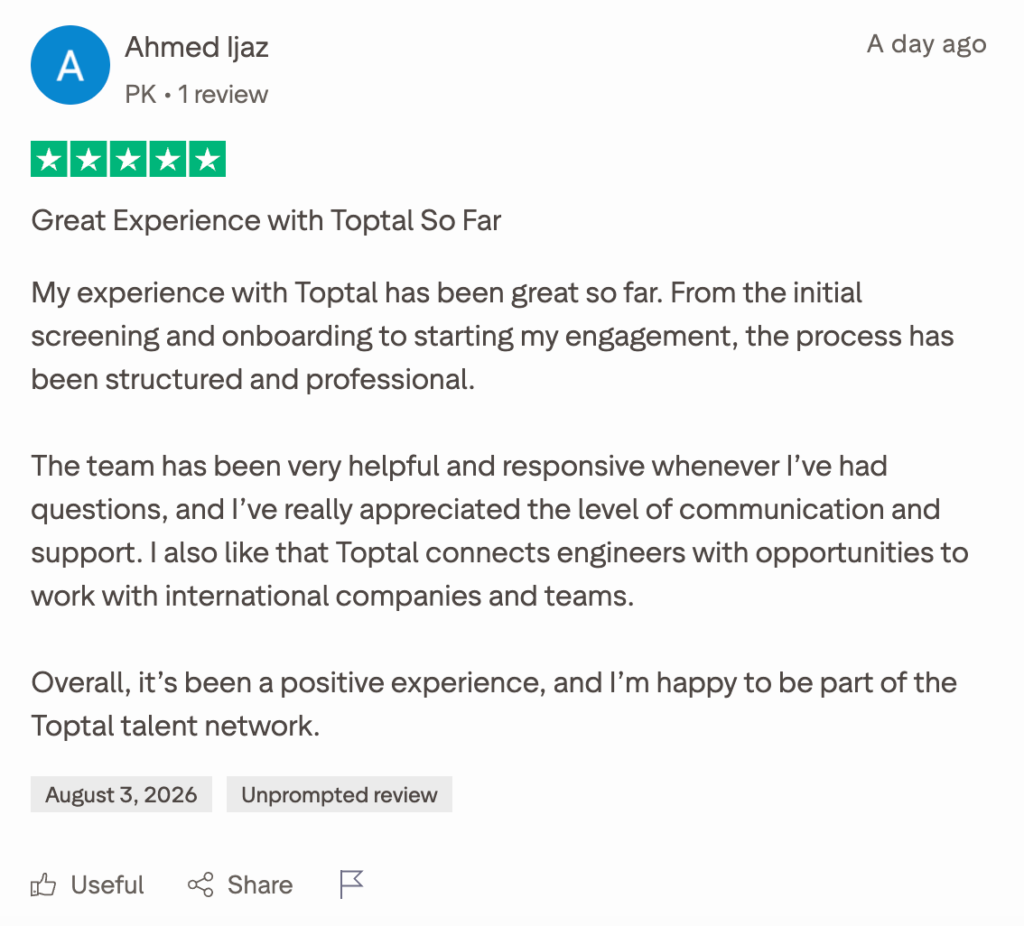
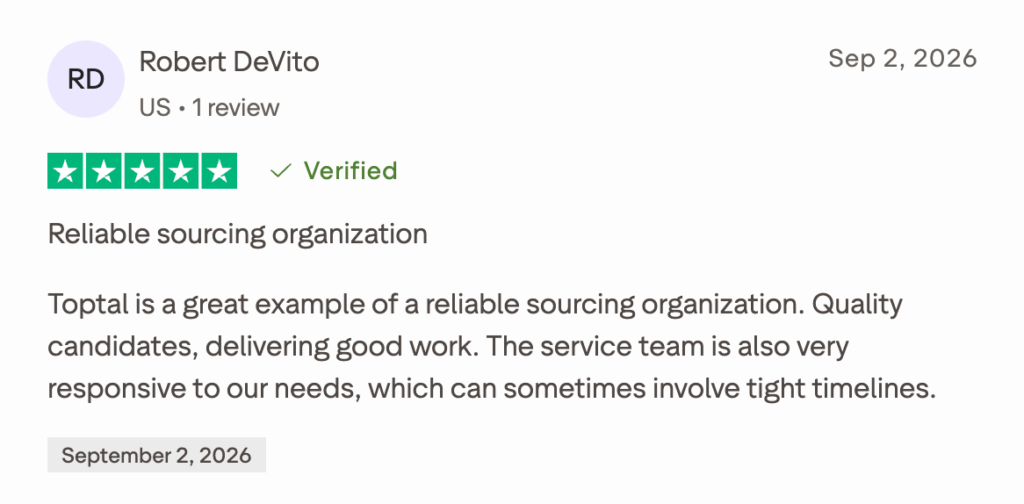
Reviews consistently applaud the technical depth of their engineers, noting they deliver high-level strategy from week one. However, client complaints focus heavily on high hourly rates ($80 to $220+/hr), a mandatory upfront $500 deposit, hidden platform markups (often 30–100%), and a $79/month platform fee that continues until canceled.
The matching phase can take 1 to 2 weeks. If you are exploring Gun.io alternatives to stretch your startup budget, Toptal’s high rates and steep direct-hire buyout fees make it a heavy financial lift for a lean MVP build.
Considering Toptal as your future partner? This article is for you: Best Toptal Alternatives in 2026: Vetted Developers Without the Enterprise Price Tag:
#3 Upwork
Why it is better: the world’s largest freelance pool; finding the candidate takes minutes; prices can fit any budget
Rating: 4.5/5 on G2 | 4.9/5 on Sitejabber
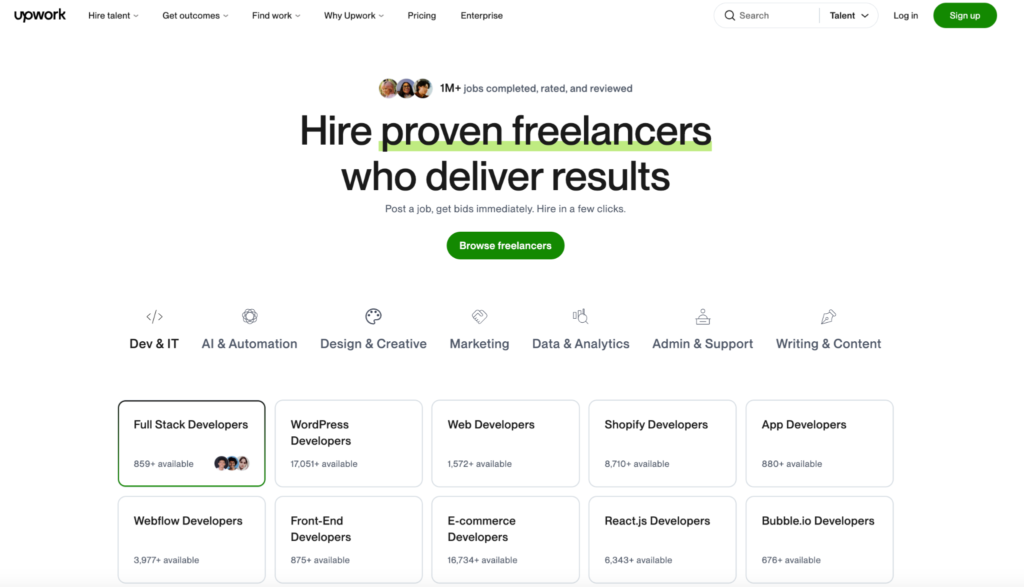
Upwork is a massive open platform for hiring freelancers across every domain. It works well for small bug fixes, minor script updates, simple WordPress maintenance, or teams that already have an in-house CTO capable of running technical interviews.
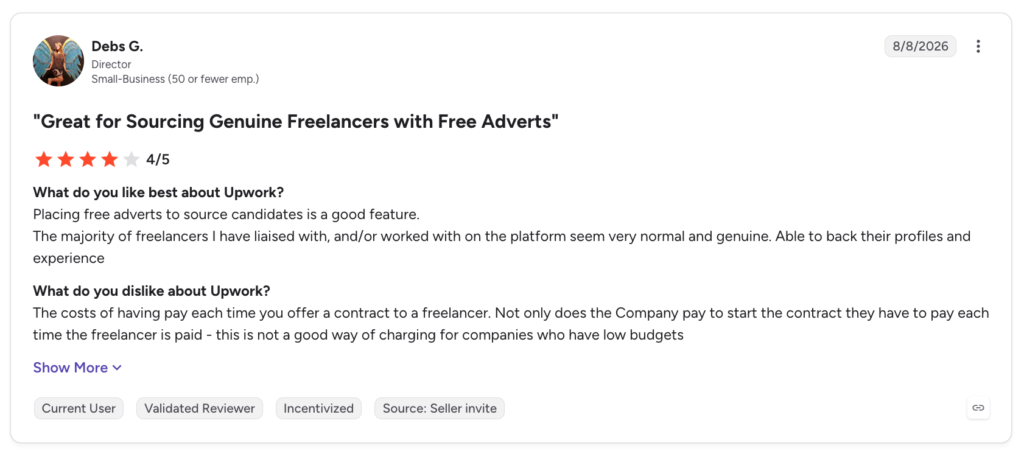
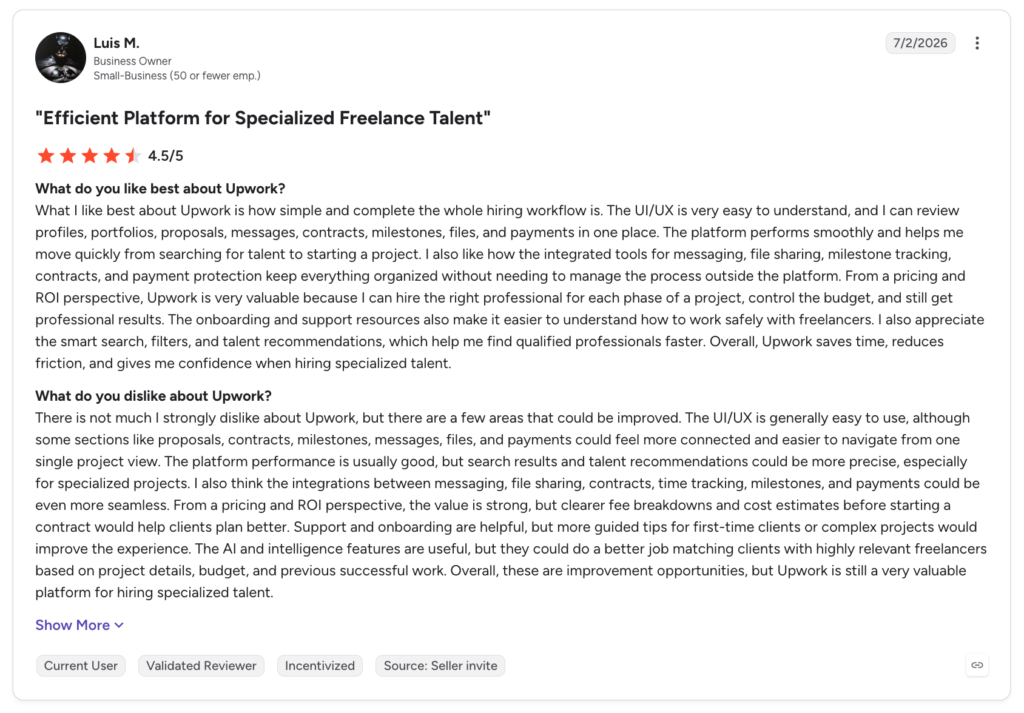
Upwork’s client reviews praise the sheer variety of rates ($10–$150+/hr) and global availability. On the flip side, negative reviews focus on unresponsive customer service during payment disputes, client fee markups, and the significant time required to sift through low-quality applications.
The key problem with Upwork is that standard accounts feature zero mandatory candidate pre-vetting, so you bear 100% of the evaluation risk. You will likely face proposal fatigue while sorting through AI-generated pitches. If a developer delivers poor code or disappears, Upwork offers basic dispute mediation, but no curated code reviews or account managers to swap in a replacement—you have to restart your search from scratch.
At the same time, Upwork is still one of the most powerful freelance platforms that help to find not just a single person but the whole team (there are agency accounts on Upwork, too)
Learn more on why you might like or not like Upwork: Best Upwork Alternatives in 2026: Top 5 Freelance Platforms for Hiring Developers.
#4 Andela
Why it is better: focused on serving growing engineering teams and software engineers from Latin America, Africa, and Asia
Rating: 4.7/5 on G2 | 1.9/5 on Trustpilot
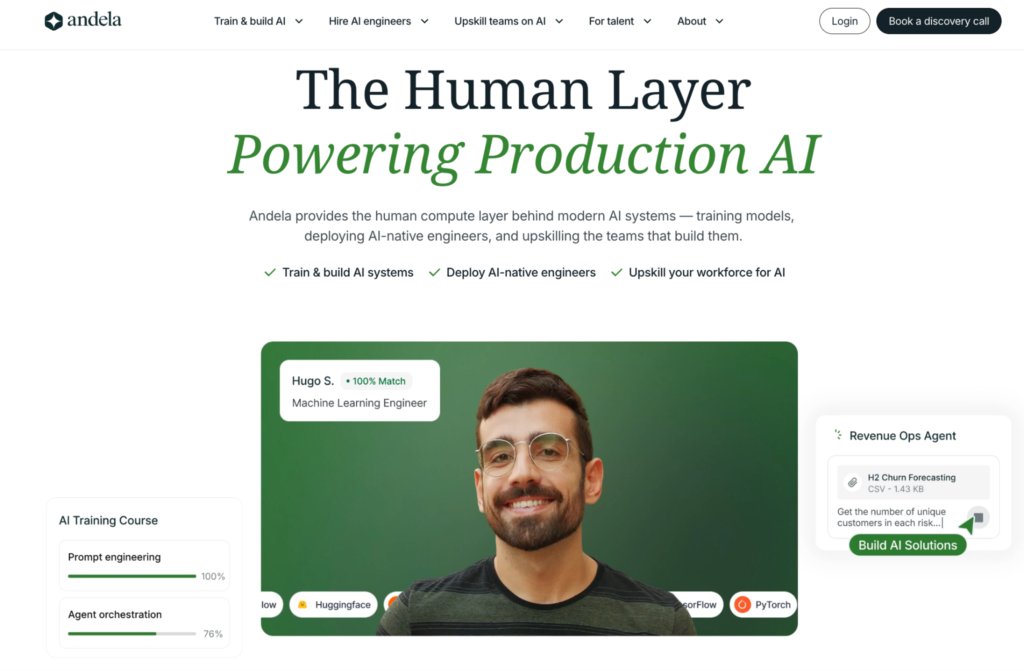
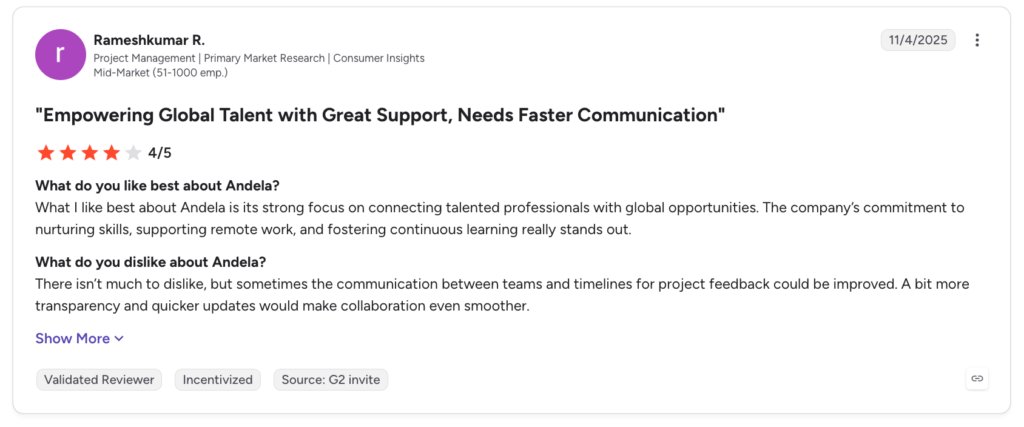
Andela operates as a global staffing platform connecting tech companies with remote talent across 130+ countries. Their multi-stage vetting process evaluates candidates on technical stack proficiency, async collaboration, English fluency, and, more recently, AI training and RLHF capabilities.
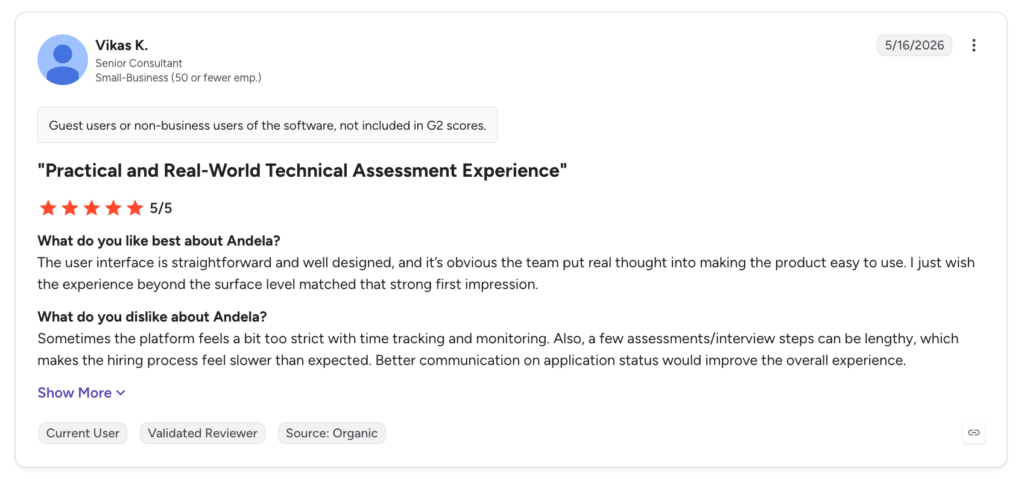
They work well for expanding companies looking to build a dedicated team, onboard offshore DevOps engineers, or scale long-term development output. The bright side (according to the reviews) is the strong work ethic and solid preparation of their engineers. However, critical reviews on Trustpilot cite high monthly costs ($6k–$15k/month) and massive corporate-style bureaucracy.
Like similar platforms, Andela handles compliance, contracts, and payroll. But for those with a limited development budget who want to move fast, process-heavy engagement models feel built for enterprise procurement and may be a problem.
Read our dedicated blog article to get more insights on Andela: Andela Alternatives 2026: Which Hiring Platform to Choose Instead.
#5 Turing
Why it is better: machine learning algorithms & automated skill tests for rapid matching and monitoring remote engineers
Rating: 4.3/5 on G2 | 2.9/5 on Trustpilot
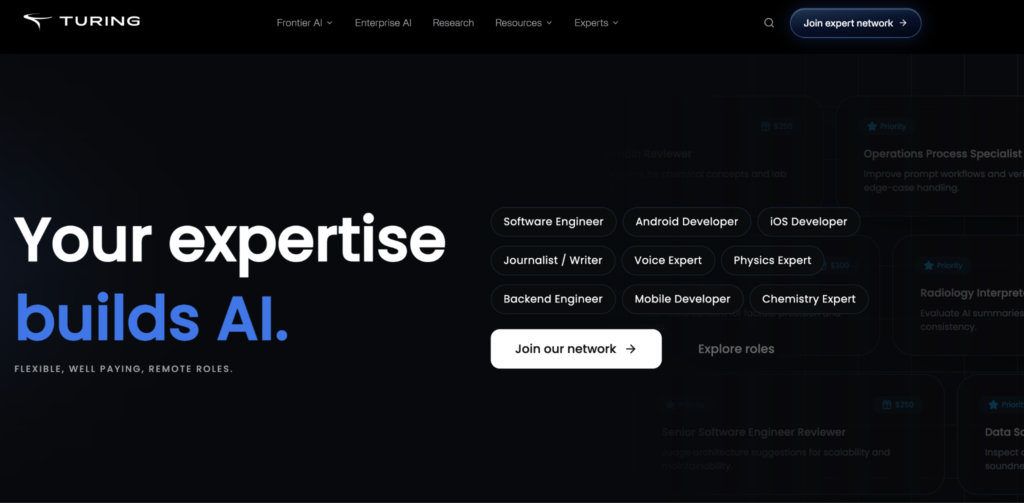
Turing uses an AI-driven talent cloud to replace traditional recruiter calls with automated screens.
How does it work? Software engineers complete automated coding challenges and stack assessments, which algorithms match against job descriptions. It works well for enterprise engineering departments scaling headcount quickly.
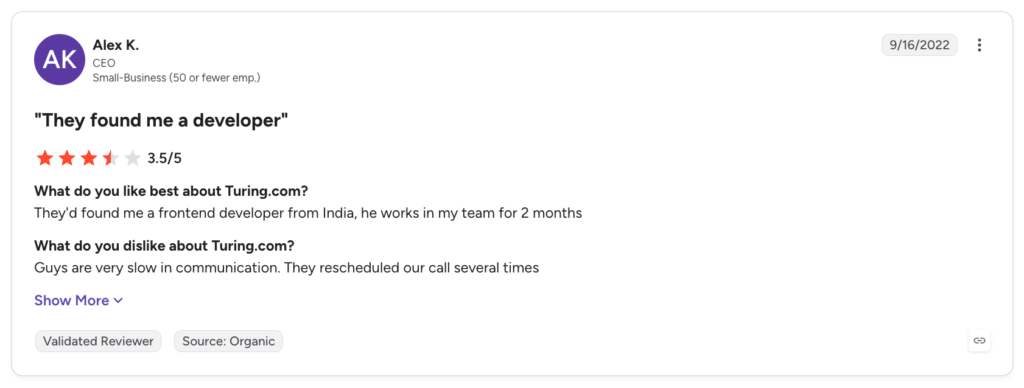
On the dark side is still inconsistent candidate quality, automated interactions that feel impersonal, and — the biggest problem — gaps between automated test scores and practical problem-solving performed by a person you might hire.
Because vetting relies heavily on test scores rather than live human interviews, soft skills and communication vary—meaning you will need to put in extra effort to evaluate cultural fit yourself. Budget side: Turing bundles its platform fee into a single hourly rate ($60–$200/hr).
Need more details to make a hiring decision? Find them here: Top Turing Alternatives 2026.
#6 Arc.dev (part of Toptal)
Why it is better: a front-end for Toptal-powered enterprise staffing; fast AI-assisted screening; offers support for short-term contract work and full-time hiring
Rating: 4.8/5 on G2 | 4.5/5 on Trustpilot

Arc originally built its name on quick, low-hassle algorithmic matches for remote teams. However, it now operates under Toptal’s enterprise umbrella rather than as an independent startup marketplace. While it still offers a global talent pool, matches now pass through Toptal’s centralized network—possibly bringing enterprise-style contracts and slower sales cycles.
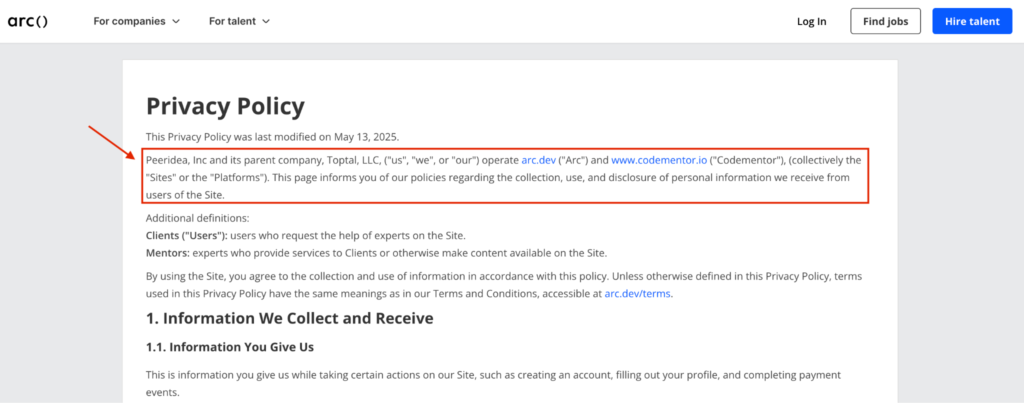
While Arc.dev has historically appealed to fast-moving startups seeking global access, its integration with Toptal introduces hidden friction for clients and talent alike. For companies, choice can be an illusion: Toptal can siphon top-tier candidates from Arc’s pool to fill its own higher-margin corporate contracts, leaving Arc clients with a secondary layer of talent.
For developers, registering on Arc funnels your profile and vetting records into Toptal’s shared central database—meaning a flag or rejection on one platform can limit you across both.
With Toptal behind the wheel, pricing and process may now be shifting toward enterprise staffing norms, which can feel overly rigid and expensive for early-stage startups seeking lean commitments. Expect an enterprise-grade approach to processes and unified data-sharing policies; if you are looking for a nimble, independent alternative with zero corporate bloat, Lemon.io remains a far more direct match.
More information on this platform can be found here: Arc.dev Review [2026]: The Good, Bad, and Better Alternatives.
#7 CloudDevs
Why it is better: focuses on senior Latin American developers, guaranteeing real-time working hour overlap for US teams at flat rates
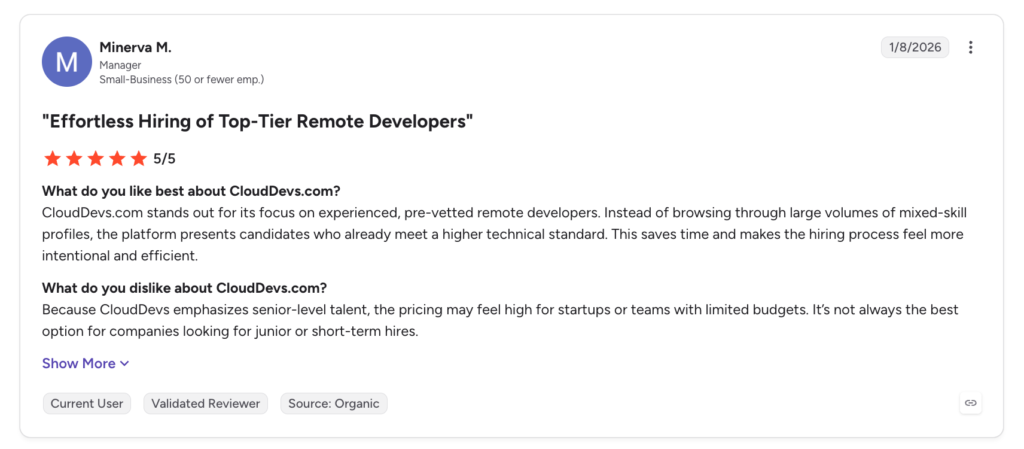
Rating: 4.9/5 on G2 | 4.2/5 on Trustpilot
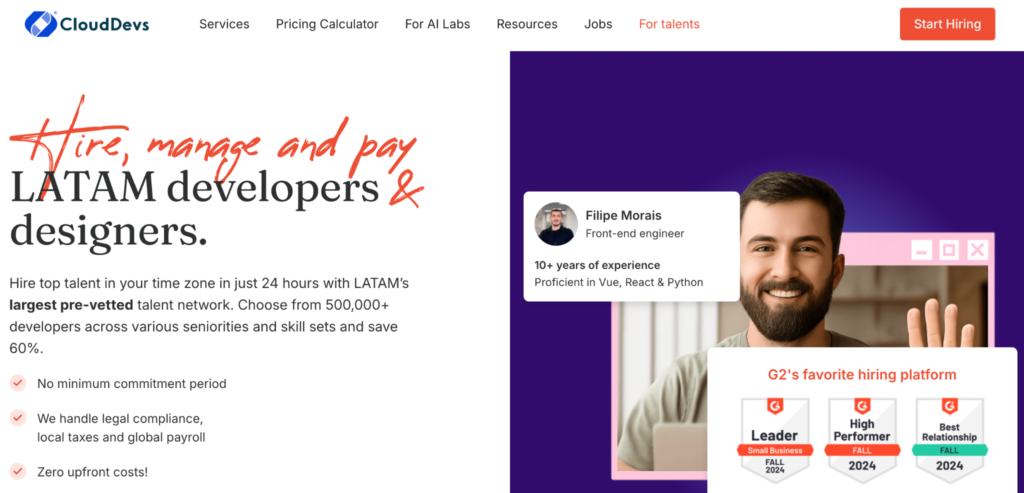
CloudDevs focuses entirely on sourcing senior Latin American developers to ensure 100% time zone alignment for North American founders collaborating via Slack and Zoom. They require engineers to have at least 5 years of experience and to undergo background checks, English assessments, and stack reviews.
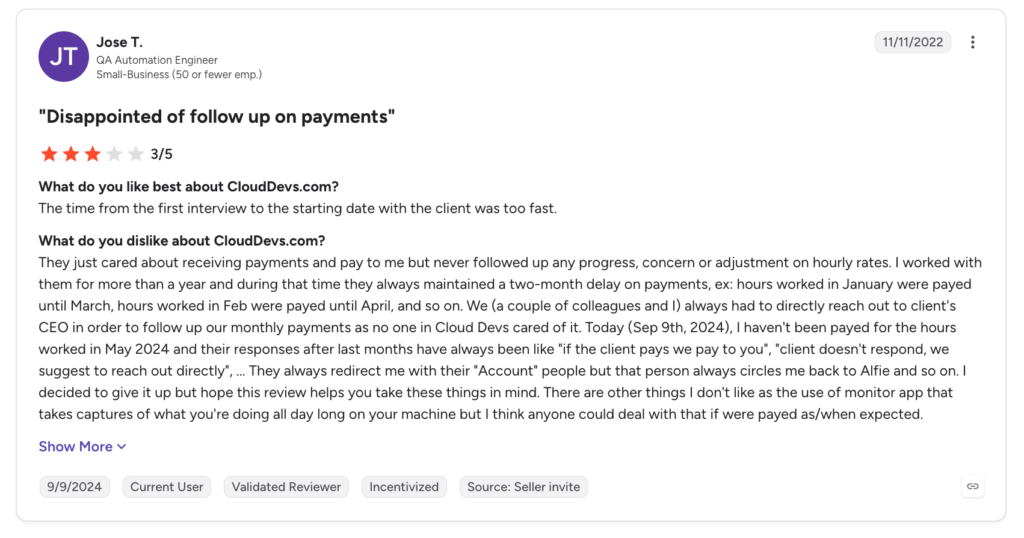
The platform is a good fit if you are building web or mobile apps and need real-time communication on a budget, with rates running from $45 to $100/hr. On the downside, Trustpilot users note that replacing a developer takes longer because of its smaller regional talent pool compared to massive platforms like Upwork or Toptal.
And what about payment structure? CloudDevs’ clients pay a flat $500 setup fee that covers the matching phase and comes with a 7-day risk-free trial. While finding rare or obscure tech stacks can take more time, it remains a reliable option for standard full-stack development within US business hours.
Cases where Gun.io still leads
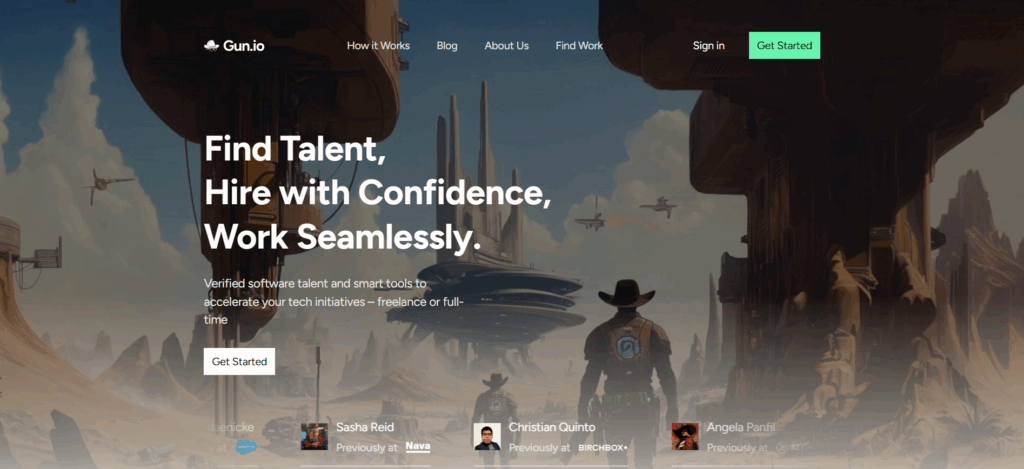
However, it might be too early to skip the platform entirely. Gun.io didn’t start out as another faceless SaaS hire-a-dev machine or generic freelance marketplace. The platform was founded in 2013 by a couple of developers frustrated by the chaos of the freelance wild west—think missed deadlines, mystery skills, and communication breakdowns that’d make a recruiter cry.
Instead of chasing unicorns with resumes full of fluff, Gun.io set out to be the matchmaker for grownups: only work with proven full-stack developers and specialized engineers who’d already built real things, knew their way around a client call, and could pass the “would you hire this person again?” test.
Fast-forward to today, and Gun.io is still leaning into its “relationship-first” and very authentic DNA. The pitch: forget armies of anonymous freelancers—what you get is a boutique pool of senior devs who can hit the ground running, versatile engagement models, a dedicated team of advocates who’ve been there, and matching done by humans.
While alternative platforms offer broader global reach or cheaper rates, Gun.io continues to hold some clear advantages:
- high concentration of senior developers
- good for nearshore, US-centered collaboration
- human-led technical screening process
- direct talent rate transparency
- dedicated ongoing client governance
If you prioritize deep senior expertise and hands-on account support over low hourly rates or a rapid time-to-hire, Gun.io remains a strong, high-touch option.
However, for startups needing fast matching and flexible global pricing, alternative vetted networks such as Lemon.io may be a better fit for your budget.
How to choose a Gun.io alternative that works for you
Choosing the right platform for finding developers comes down to matching your immediate project needs with the platform built to solve them:
- For enterprise systems & complex architectures, pay premium rates on Toptal or Andela to secure heavy compliance and scale-up infrastructure, and be ready for long-term project scoping.
- For quick bug fixes with an in-house CTO, use Upwork’s open marketplace to hire low-cost freelancers and run your own interviews.
- For strict US time-zone overlap on web apps, opt for CloudDevs to secure nearshore Latin American developers with guaranteed work-hour overlap or choose Gun.io — still a good option if your budget allows.
- For lean MVPs and fast startup iterations, choose Lemon.io for pre-vetted senior talent, low rates, and a 24-hour turnaround.
And one more thing. If you are an early-stage founder trying to stretch your runway without sacrificing code quality, heavy agency fees and two-week matching delays will only stall your momentum.
This is where leaving a hiring request with Lemon.io becomes the fastest, most precise, and budget-smart alternative of all. With pre-vetted engineers across 100+ tech stacks, you can get matched with a handpicked developer within 24 hours and start building your product next week. So why not give it a try?