


Every year, dozens of coding bootcamps promise to teach full-stack development, data science, or cybersecurity in a matter of months, often for less than a single semester of college.
We compared 20+ of the most-discussed coding bootcamps on the following criteria: who’s teaching, whether graduates work on real engineering projects, how transparent the schools are about employment outcomes, and what kind of support students receive when it’s time to start interviewing.
#1. Codesmith
Codesmith is one of only three bootcamps in this comparison that currently publishes independently audited employment outcomes through Council on Integrity in Results Reporting (CIRR). Designed for learners with prior programming experience, it goes beyond introductory web development to cover advanced JavaScript, distributed systems, and AI engineering concepts, such as retrieval-augmented generation (RAG), vector databases, and LLM integrations. Its emphasis on production-grade engineering projects and technical communication makes it particularly well suited to students targeting mid-level and senior software engineering roles rather than junior developer positions. Codesmith’s core differentiator is lifetime career support after graduation.
Tuition fees: Approximately $20,000; free courses and materials are available
Rating across platforms: Course Report: 4.9/5 (596 reviews) | SwitchUp: 4.9/5 (353 reviews)
Check out our list of the best 25 coding podcasts.
#2. Code Platoon
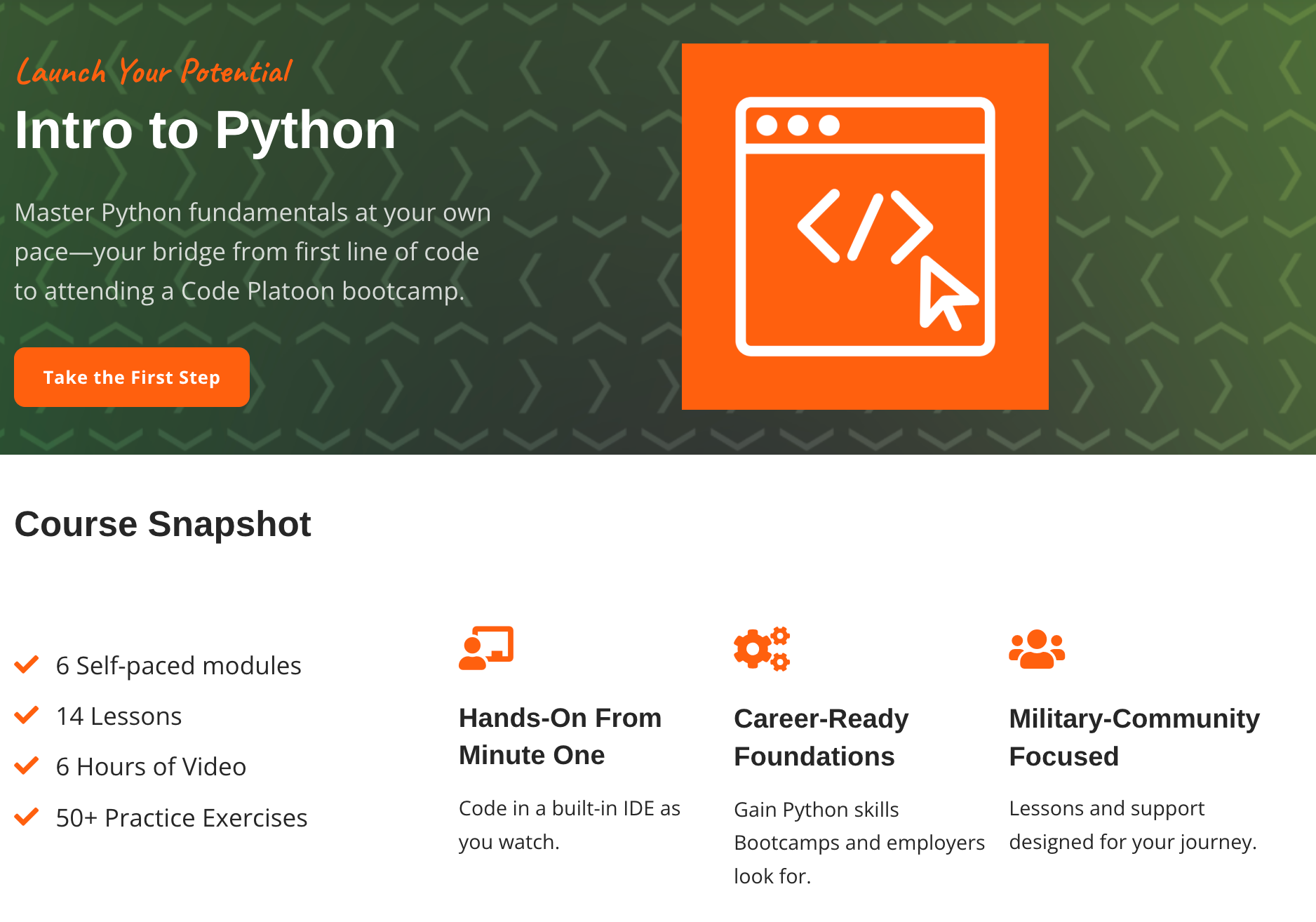
Code Platoon is a nonprofit software engineering bootcamp created specifically for veterans, active-duty service members, and military spouses. Students learn full-stack development with Python, JavaScript, React, and SQL while working on collaborative engineering projects that mirror professional development teams. There are also free courses that help veterans learn the fundamentals of various programming languages. The program also offers an AI Cloud & DevOps Engineering track for students pursuing infrastructure and cloud careers. As a current CIRR member, Code Platoon is one of the few bootcamps that independently verifies its graduate employment outcomes.
Tuition fees: $20,000 (GI Bill, VR&E, and scholarships available)
Rating across platforms: Course Report: 5.0/5 (143) | SwitchUp: 5.0/5 (121)
#3. Hacktiv8
Hacktiv8 is Indonesia’s best-known online coding bootcamp and one of the few outside North America that reports graduate outcomes through CIRR. Its immersive Full-Stack JavaScript program combines React, Node.js, databases, and software engineering fundamentals with project-based learning, while additional tracks cover data science and cybersecurity. Students can also finance their tuition through an income-share agreement, thereby lowering the upfront cost of switching careers.
Tuition fees: Approximately $2,500
Rating across platforms: Course Report: 4.8/5 (687) | Career Karma: 4.7/5 (67 reviews)
#4. Springboard
Springboard takes a different approach from cohort-based bootcamps by pairing every student with an experienced industry mentor while allowing them to learn at their own pace. Its Software Engineering Career Track covers the MERN stack, SQL, APIs, and modern development workflows over approximately nine months. The program also stands out for offering a money-back guarantee for eligible graduates who don’t secure a qualifying job within the required timeframe. However, prospective students should carefully review the eligibility requirements.
Tuition fees: $9,900–$13,950
Rating across platforms: Course Report: 4.6/5 | SwitchUp: 4.7/5 (1842 reviews) | Trustpilot: 4.0/5 (357 reviews)
#5. TripleTen
TripleTen is designed specifically for beginners, with most students entering the program without prior technical experience. The curriculum covers full-stack web development with JavaScript, React, Node.js, and databases through guided projects. At the same time, every student completes an externship with one of the company’s partner organizations to gain commercial experience before graduating. TripleTen also backs its programs with a tuition refund guarantee for eligible graduates who don’t find a qualifying tech job after completing career services.
Tuition fees: Approximately $9,800
Rating across platforms: Course Report: 4.8/5 (542 reviews) | SwitchUp: 4.9/5 (256 reviews) | Trustpilot: 4.5/5 (1167 reviews)
#6. General Assembly
General Assembly is one of the largest and longest-running coding bootcamps, with more than 2 million graduates worldwide. Its Software Engineering Bootcamp combines Python, JavaScript, APIs, databases, and full-stack application development with structured career coaching, mock interviews, and networking support. Backed by global staffing company Adecco Group, General Assembly also offers flexible study formats and financing options, making it one of the most recognizable names in career-focused tech education.
Tuition fees: Approximately $15,950
Rating across platforms: Course Report 4.3/5 (713 reviews) | SwitchUp: 4.3/5 (1005) | Trustpilot: 4.0/5 (91 reviews)
#7. Flatiron School
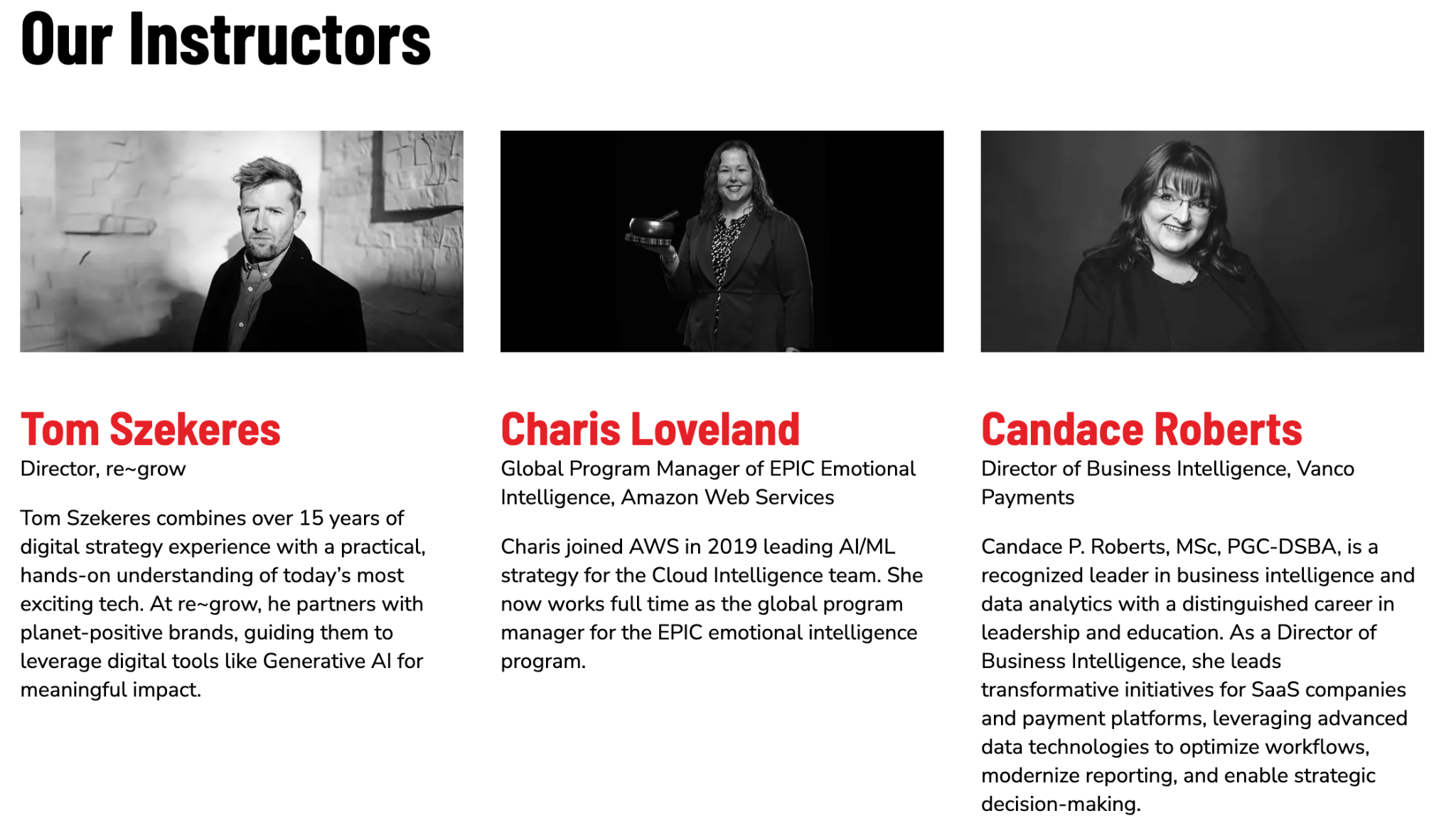
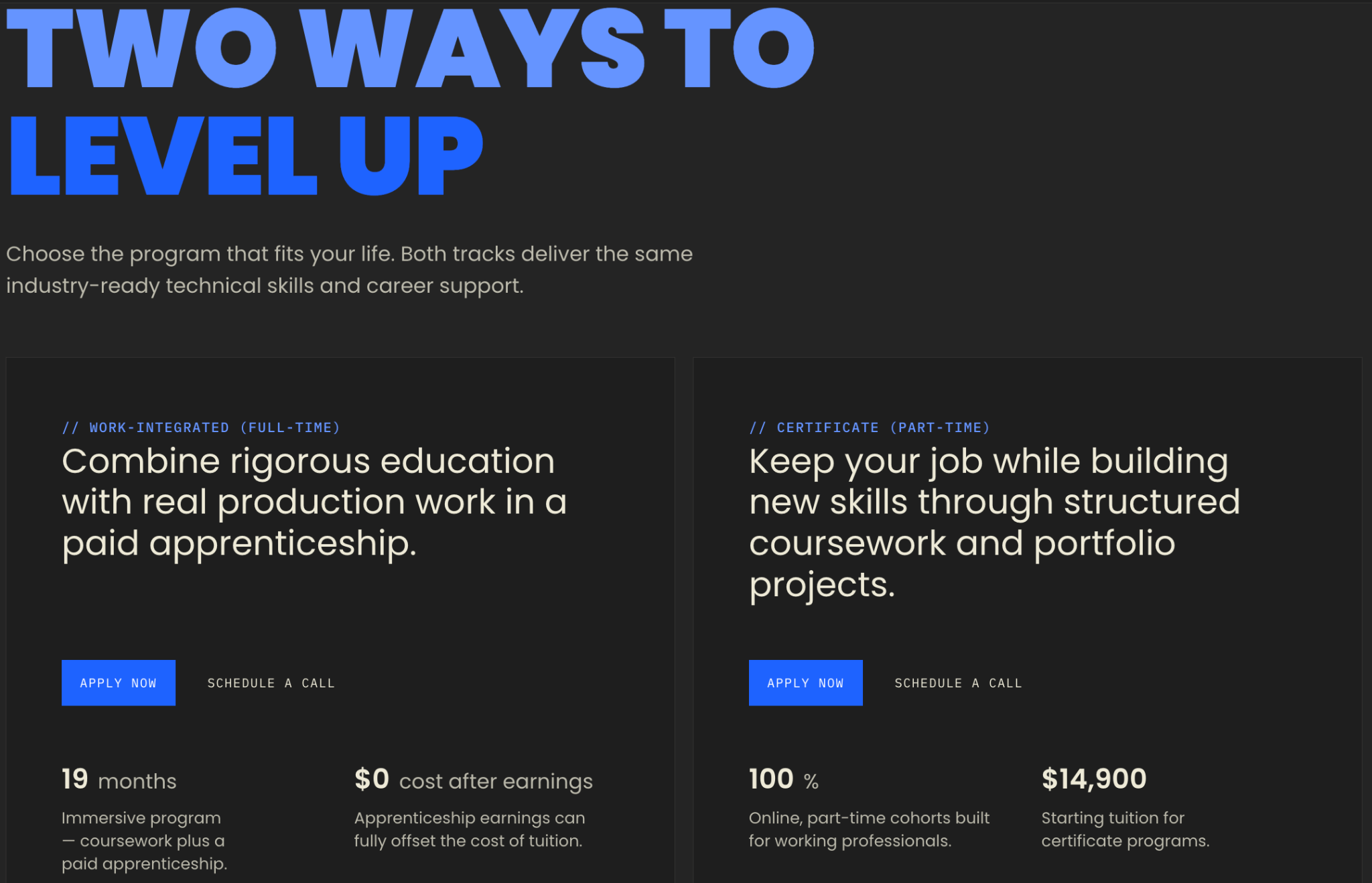
Flatiron School offers an intensive Software Engineering program built around JavaScript, Python, SQL, APIs, and modern software development practices. One of its distinguishing features is the Work-Integrated Learning track, which combines technical training with paid apprenticeship opportunities, enabling students to graduate with commercial experience rather than portfolio projects alone. Although Flatiron previously reported graduate outcomes through CIRR, its publicly available reports are historical rather than current.
Tuition fees: $14,900–$29,900
Rating across platforms: Course Report: 4.4/5 (581 reviews) | SwitchUp: 4.6/5 (268 reviews)
#8. Hack Reactor
Hack Reactor focuses on preparing students for professional software engineering careers through an immersive JavaScript- and Python-based curriculum that also introduces modern AI-assisted development workflows. Students build increasingly complex applications while working in collaborative teams that simulate professional engineering environments. Career coaching continues after graduation, although the school no longer publishes independently verified placement data.
Tuition fees: Approximately $17,980
Rating across platforms: Course Report: 4.6/5 (330 reviews) | SwitchUp 4.8/5 (312 reviews) | Trustpilot: 4.7/5 (47 reviews)
#9. App Academy
App Academy has evolved significantly since partnering with Coding Temple, shifting its curriculum toward Python, React, AI application development, and modern software engineering practices. While the program continues to emphasize portfolio building and interview preparation, its widely cited employment outcomes refer to the legacy App Academy rather than the current offering. Prospective students should evaluate the updated curriculum on its own merits instead of relying on historical placement statistics.
Tuition fees: $3,500–$10,000
Rating across platforms: Course Report: 4.6/5 (1155 reviews) | SwitchUp: 4.7/5 (1204 reviews)
#10. Codeworks
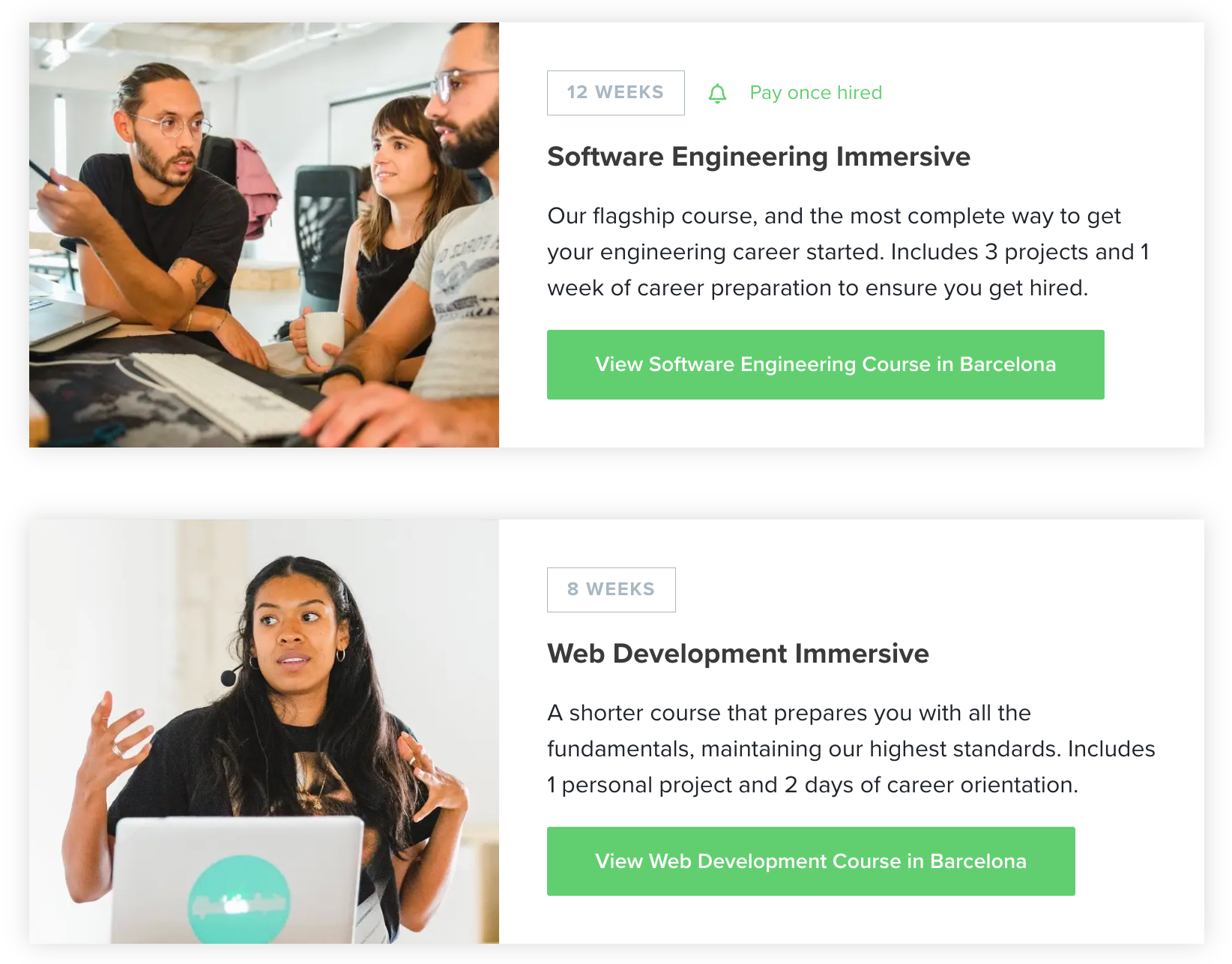
Codeworks is a European software engineering bootcamp with on-site campuses in Barcelona, Berlin, and London as well as fully remote cohorts worldwide. The curriculum concentrates on advanced full-stack JavaScript development through pair programming, collaborative engineering projects, and intensive interview preparation. Rather than targeting complete beginners, Codeworks is generally better suited to students with some existing coding knowledge who want to accelerate into professional software engineering roles.
Tuition fees: $4,800–$14,800
Rating across platforms: Course Report: 4.9/5 (191) | SwitchUp: 4.93/5 (207 reviews)
#11. Coding Temple
Coding Temple has expanded beyond traditional web development into AI Software Engineering, teaching students to build applications with Python, SQL, FastAPI, vector databases, and RAG. Alongside portfolio projects, the bootcamp offers career coaching, resume support, and deferred tuition options, including a conditional tuition refund for graduates who meet its job search requirements.
Tuition fees: $3,500–$10,000
Rating across platforms: Course Report: 4.8/5 (464 reviews) | SwitchUp: 4.9/5 (179 reviews) | Trustpilot: 4.4/5 (103 reviews)
#12. 4Geeks Academy
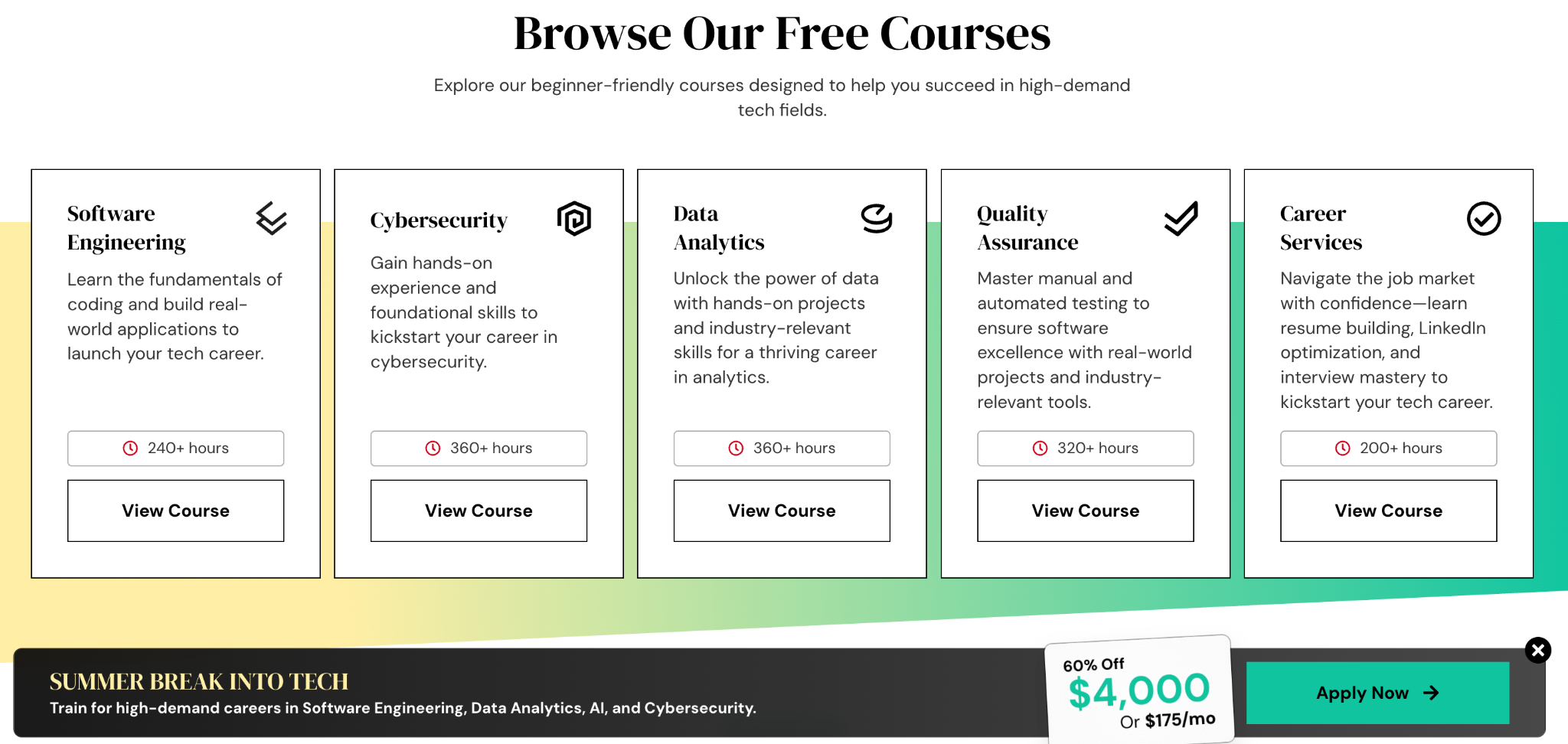
4Geeks Academy combines AI-assisted software engineering with full-stack development, data science, and cybersecurity across campuses in North America, Europe, and Latin America. Students build practical applications throughout the program, while flexible financing options (including income share agreements) make the bootcamp accessible to career changers. The academy also publishes detailed regional employment reports, although these outcomes are self-reported rather than independently audited.
Tuition fees: $8,999–$9,999
Rating across platforms: Course Report: 4.8/5 (182) | SwitchUp: 4.9/5 (202) | Trustpilot: 4.0/5 (28 reviews)
#13. BrainStation
BrainStation is a UK-based bootcamp that offers AI development and software engineering education as well as programs in UX design, digital marketing, project management, and data science. Its Software Engineering Bootcamp emphasizes modern JavaScript development, collaborative projects, and hands-on instruction from industry professionals. Although BrainStation enjoys a strong reputation across review platforms, its publicly available graduate employment statistics haven’t been updated in recent years. The company also hosts various events, masterclasses, and demos to provide students with more real-life experiences.
Tuition fees: Up to $16,500
Rating across platforms: Course Report: 4.7/5 (2339 reviews) | SwitchUp: 4.6/5 (326 reviews) | Trustpilot: 3.9/5 (14 reviews)

#14. Turing College
Turing College is a fully online, self-paced bootcamp that combines one-on-one mentorship with project-based learning instead of traditional lectures. Its Software & AI Engineering program covers Python, backend development, LLM applications, and modern AI frameworks, making it one of the most AI-focused curricula in this comparison. Students progress through real engineering assignments while receiving continuous feedback from experienced mentors.
Tuition fees: Approximately €5,400 (discounts available)
Rating across platforms: Course Report: 4.9/5 (406 reviews) | SwitchUp: 5.0/5 (218 reviews) | Trustpilot: 4.9/5 (233 reviews)
In the RLHF article, we’ve also compared Turing with other data annotation vendors.
#15. Nucamp
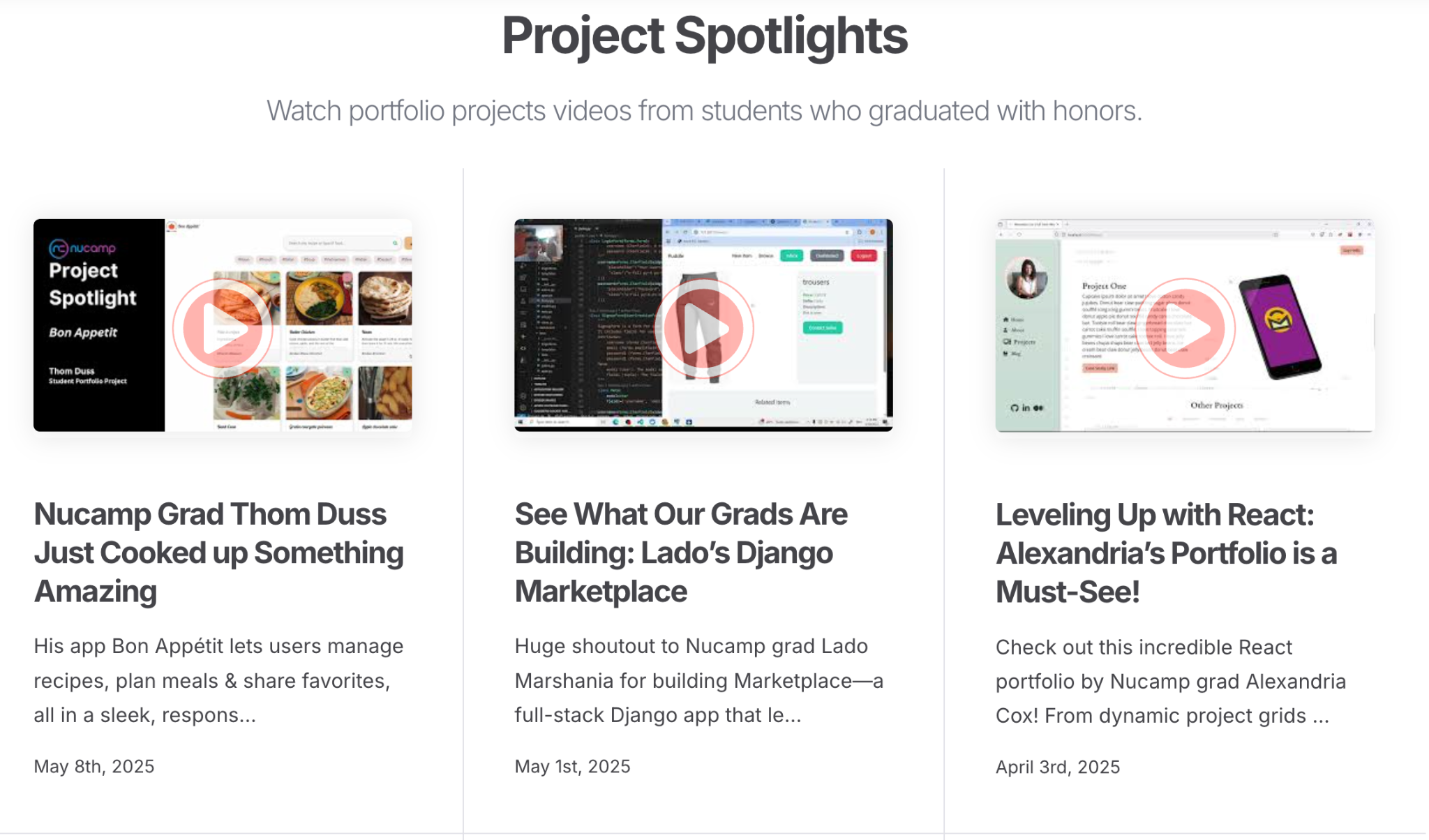
Nucamp focuses on affordability, offering part-time online programs that allow students to continue working while learning web development, backend engineering, cybersecurity, or cloud computing. Although its curriculum is less intensive than many immersive bootcamps, flexible payment plans and relatively low tuition make it an accessible option for beginners exploring software development without committing to a five-figure investment.
Tuition fees: $458–$2,604
Rating across platforms: Course Report: 4.7/5 (1897 reviews) | SwitchUp: 4.7/5 (755 reviews) | Trustpilot: 4.2/5 (397 reviews)
#16. The Tech Academy
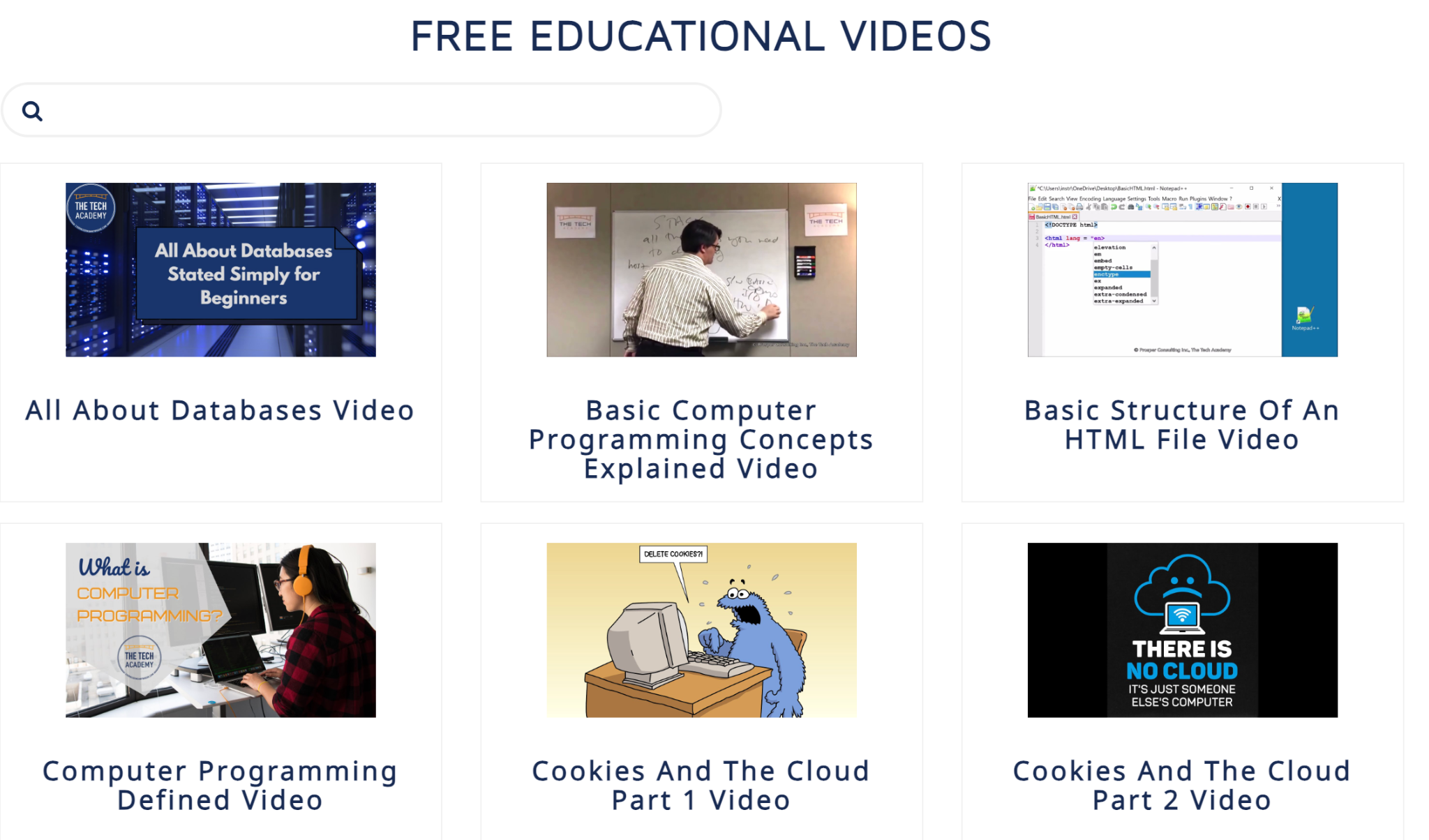
The Tech Academy offers one of the broadest selections of technology programs, spanning software development, cybersecurity, data analytics, data science, AI, Python, and UI/UX design. Students learn through a self-paced curriculum with instructor support and can choose from online or on-campus formats. Notably, the school avoids publishing promotional placement statistics, instead encouraging prospective students to evaluate outcomes using independent reporting standards.
Tuition fees: $5,580–$8,380
Rating across platforms: Course Report: 4.8/5 (432 reviews) | SwitchUp: 4.8/5 (374 reviews)
#17. Skill Distillery
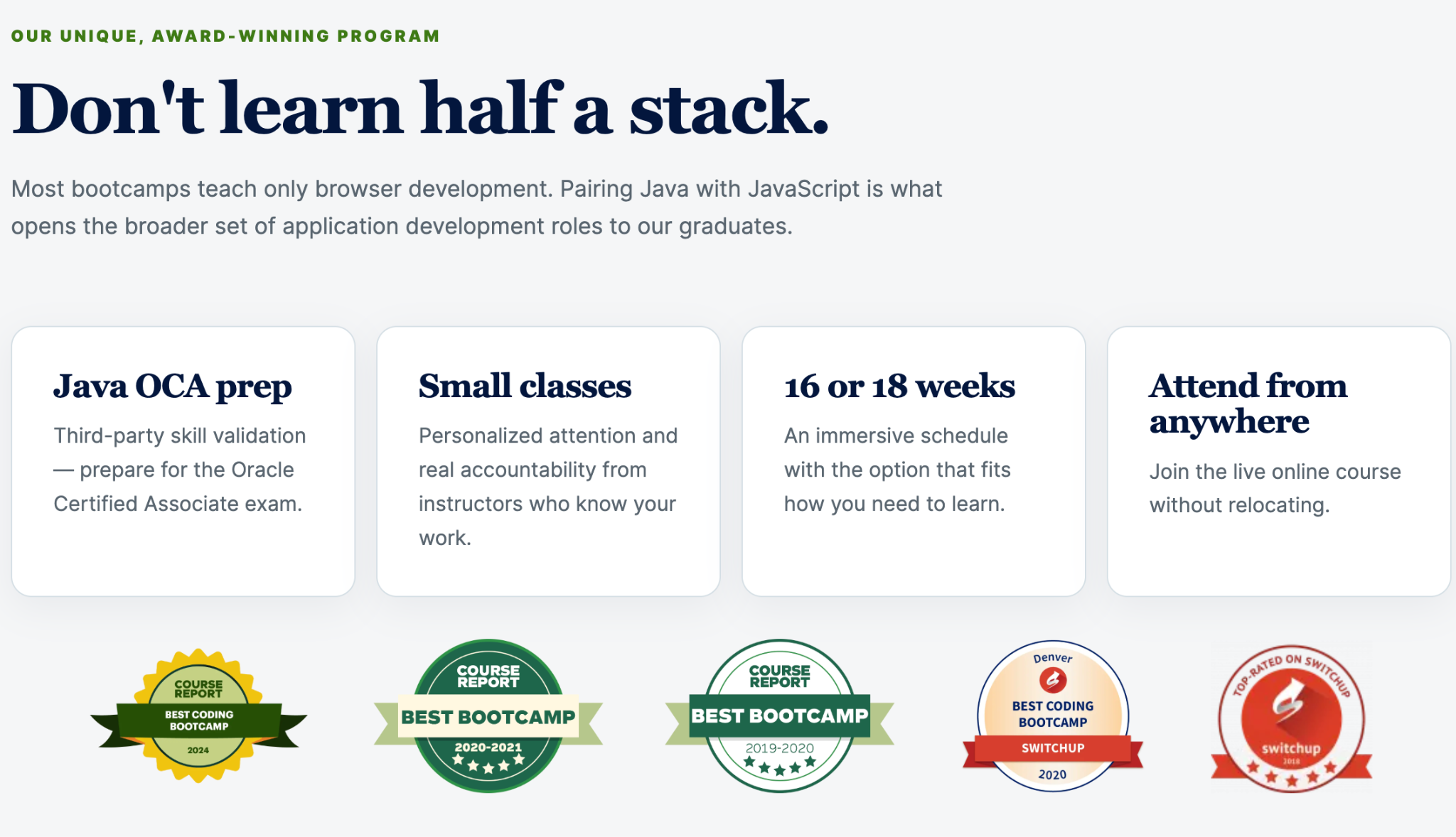
Unlike most coding bootcamps that emphasize JavaScript, Skill Distillery specializes in enterprise Java development using Spring Boot, object-oriented programming, relational databases, and backend architecture. Students complete collaborative full-stack projects while preparing for Oracle Java certification, making the program particularly relevant for those targeting enterprise software engineering positions.
Tuition fees: Approximately $19,950
Rating across platforms: Course Report: 4.7/5 (148 reviews) | SwitchUp: 4.9/5 (90 reviews)
#18. Launch Academy
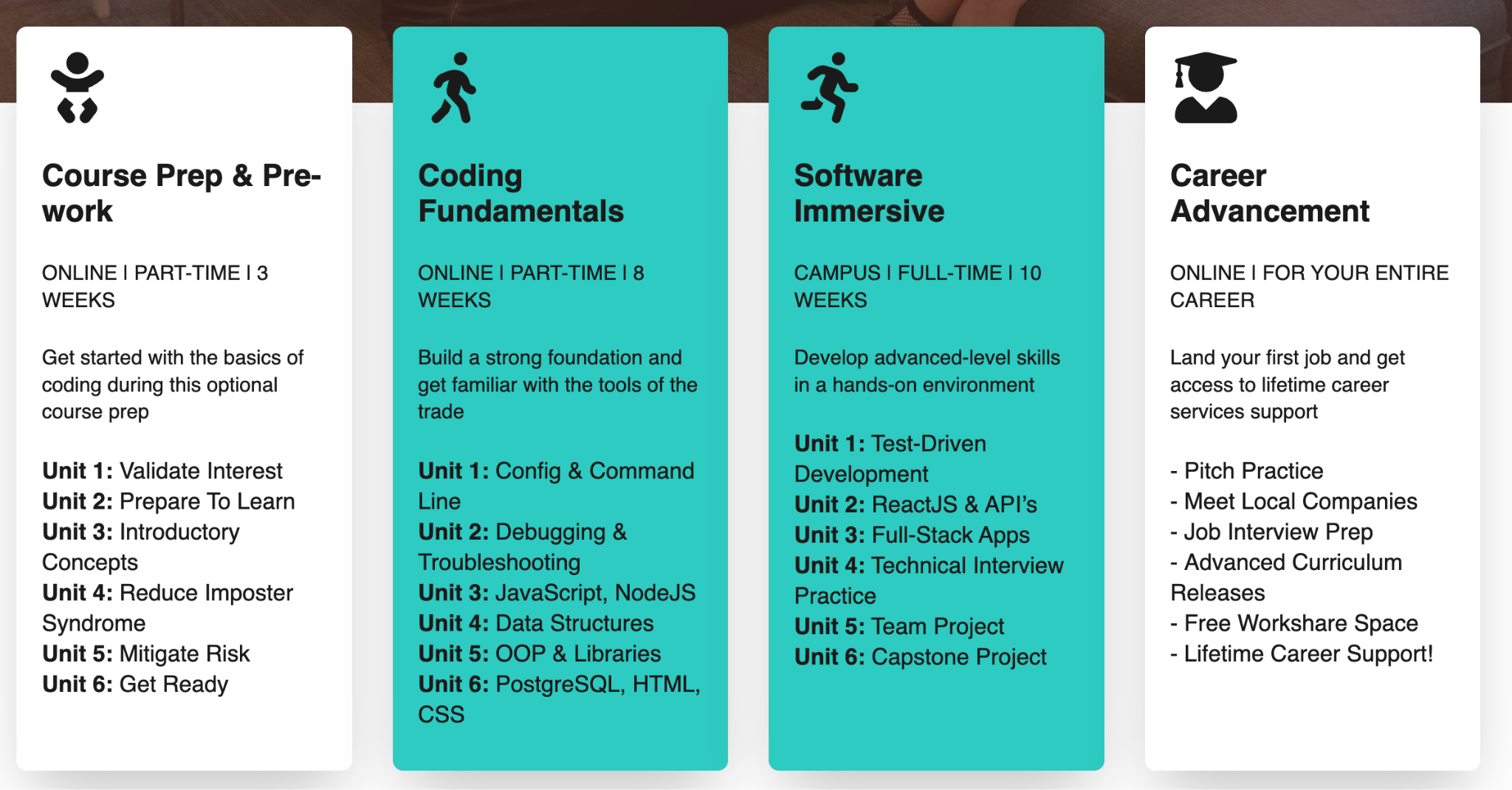
Launch Academy is a selective Boston-based bootcamp that combines online instruction, in-person software engineering training, and structured job-search support over a six-month program. Students spend much of the curriculum working collaboratively on production-style JavaScript applications before transitioning into an employer-focused placement phase. Launch Academy also has a long track of reporting employment outcomes through CIRR, although the latest public reports are historical.
Tuition fees: Up to $17,500
Rating across platforms: Course Report: 4.6/5 (54 reviews) | SwitchUp: 4.5/5 (65 reviews)
#19. Tech Elevator
Tech Elevator differentiates itself by focusing on enterprise software development rather than consumer web applications. Students can specialize in either Java or .NET while learning databases, APIs, testing, and professional software development practices commonly used by large organizations. The bootcamp has historically published CIRR outcomes and maintains strong employer partnerships across the United States, although its latest independently audited reports date back several years.
Tuition fees: Up to $16,500
Rating across platforms: Course Report: 4.9/5 (509 reviews) | SwitchUp: 4.9/5 (232 reviews)
#20. Ada Developers Academy
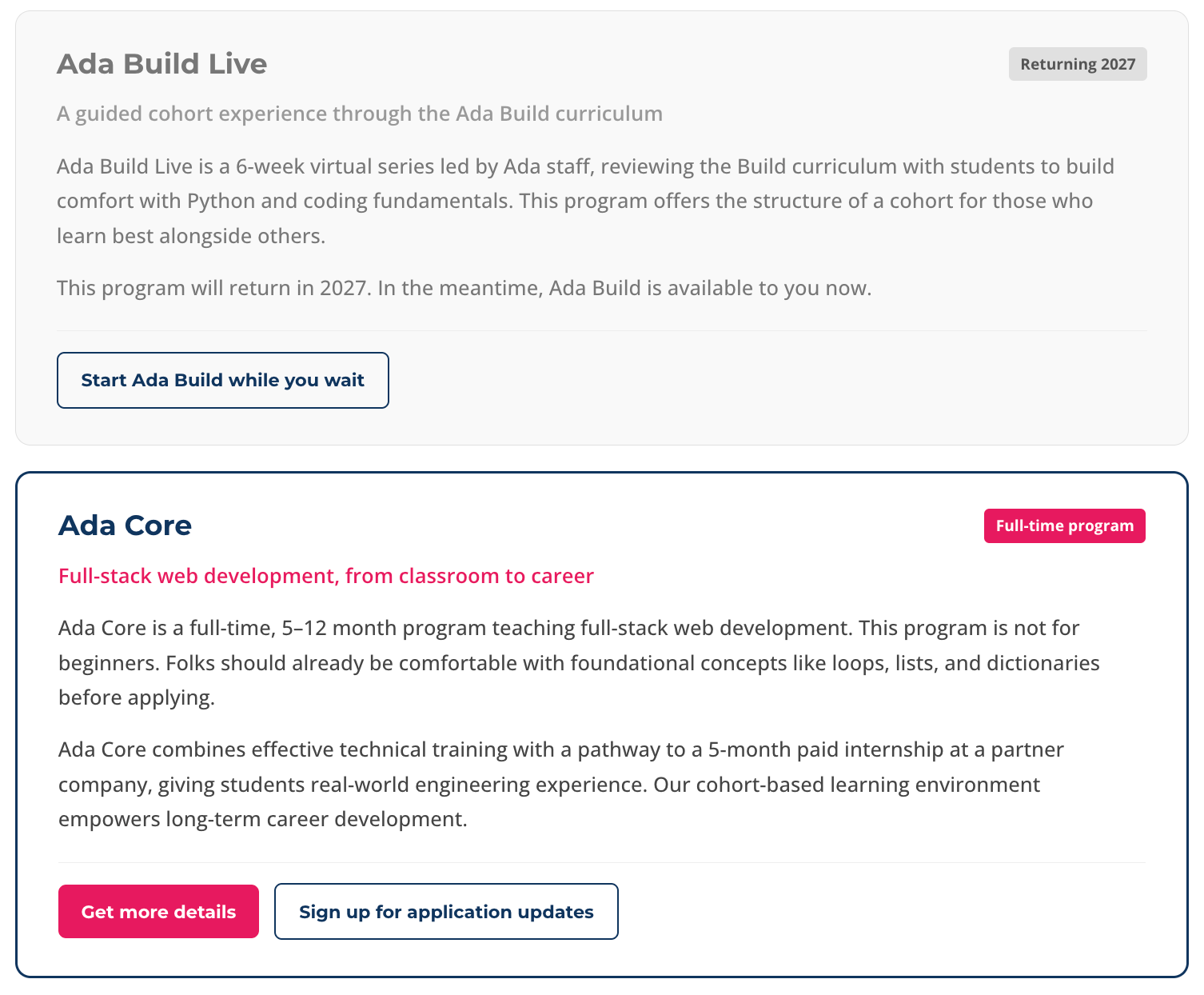
Ada Developers Academy is a nonprofit, tuition-free bootcamp created for women and gender-expansive adults pursuing careers in software engineering. The program combines six months of full-stack training in Python, React, SQL, and software engineering fundamentals with a mandatory five-month paid internship at partner companies, allowing graduates to enter the job market with real commercial experience. Its selective admissions process and internship model make it one of the most distinctive programs in this comparison.
Tuition fees: Free
Rating across platforms: SwitchUp: 4.3/5 (12 reviews)
How to Avoid Scams When Choosing a Bootcamp?
The Council on Integrity in Results Reporting (CIRR), the industry’s one real independent auditor, flags a specific set of warning signs, and they’re worth checking before you enroll or build a hiring pipeline around a program’s graduates:
- Missing or selective data that excludes non-graduates or students still job-hunting.
- Employment or salary claims without independent audit or verification.
- Vague metrics like “high job placement” that never specify a timeline, such as 60 days, 180 days, or a year.
- No documented career intent at enrollment, which opens the door to counting any job, in any field, as a “placement.”
- Inconsistent or incomplete reporting periods across different pages of the same site.
- No annual third-party audit of the data.
- Graduates lumped into vague “other” or undefined employment categories.
- High dropout rates reported with no explanation.
- Placement numbers inflated by hiring grads internally as teaching assistants or staff.
- Graduation rates that are unclear or missing entirely.
Where Lemon.io Fits in: Proof of Work Over Pedigree
We don’t run a bootcamp, and we’re not selling one. Lemon.io is a marketplace for hiring vetted, senior developers — full-stack, front-end, back-end, DevOps, AI engineers — on a direct or contract basis. But we read a lot of resumes, and the debate over bootcamp vs. computer science degree looks different from where we sit: we don’t care which one got a developer to the interview.
Our vetting process checks for proven commercial experience with the required stack. It’s a four-stage funnel: CV and pre-screening, a recruiter interview on communication and pressure-handling, a live technical interview with a senior engineer, and final onboarding. Out of every 100 applicants, roughly one makes it onto the platform. A computer science degree doesn’t fast-track anyone through that. Neither does a bootcamp certificate. What moves the needle is a portfolio of shipped work, the ability to explain trade-offs in a live technical interview, and, increasingly, in 2026, good judgment about when to lean on AI tools like Cursor or Claude Code and when to slow down and own the decision yourself.
Head-to-Head Comparison of the Best Coding Bootcamps
| Bootcamp | Who teaches | Verified hiring outcomes | Real engineering practice | Externship/client work | Independent reputation | Employment protection | Career support |
|---|---|---|---|---|---|---|---|
| Codesmith | Senior software engineers | CIRR verified | Excellent | Open-source production projects | Excellent | None | Extensive |
| Code Platoon | Industry engineers | CIRR verified | Excellent | Team-based client projects | Excellent | None | Extensive |
| Hacktiv8 | Industry engineers | CIRR verified | Excellent | Industry-sponsored projects | Excellent | Income Share Agreement | Strong |
| Springboard | Industry mentors | Self-reported | Excellent | Guaranteed externship | Excellent | Money-back guarantee | Extensive |
| TripleTen | Industry engineers | Self-reported | Strong | Company externship | Excellent | Money-back guarantee | Extensive |
| General Assembly | Industry practitioners | Self-reported | Strong | Internal capstones | Very strong | None | Extensive |
| Flatiron School | Industry practitioners | Historical CIRR | Strong | Apprenticeship option | Very strong | None | Extensive |
| Hack Reactor | Industry practitioners | Self-reported | Strong | Team capstones | Very strong | None | Extensive |
| App Academy | Industry practitioners | Historical outcomes | Strong | Portfolio projects | Strong | Flexible payment plans | Extensive |
| Codeworks | Industry practitioners | Self-reported | Strong | Team-based projects | Excellent | None | Strong |
| Coding Temple | Industry practitioners | Self-reported | Strong | Portfolio projects | Strong | Money-back guarantee | Extensive |
| 4Geeks Academy | Industry practitioners | Self-reported | Strong | Industry projects | Strong | Optional guarantee | Strong |
| BrainStation | Industry practitioners | Limited | Strong | Portfolio projects | Strong | None | Strong |
| Turing College | Industry mentors | Limited | Strong | Industry simulations | Strong | None | Strong |
| Nucamp | Industry practitioners | Limited | Good | Portfolio projects | Strong | None | Standard |
| The Tech Academy | Industry practitioners | Self-reported | Good | Portfolio projects | Good | Conditional refund | Strong |
| Skill Distillery | Industry practitioners | Self-reported | Strong | Portfolio projects | Strong | None | Strong |
| Launch Academy | Industry practitioners | Historical CIRR | Strong | Startup partnerships | Strong | None | Extensive |
| Tech Elevator | Industry practitioners | Historical CIRR | Strong | Employer partnerships | Excellent | None | Extensive |
| Ada Developers Academy | Industry engineers | Self-reported | Excellent | Paid internship | Excellent | N/A | Extensive |