

Great sign for your business: according to Harvard Business School, today’s engineers are willing to accept a 25% lower salary for fully remote roles than for in-person positions. In practical terms, this creates a competitive edge for smaller businesses hiring in a crowded tech market.
And one more good news. Remote engineering can enhance your product at a lower cost, as remote workers are 12% faster and more accurate with focused tasks like software development.
Yet “remote success” is not something automatic—it depends on one critical factor, thoughtful remote leadership.
With years of experience helping businesses scale high-performing remote teams, we’re here to share easy-to-apply insights that can support your growth.

Key Challenges of Remote Engineering Today
Remote software development is no longer a fast response to the pandemic—it is a time-proven operating model. For founders and SMB leaders, its appeal is clear: access to global talent, cost savings, and improved retention.
But what about risks?
While the manager’s role remains the same, virtual team leadership poses new challenges for startups:
Communication gap
When a remote development team meets via Slack or Zoom, details get lost. Requirements sound clear in the moment, but mean different things to different people. That leads to extra iterations and rework.
We recommend that you rely on visuals—such as screen recordings, schemes, and screenshots with comments. End each stand-up with a document summarizing it, keeping all decisions written down and easy to find later.
Knowledge sharing failure
When team members work remotely on separate tasks, they often keep their know-how to themselves without even noticing it. As a result, tips, shortcuts, and product context stay in their heads. If someone leaves, the team suddenly feels the gap.
Good news—you can schedule peer code reviews and rotate responsibilities every few sprints to avoid being dependent on particular experts.
Weak team spirit
A remote work environment can quietly become isolating. Without quick daily chats, shared laughs, or spontaneous brainstorming, people start feeling disconnected—not just from the team, but from the product itself.
When the sense of belonging fades, engagement naturally drops. To prevent this, intentionally build a connection into the workflow. For example, ask colleagues about their lives at the beginning of meetings and create online chats to share jokes.
Productivity tracking without pressure
Tracking software engineer performance can easily turn into micromanagement.
Never-ending monitoring, combined with daily reports, multiplies stress—and your people become afraid to experiment or take initiative. That’s how creativity and ownership suffer. So, streamline your productivity by focusing on outcomes. If someone delivers strong results and moves the product forward, trust them to manage their schedule!
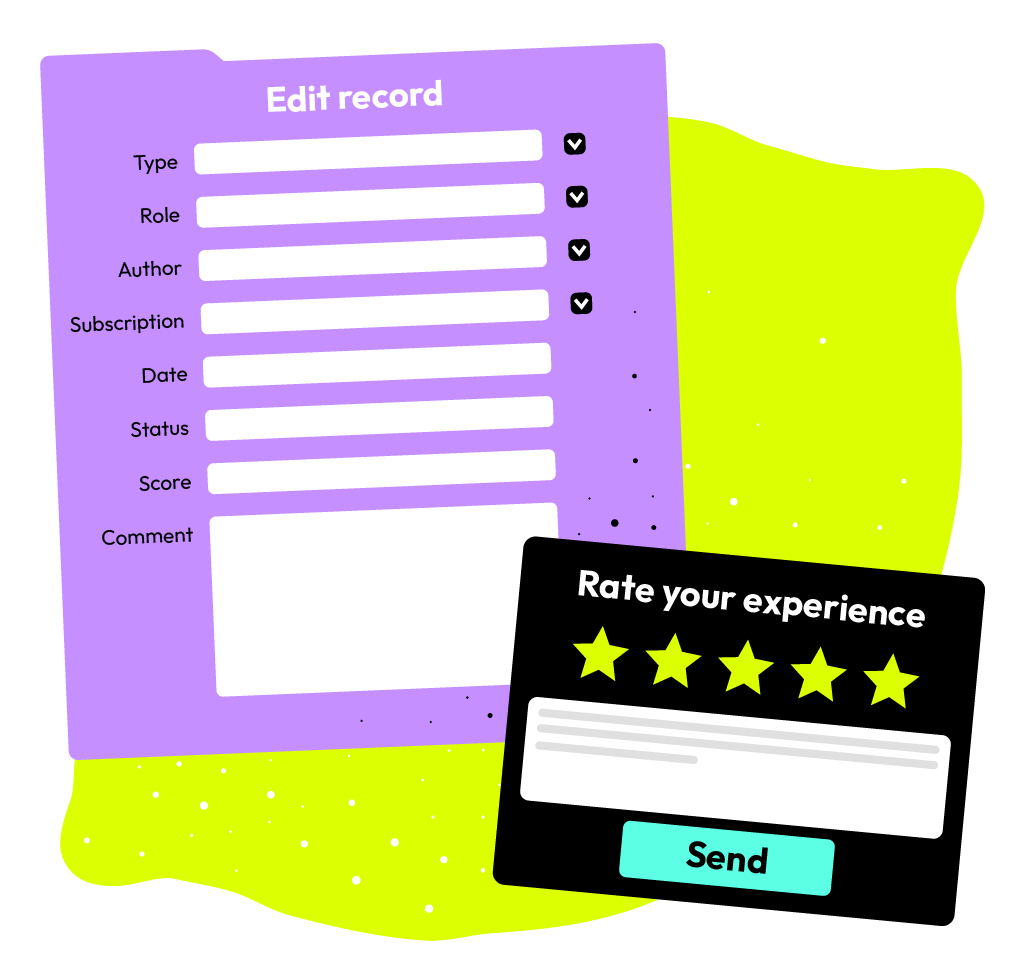
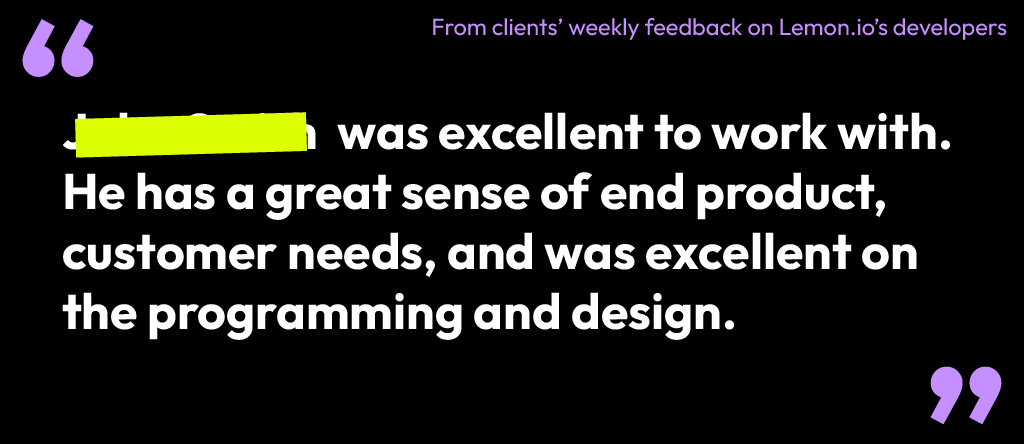
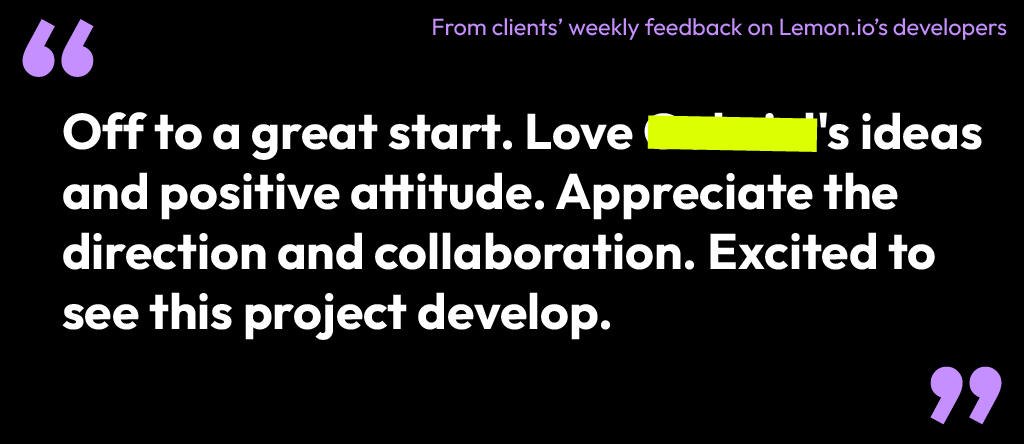
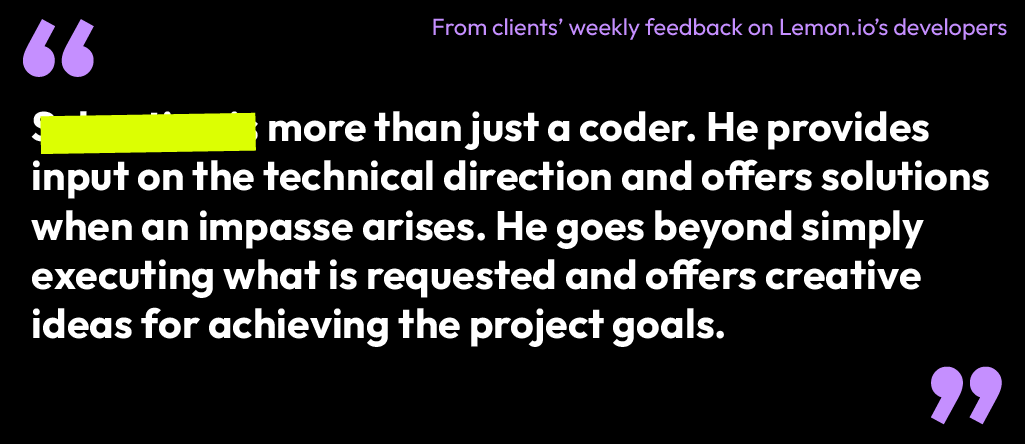
At Lemon.io, we ask you to share quick weekly feedback on your dedicated developers through a short review form:
7 Non-Negotiable Rules for Your Remote Leadership
Remote management in 2026 is no longer about becoming adaptable or building trust within a team—those are baseline expectations. What separates high-performing startups is clarity: how decisions are documented, time zones handled, and ownership distributed.
Here are the winning methodologies for managing remote engineering teams:
Don’t assign tickets—assign missions
Start with the big picture. Remote developers perform best when they own results, not just tickets in a Jira backlog. In particular, share the business goal, expected impact, and success metrics. When engineers understand the “why,” they make smarter product decisions without waiting for instructions.
Over-communicate decisions
Startups pivot—often. When priorities shift, explain what changed, why, and how it affects the roadmap. Then, set clear expectations.
Harvard Business Review reported that only 48% of managers feel trained to lead distributed teams effectively. To avoid being one of them, make clarity your competitive edge. A well-written update today can prevent days of confusion, silent frustration, and misaligned development tomorrow. So why not?
Onboard thoughtfully and don’t forget regular check-ins
Remote roles attract over 60% of applications, even though only 13—18% of tech jobs are fully remote. Although competition is high, retention depends on the structure. So, how to build it?
Create onboarding checklists (access, clear goals, working norms) and define recurring touchpoints: updates, weekly syncs, one-on-ones, and feedback video calls. Stability builds confidence, especially in the first days.
If it’s not written, it doesn’t exist
Async-first is not optional—it’s operational hygiene today. Requirements, decisions, and updates should be documented, searchable from day one, and accessible to everyone who needs them. Therefore, a modern intranet serves as a foundation of information and transparency where the entire engineering team can stay aligned.
Master the calendar—master the chaos
Remote doesn’t mean always available—especially when your team works across different time zones. Define working hours, response-time expectations (example: 2 hours for urgent, 24 hours for standard), and protect blocked focus time. Clear rules make teamwork less stressful and prevent burnout.
Turn code reviews into a superpower
If you think that code reviews are micromanagement, think again. In fact, they’re quality control and knowledge transfer in one system.
Teach your software development team to give feedback and normalize receiving it. Strong peer reviews and pair programming reduce dependence on individuals and, more importantly, raise the technical bar across the team.
This is especially important for evolving niches such as AI engineering and machine learning.
Make progress visible (or risk burnout)
98% of remote professionals want to continue working remotely, yet exclusively remote employees report higher daily stress (45%) and loneliness (27%)—Fortune.
Burnout often comes from invisible progress, not workload alone. So show developers how their work moves the needle on metrics. When impact is visible, motivation becomes sustainable.
At Lemon.io, we believe that remote management in 2026 is less about control and more about clarity—that’s why we analyze in depth who exactly you need on your team.
More on our methods: Our vetting process in detail.
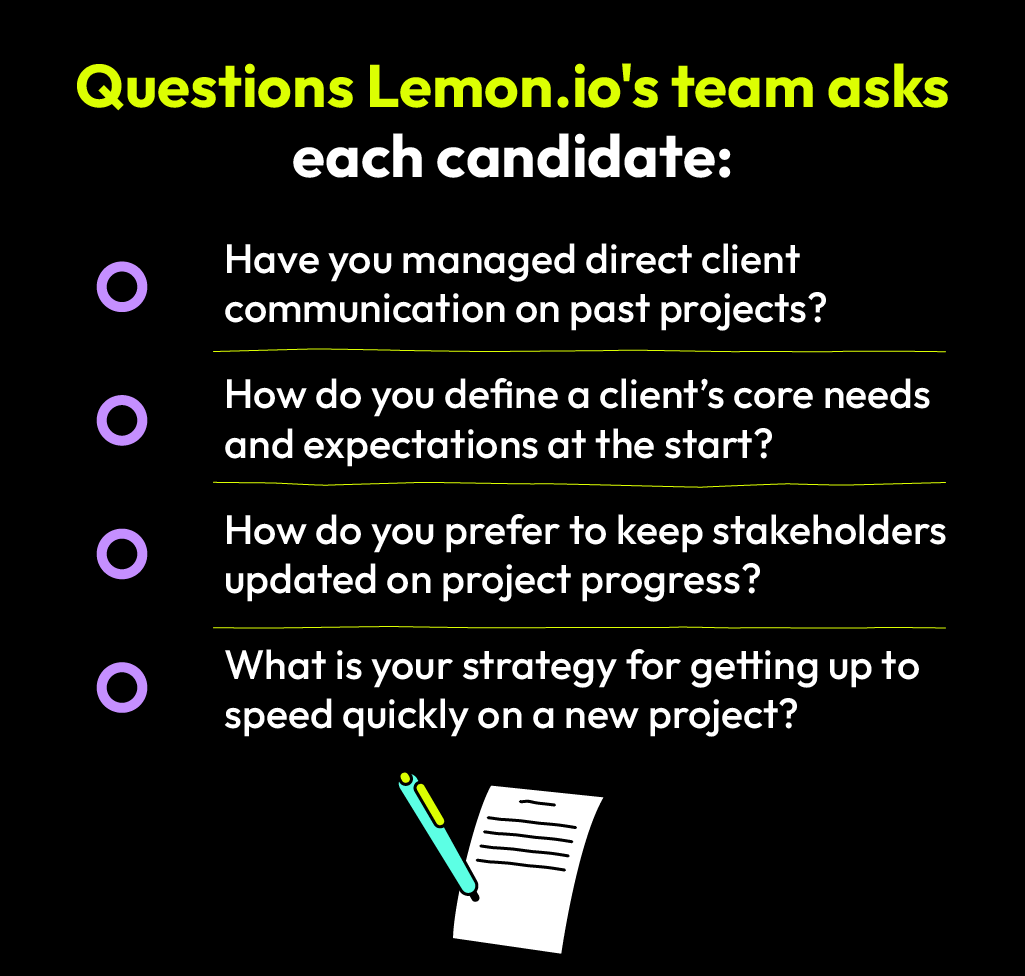
What Makes a Great Remote Engineer [checklist]
In remote teams, technical skills alone are not enough. Productivity and product quality depend heavily on how engineers communicate, take ownership, and adapt to change.
At Lemon.io, we work with vetted senior developers—including full-stack developers and specialized ones—and specifically check their remote work experience and ability to perform well without constant control.
Based on our experience, here are the key traits managers should appreciate in team members:
Ownership mentality
Strong remote engineers take responsibility for outcomes, not just tasks. In particular, they proactively identify risks, suggest improvements, and move projects forward without waiting for details.
Understanding the business context
It doesn’t matter whether you’re building a stock trading app or a simple to-do list. A great developer looks beyond the feature itself and asks: Who are the users? How do they behave? What problem are we really solving? And their main goal is to make a product scalable and sustainable.
Clear communication
That’s the foundation—top developers who work remotely express their ideas in writing and speak clearly on video conferencing. This effective communication reduces misunderstandings and shortens feedback loops, protecting your delivery timelines.
Growth-oriented thinking
Top remote engineers see challenges as opportunities to improve and refine solutions. This mindset drives continuous progress and long-term product evolution.
Professional humility
Informal communication matters—and a healthy work environment, too. So choose in-house candidates who are likely to accept feedback calmly, admit mistakes, and focus on solutions.
Documentation habits
High-performing remote developers document decisions and share context openly—this prevents knowledge silos and unlocks scaling opportunities for your team.
Your Effective Tech Stack: Build More by Managing Less
We’ve seen one pattern repeated across dozens of early-stage startups: complexity kills speed. Founders often overload their teams with enterprise-grade tools before they have enterprise-level problems.
Our opinionated advice? Start minimal! A focused, lightweight stack reduces onboarding, cuts unnecessary meetings, and keeps engineers focused on shipping product.
Here are the right tools we recommend for managing remote teams:
Slack
for communication
It is a fast, asynchronous communication hub that organizes conversations by channel.
This tool mainly lowers email clutter. It also supports quick clarifications without turning everything into a meeting, whether you are organizing a team of game developers or a data analyst unit.
Slack is perfect for startups as it has a simple structure, searchable history, and easy integrations (Google products and more). Additional bonus—you’d barely find a senior-level developer who doesn’t have long-term experience with Slack.
Alternative communication tool: Microsoft Teams (often better suited for corporate environments).
Linear
for project management
Linear is a clean, developer-friendly issue tracker built for speed. In its core, it keeps backlogs, sprints, and priorities structured without overwhelming teams with unnecessary configuration. Here, the key bonuses are a clean, clear interface, fast workflows, and minimal admin effort.
Notion
for documentation
Most people heard about it as a personal tool. However, it can also serve as a flexible, easy-to-access workspace for documentation, product specs, decision logs, and async project updates. Which means it supports the “document-first” culture your remote teams need.
Notion combines a wiki, lightweight project management, and an internal knowledge base in one place. And it has numerous templates you can use right away.
Alternatives project management tools: Jira (powerful but often too complex for small teams), Trello, or Asana (simpler but may lack depth as you scale).
GitHub
for code management
Meet the industry standard for version control, pull requests, and code reviews—a remote team management tool that keeps collaboration structured and contributions fully transparent from day one. It grows with you, working just as effectively for a small founding team as it does for a fast-scaling startup.
With its automation function and a clear, frictionless peer-review workflow, it helps you maintain high code quality without slowing down.
Alternative collaboration tools: GitLab and Bitbucket.
Sentry
for debugging
Sentry gives you real-time error monitoring that helps your team spot and fix issues before users even notice them. Instead of waiting for complaints or digging through logs, you see exactly what broke, where, and why.
For startups, it’s a smart shortcut: you get powerful debugging and visibility without building a complex monitoring system. It’s simple to set up, cost-effective, and scales as your product grows.
The stack we suggest you cover: communication, planning, documentation, coding, and monitoring. This is our recommendation, not a universal rulebook. However, based on our experience matching developers and founders, this tech stack helps small teams move faster and stay aligned.
And yes, we are sure that our developers are aware of all the tools we mentioned.
Remote Management Getting Easy—with Lemon.io
Still feeling unsure about your remote team? That’s normal. But the truth is, once you have the right people on board, half the battle is already won.
Hiring remote developers shouldn’t feel like a leap of faith—and with Lemon.io, it doesn’t. We’ve built a system that keeps your entire team sharp and moving fast:
First, we look for real remote players—who take ownership, communicate clearly, and don’t wait to be told what to do.
Second, after the intro call, we stay close, gather feedback, and keep an eye on how things are going. If something feels off, you ping us or mention the issue in your weekly feedback—we step in early and fix the friction.
Third, everything on Lemon.io runs on a flexible monthly model. If it’s not the perfect match, we help you to switch immediately.
And it’s just the beginning! If you want a remote team that ships fast and treats your product like their own, let’s make it happen. Reach out—and turn remote into your unfair advantage.